
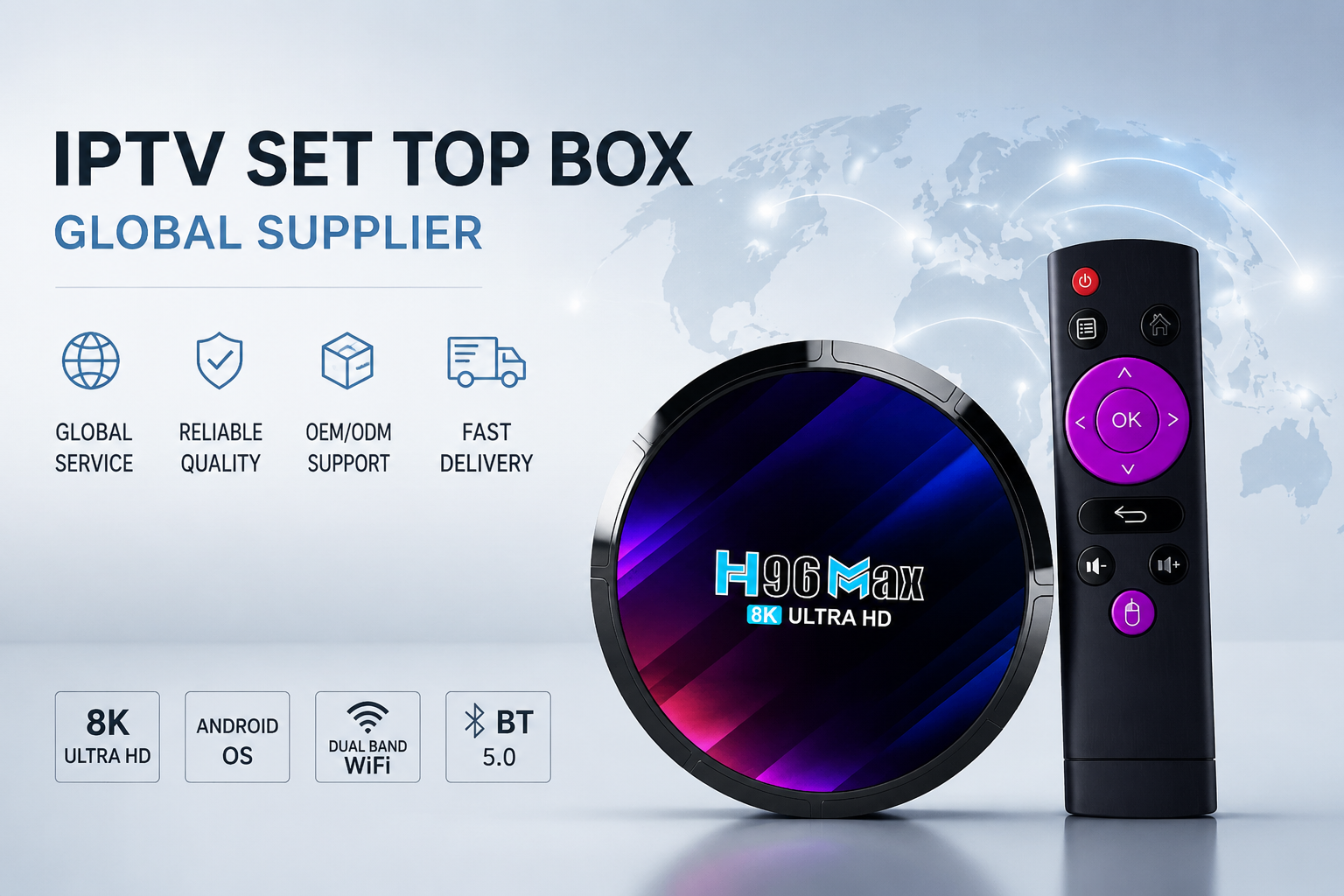
How Should IPTV Box Buyers Plan Compliance for Global Markets?
Selecting an IPTV Set Top Box Manufacturer for international distribution requires more than confirming that a sample carries familiar compliance logos. Brands, importers, wholesalers, distributors, operators and OEM/ODM procurement teams need to understand which requirements apply to the finished configuration in each target market, who is responsible for demonstrating conformity, and what happens when hardware changes after approval. Radio modules, antennas, power adapters, enclosures, labels, firmware and accessories can all influence the compliance strategy. A certificate from a similar model may be useful background evidence but should not automatically be treated as authorization for a new product. The safest B2B approach is to define markets early, freeze relevant configurations, work with qualified laboratories or advisers and maintain technical records through the product lifecycle. This guide explains how buyers can make regulatory planning part of sourcing instead of discovering expensive gaps immediately before shipment.
Start With a Target-Market Matrix
List every country or region planned for launch and identify the exact product configuration for each one. Include wireless technologies, adapter, plug, remote, accessories and intended commercial channel because requirements can vary.
Give this matrix to the IPTV Set Top Box Supplier before final quotation. Compliance work discovered after tooling or production can create redesign, retesting, relabeling and schedule costs that were absent from the original price.
Do Not Treat CE as One Universal Certificate
For products placed on the European Economic Area market, CE marking represents the manufacturer's declaration that applicable EU requirements are met. The specific legislation and conformity route depend on the product.
A professional IPTV Set Top Box Manufacturer should help assemble technical evidence, but the responsible economic operator should obtain qualified guidance on its own legal obligations rather than assuming one laboratory report solves every requirement.
Understand the EU Radio Equipment Framework
An IPTV box with Wi-Fi or Bluetooth may fall within the EU Radio Equipment Directive framework. Radio performance, electromagnetic compatibility and safety-related requirements should be considered using the finished product configuration.
A change to radio hardware, antenna implementation or other relevant design elements may require technical reassessment. Buyers should therefore connect regulatory files with engineering change control instead of treating compliance as a one-time purchasing document.
Plan for Cybersecurity Requirements
Connected products face growing cybersecurity obligations. The European Commission states that the Cyber Resilience Act entered into force on December 10, 2024, with reporting obligations applying from September 11, 2026 and the main obligations from December 11, 2027.
An IPTV Set Top Box Manufacturer supporting EU programs should be prepared to discuss software updates, vulnerability handling and support dependencies. Buyers should seek specialist advice to determine how current rules apply to their particular product and role.
How Should Buyers Approach the United States?
In the United States, radio-frequency devices are subject to FCC requirements according to their equipment category. Products incorporating intentional radiators such as Wi-Fi or Bluetooth require the appropriate equipment-authorization strategy before marketing.
Do not assume that an approved wireless module automatically resolves every host-product obligation. Antenna conditions, integration, labeling and other aspects should be reviewed for the final configuration by qualified parties.
Why Does the Final Antenna Configuration Matter?
Wireless performance and regulatory characteristics depend on more than the chipset. Antenna type, placement, gain, enclosure materials and nearby components can influence the finished radio system.
A Custom IPTV Set Top Box Manufacturer should coordinate mechanical and RF engineering before formal testing. Moving an antenna late in development may require more than a simple cosmetic approval.
Treat EMC as a System Property
Electromagnetic compatibility concerns the behavior of the finished electronic system in its intended environment. PCB layout, cables, enclosure, clocking, adapter and peripherals can all influence emissions or immunity performance.
Pre-compliance testing during development can identify problems before formal evaluation. This is especially valuable after major PCB or enclosure changes, when waiting until the final certification stage makes redesign expensive.
Power Adapters Need Their Own Compliance Review
An external adapter is part of the product customers receive and may have market-specific safety, efficiency, plug and labeling considerations. Control the exact approved adapter rather than allowing purchasing to substitute a similar-looking unit.
An OEM IPTV Set Top Box Manufacturer should identify adapter variants by destination. Buyers should verify applicable requirements with competent laboratories or advisers for each target market.
Materials Compliance Belongs in the BOM
Market obligations can include restrictions on certain hazardous substances and requirements affecting electrical and electronic equipment. Relevant supplier declarations and material information should be linked to controlled components where appropriate.
The IPTV Set Top Box Manufacturer should have a process for evaluating new sources or substitutions. A component change is not purely a cost decision when it can alter the evidence supporting the finished product.
What About RoHS?
The EU Restriction of Hazardous Substances framework limits specified hazardous substances in electrical and electronic equipment, subject to its scope and exemptions. Buyers should determine how the rules apply to their products and documentation.
Supplier declarations can support due diligence, but procurement should avoid treating a generic “RoHS compliant” statement as complete technical evidence without understanding what product, materials and revision it covers.
Consider WEEE Responsibilities in Europe
Electrical and electronic equipment sold in European markets can also create waste-management responsibilities under the WEEE framework. Producer registration, marking and reporting obligations can depend on country and commercial role.
These activities may sit with the brand or importer rather than the factory. Include them in market-entry planning so administrative obligations do not appear after inventory has already shipped.
Do HDMI Claims Require Care?
HDMI functionality, trademarks and licensing should be handled according to applicable program requirements. Buyers should distinguish technical connector capability from rights to use specific logos or marketing claims.
For a Wholesale IPTV Set Top Box program, packaging and listings should use only claims supported by the approved product and relevant rights. Marketing teams should not add badges simply because competitors display them.
Apply the Same Discipline to Wi-Fi and Bluetooth Marks
Technology alliance names and logos can be governed by certification and trademark programs separate from government regulation. Determine what claims the final product is entitled to make before printing packaging.
The distinction matters because regulatory authorization and industry certification serve different purposes. Procurement should ask exactly which program a supplier's document relates to instead of grouping all paperwork under “certificates.”
Build a Compliance Configuration List
For every tested product, record PCB revision, critical components, wireless module, antenna, enclosure, adapter, firmware where relevant and accessories used during assessment. This configuration becomes the reference for future production.
A disciplined IPTV Set Top Box Manufacturer should be able to reproduce that configuration. If production later differs, engineering and compliance teams can determine whether existing evidence remains applicable.
Freeze the Design Before Formal Testing
Formal testing is most efficient after high-impact design decisions are stable. Testing too early can generate reports for a configuration that never reaches production, while testing too late leaves no schedule margin for correction.
Use engineering and pre-compliance work to reduce uncertainty first. Then freeze relevant hardware, enclosure, radio and adapter choices before final assessment.
Control Labels and Regulatory Artwork
Product labels may need model identifiers, electrical ratings, regulatory information and other market-specific content. Packaging and manuals may also carry required information or warnings depending on jurisdiction.
Maintain approved artwork by SKU and revision. A correct laboratory report cannot prevent a shipment problem caused by an outdated label file being printed on thousands of units.
Keep Technical Documentation Organized
Store reports, declarations, drawings, BOM references, label files and other relevant evidence in a controlled project record. Document names should identify product and revision clearly enough for later retrieval.
The buyer and IPTV Set Top Box Manufacturer should define which records each party maintains and how updates are communicated. Good documentation becomes increasingly valuable during repeat orders and audits.
Connect Compliance to Engineering Change Control
A component substitution, PCB revision, new enclosure or adapter can affect previously completed assessments. Require change notifications and include compliance impact in the approval workflow before revised material enters mass production.
Not every change requires complete retesting. Qualified technical personnel should determine the appropriate assessment based on what changed and which requirements could be affected.
What Should Importers Verify Before Shipment?
Before release, confirm the production configuration matches the approved one, required documents are available, labels and packaging use correct revisions, and destination-specific accessories are packed correctly.
Importers should understand their own obligations in the destination market. Factory documents support compliance, but commercial responsibility cannot always be transferred simply by purchasing from an overseas supplier.
Budget Compliance as Part of Product Development
Laboratory work, engineering changes, samples, documentation and market-specific administration should appear in the project budget. Treating these activities as unexpected overhead makes sourcing comparisons misleading.
Ask the IPTV Set Top Box Manufacturer which existing platform evidence may legitimately support the project and which customization requires additional work. Reuse can save time when technically and legally appropriate.
Plan Schedule Margin for Failures
Even mature designs can encounter unexpected test results. Include time for investigation, modification and reassessment rather than scheduling mass shipment immediately after the first formal test date.
This margin is particularly important for custom PCB, enclosure or radio designs. A launch plan that assumes every test passes first time converts ordinary engineering risk into a commercial emergency.
Use a Market-Entry Gate Before Mass Production
Create a cross-functional release gate involving engineering, quality, compliance, procurement and commercial teams. Confirm product configuration, required evidence, artwork and open issues before authorizing volume production for each destination.
The gate prevents sales urgency from bypassing unresolved requirements. It also creates a documented decision point that can be referenced when later variants or repeat orders are introduced.
What Does a Scalable Compliance Strategy Look Like?
A scalable strategy starts with known markets, uses a controlled common platform, minimizes unnecessary variants and links every meaningful change to technical review. Documentation follows the product throughout its lifecycle rather than being collected once before launch.
Evaluating an IPTV Set Top Box Manufacturer through this framework helps B2B buyers reduce regulatory surprises while preserving the flexibility needed for global product expansion.
Discuss Global IPTV Product Planning With H96 Max
H96 Max is a source factory supporting brands, importers, wholesalers, distributors, operators and OEM/ODM procurement teams. We can discuss IPTV set top box platform selection, hardware configurations, wireless options, adapters, customized enclosures, packaging, production configuration control and coordination of samples for market-specific evaluation. Share your target countries, required features, expected volume, customization scope and launch schedule so relevant engineering and documentation needs can be identified early. Buyers should obtain qualified regulatory advice for their own market obligations. Partner with H96 Max today to explore an IPTV set top box program built around controlled manufacturing, practical customization and scalable international supply.
READ MORE
How to Structure an IPTV Set Top Box Manufacturing Agreement for B2B Buyers
How to Manage IPTV Set Top Box Fleets After Large-Scale Deployment
How to Calculate the True Cost of Bulk IPTV Set Top Box Procurement
How B2B Buyers Can Audit IPTV Set Top Box Quality Before Mass Production
How to Reduce IPTV Set Top Box Supply Chain Risk Before Bulk Orders
How to Control IPTV Set Top Box Software Before Mass Deployment
OEM vs ODM: Which IPTV Set Top Box Manufacturing Model Fits Your Business?
How to Choose an IPTV Set Top Box Manufacturer for B2B Procuremen
Quick Links

.png "Watch H96 Max Android TV Box reviews on our YouTube channel")

.png "Explore H96 Max product photos on Instagram")