
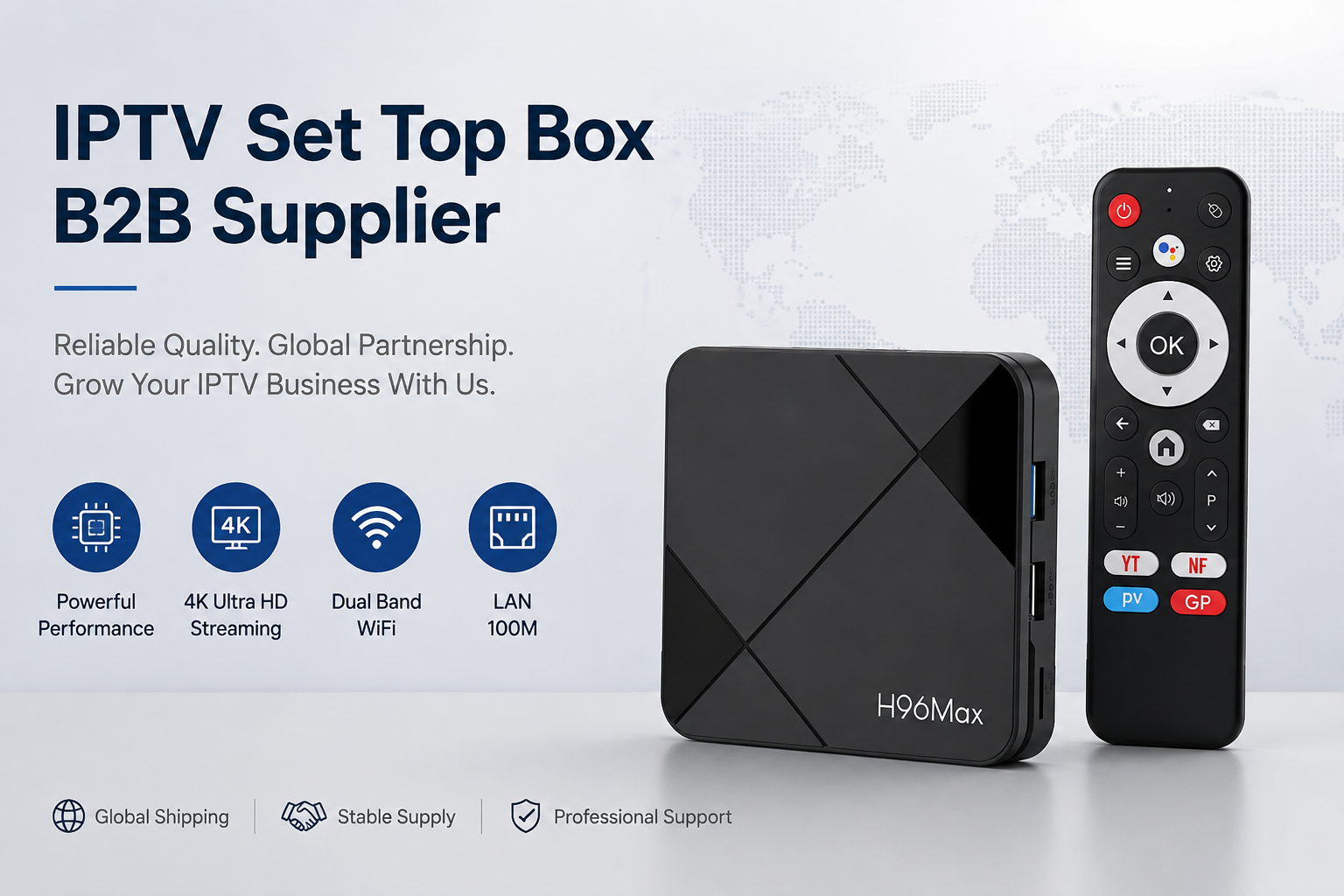
Can Your IPTV Box Supply Chain Support Years of Repeat Orders?
A dependable IPTV Set Top Box Manufacturer must do more than build the first purchase order correctly. For brands, importers, wholesalers, distributors, operators and OEM/ODM procurement teams, the harder challenge is maintaining product consistency while semiconductor availability, memory pricing, wireless modules, adapters and customized materials change over time. A box can pass qualification and still become commercially difficult if a critical component disappears, an unapproved substitute changes performance, or buyer-specific packaging creates excess inventory. Supply-chain evaluation should therefore begin before volume purchasing, with a controlled BOM, clear change rules, realistic forecasts and an agreed approach to component lifecycle. This guide explains how B2B buyers can reduce shortages, silent substitutions and obsolete stock while preserving enough sourcing flexibility for a factory to keep production competitive.
Why Is the BOM a Commercial Control Document?
The bill of materials connects the approved product to what the factory actually buys. Buyers do not necessarily need every supplier's confidential commercial detail, but critical components should be controlled by specification, approved source or defined equivalent criteria.
Ask the IPTV Set Top Box Supplier how SoC, memory, storage, wireless modules, PCB revisions and adapters are identified. If important parts can change without review, the approved sample is not a reliable definition of future production.
Which Components Deserve the Most Attention?
Prioritize components that affect software, performance, radio behavior, safety, regulatory evidence or supply continuity. The SoC, memory, flash storage, Wi-Fi/Bluetooth solution and power adapter often deserve stronger controls than generic passive components.
A capable IPTV Set Top Box Manufacturer should explain where alternatives are easy and where a substitution creates substantial engineering work. This helps procurement focus oversight where a change can genuinely affect customers.
How Should SoC Lifecycle Influence Platform Selection?
A chipset decision affects firmware, video capability, drivers and long-term platform support. Ask about product maturity, expected availability and successor options before committing a multi-year program. No supplier can guarantee semiconductor availability indefinitely, so migration planning matters.
For operator deployments, the cost of replacing a platform can exceed a small initial chipset saving. Applications, middleware, remote behavior and validation may all need to be repeated on the successor architecture.
Why Do Memory and Storage Need Qualification?
RAM and flash devices may look interchangeable by capacity, but performance, endurance and firmware compatibility can differ. A lower-cost substitute should be validated against the same acceptance criteria used for the approved configuration.
An OEM IPTV Set Top Box Manufacturer should maintain approved alternatives where practical rather than introducing emergency substitutions during shortages. Prequalified options create flexibility without turning every supply disruption into a new engineering project.
Treat Wireless Modules as More Than Commodity Parts
A Wi-Fi/Bluetooth module interacts with drivers, antennas, PCB design, enclosure and regulatory work. Changing it can affect throughput, stability, coexistence and technical documentation even when headline specifications appear equivalent.
The IPTV Set Top Box Manufacturer should notify buyers before such changes and provide engineering evidence. Qualified advisers should determine whether a revised radio configuration affects market-access obligations in each destination.
Why Should the Adapter Be Controlled?
Power adapters are sometimes sourced late because they appear simple, yet poor power quality can cause resets or field failures. Plug type, cable length, connector, voltage and current also form part of the commercial product configuration.
Maintain approved adapter models by market. If sourcing proposes an alternative, evaluate electrical behavior, physical fit and applicable regulatory requirements before the replacement reaches production.
What Is an Approved Vendor List?
An approved vendor list identifies accepted sources or components for controlled parts. It gives purchasing teams alternatives without allowing arbitrary substitutions. The level of detail should match the technical and commercial risk of each item.
For a Custom IPTV Set Top Box Manufacturer, the list can also include buyer-specific enclosure materials, remotes, cables and packaging. Keeping approvals current reduces delays when the primary source encounters a constraint.
Fixed BOM or Flexible BOM?
A completely fixed BOM provides strong consistency but can become difficult during shortages. An uncontrolled flexible BOM creates quality risk. The practical middle ground is controlled flexibility: approved alternatives plus formal review for anything outside them.
Buyers should define which substitutions require notification, samples, regression, regulatory review or written approval. The rules should be established before a shortage creates pressure for an immediate decision.
How Should Product Change Notifications Work?
Require the IPTV Set Top Box Manufacturer to communicate significant component, PCB, firmware, enclosure or adapter changes before implementation. The notice should identify the reason, affected products, proposed timing and available technical evidence.
Engineering can then assess impact on function, software, quality and compliance. Procurement can evaluate cost and inventory. This makes change management a cross-functional decision instead of a purchasing action hidden inside the factory.
When Does a Substitute Need Retesting?
Testing depth should reflect risk. A cosmetic packaging material may require a different review from a new wireless module or storage device. Define a change-classification process so teams know which validation is expected.
At minimum, verify the functions plausibly affected by the change and run critical regression where necessary. Qualified compliance specialists should assess whether existing regulatory evidence remains applicable to the revised configuration.
Can Dual Sourcing Eliminate Supply Risk?
Dual sourcing can reduce dependency, but it is not free. Each alternative requires qualification, commercial management and sometimes additional inventory. Some highly integrated components may not have drop-in alternatives at all.
Use dual sourcing selectively for parts where disruption risk and qualification economics justify it. For single-source components, stronger forecasting, lifecycle monitoring and migration planning may provide more value.
How Should Buyers Use Forecasts?
Forecasts help an IPTV Set Top Box Manufacturer anticipate material and production needs, but buyers should distinguish planning forecasts from firm purchase commitments. Provide visibility by month, region and SKU when the information is reasonably available.
Update forecasts regularly as sales information changes. Large unexplained swings force factories to choose between excess inventory and shortages, particularly when buyer-specific materials cannot be redirected to another customer.
Measure Forecast Accuracy, Not Just Supplier Delivery
Supplier performance should be measured fairly. If actual demand doubles without warning, late delivery may reflect planning failure rather than manufacturing weakness. Compare forecast, committed orders and actual consumption over time.
The data helps both parties determine appropriate buffers and lead times. Better forecasting can reduce premium freight and emergency component purchasing while improving confidence in future delivery dates.
When Is Material Reservation Appropriate?
For constrained or long-lead components, buyers may consider reserving material before a finished-goods order is due. This can protect availability, but ownership, cancellation liability and usable configurations must be clearly defined.
Do not reserve large quantities simply because shortage headlines create fear. Compare the cost of holding material with realistic demand, replenishment lead time and the risk that the platform changes before inventory is consumed.
Customized Materials Create Different Risks
Branded cartons, printed remotes, labels and unique enclosures cannot always be redirected if demand falls. For Wholesale IPTV Set Top Box programs, these materials can create hidden MOQ and obsolete-stock exposure.
Ask which customized item drives each minimum quantity. Where practical, postpone branding or final packaging until demand is clearer, while maintaining common hardware inventory that can serve several SKUs.
How Can Postponement Reduce Inventory?
Postponement keeps products common for as long as possible and adds market-specific elements later. A shared hardware platform might receive regional firmware, labels, adapters or packaging closer to the confirmed order.
This strategy is not appropriate for every design, but it can reduce finished-goods fragmentation. The factory must maintain strong configuration controls so late differentiation does not create mixing errors.
What Should Safety Stock Protect Against?
Safety stock can buffer demand variability, supply delays or production interruptions. Determine the quantity using actual lead-time and demand data rather than applying the same percentage to every component or finished SKU.
High buffers improve availability but consume cash and increase obsolescence exposure. Stable platforms and predictable suppliers can often operate with less inventory than products experiencing frequent engineering changes.
How Should Buyers Prepare for Component Obsolescence?
Ask the IPTV Set Top Box Manufacturer to monitor critical components for lifecycle notices and communicate material risks early. When a part approaches discontinuation, evaluate last-time purchases, approved alternatives and successor-platform timing together.
A last-time buy should be based on conservative remaining demand. Excess stock can become worthless if applications, regulations or market expectations force a platform transition sooner than expected.
Plan Platform Migration Before Supply Becomes Critical
A successor platform should be evaluated while the existing product remains available. Compare application compatibility, network behavior, remote functions, enclosure constraints, power requirements and customer-facing performance.
Planned overlap creates time for validation and customer communication. Emergency migration under shortage pressure can force compromises in engineering, cost and launch readiness.
Use Traceability to Contain Supply Problems
If a component-related field defect appears, traceability should identify which production batches used the affected material. Serial, batch, firmware and relevant component records can prevent an investigation from expanding to every shipped unit.
A disciplined IPTV Set Top Box Manufacturer should retrieve this information efficiently. Traceability turns a broad commercial risk into a defined population that can be tested, contained or corrected.
What Supply Metrics Should Procurement Review?
Track on-time delivery, forecast accuracy, lead-time variation, approved changes, shortage incidents, premium freight, excess customized inventory and component-related defects. Metrics should reveal causes, not simply produce a supplier score.
Review trends with sourcing, engineering and quality teams. A recurring shortage caused by one unique part may justify redesign, while repeated forecast errors may require changes in the buyer's planning process.
What Does a Resilient IPTV Supply Program Look Like?
A resilient program combines controlled BOMs, qualified alternatives, early change notification, realistic forecasts, selective buffers, traceability and planned migration. It does not depend on the impossible assumption that every component will remain unchanged forever.
Working with an IPTV Set Top Box Manufacturer this way helps B2B buyers protect repeat-order consistency while giving the factory enough controlled flexibility to respond to real supply-market conditions.
Discuss Supply Continuity With H96 Max
H96 Max is a source factory supporting brands, importers, wholesalers, distributors, operators and OEM/ODM procurement teams. We can discuss IPTV set top box platform selection, BOM control, hardware configurations, customized materials, pilot production, forecast planning, repeat-order consistency and successor-product preparation. Share your target markets, expected volume, SKU structure, customization requirements and delivery plan so supply dependencies can be reviewed before large commitments are made. Partner with H96 Max today to explore an IPTV set top box program built around controlled sourcing, scalable manufacturing and practical long-term supply continuity.
READ MORE
How to Structure an IPTV Set Top Box Manufacturing Agreement for B2B Buyers
How to Manage IPTV Set Top Box Fleets After Large-Scale Deployment
How to Plan IPTV Set Top Box Compliance for International B2B Markets
How to Calculate the True Cost of Bulk IPTV Set Top Box Procurement
How B2B Buyers Can Audit IPTV Set Top Box Quality Before Mass Production
How to Control IPTV Set Top Box Software Before Mass Deployment
OEM vs ODM: Which IPTV Set Top Box Manufacturing Model Fits Your Business?
How to Choose an IPTV Set Top Box Manufacturer for B2B Procuremen
Quick Links

.png "Watch H96 Max Android TV Box reviews on our YouTube channel")

.png "Explore H96 Max product photos on Instagram")