.png "H96 Max Android TV Box video reviews and tutorials on YouTube")
.png "H96 Max Android TV Box photos and lifestyle shots on Instagram")



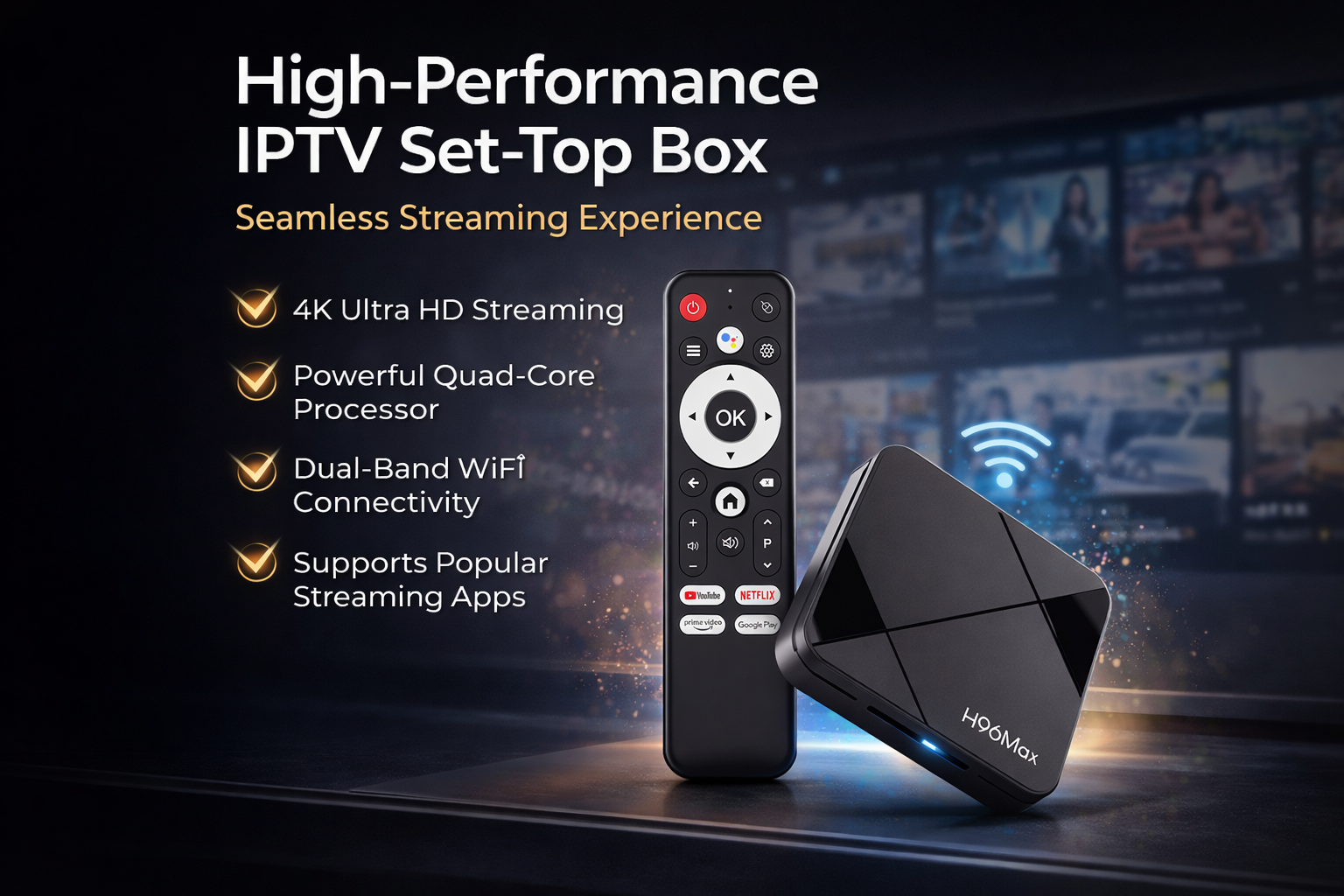
What Failed IPTV Projects Teach About Choosing the Right Set Top Box
For telecom operators, selecting a carrier-grade set top box is often viewed as a technical procurement task. However, real-world deployment failures show that it is actually a high-impact strategic decision. According to reports from Deloitte and Analysys Mason, nearly 50% of IPTV project setbacks are linked to poor hardware selection or supplier misalignment. These failures not only increase operational costs but also damage brand reputation and customer trust. Understanding these failure patterns is essential for operators seeking long-term success.
In practice, many operators underestimate the complexity behind choosing the right IPTV set top box supplier. Without a clear understanding of how to choose a carrier-grade set top box supplier for IPTV operators, procurement decisions often rely on incomplete data or short-term cost considerations. At the same time, failing to fully evaluate what to consider when buying 4K IPTV set top box for telecom operators leads to performance gaps that directly impact user experience.
Case 1: Large-Scale Deployment Failure Due to Hardware Instability
One regional telecom operator deployed over 200,000 units of what was marketed as a carrier-grade set top box. Within six months, failure rates exceeded 18%, far above the industry average of below 5%. The root cause was insufficient thermal design and unstable chip performance under continuous usage. This case highlights the importance of verifying real-world reliability rather than relying solely on supplier claims.
Case 2: Integration Breakdown with Middleware Systems
Another operator faced severe delays due to incompatibility between the operator set top box and its existing middleware platform. Despite initial assurances from the IPTV set top box supplier, integration issues caused a six-month delay in service launch. This resulted in lost market opportunities and increased operational costs. Proper pre-deployment testing could have prevented this issue.
Case 3: Poor Performance Under Peak Load
A telecom provider introduced a 4K IPTV set top box without adequate stress testing. During peak viewing hours, users experienced buffering, lag, and system crashes. Customer complaints increased by over 40%, leading to significant churn. This case demonstrates that performance validation must include real-world usage scenarios, not just laboratory benchmarks.
Case 4: Security Vulnerabilities and Content Piracy
In another instance, a carrier-grade set top box lacked proper DRM implementation, exposing the operator to content piracy risks. The resulting legal and financial consequences were substantial. Security should always be a core evaluation factor when selecting an IPTV set top box supplier.
Case 5: Supplier Delivery and Supply Chain Failure
A project involving an Android TV set top box was delayed due to supplier production issues. The supplier failed to meet delivery deadlines, causing rollout delays and increased costs. This case emphasizes the importance of evaluating supplier manufacturing capacity and supply chain stability.
Case 6: Hidden Costs from Low-Price Procurement
An operator selected a low-cost IPTV set top box supplier to reduce upfront expenses. However, high failure rates and frequent maintenance increased total costs by over 30% within the first year. This case clearly illustrates that initial price should never be the sole decision factor.
Case 7: Lack of Software Support and OTA Updates
A carrier-grade set top box deployment suffered from outdated firmware due to limited supplier support. Without OTA updates, devices quickly became incompatible with new applications. This led to declining user satisfaction and increased support requests.
Case 8: Failure to Plan for Scalability
An operator underestimated future growth and selected a solution that could not scale efficiently. As subscriber numbers increased, system performance degraded. Choosing a scalable carrier-grade set top box is essential for long-term success.
Case 9: Poor User Experience Design
Even technically stable devices can fail if user experience is neglected. One Android TV set top box project saw high churn due to slow UI response and poor navigation design. User experience plays a critical role in customer retention.
Case 10: Lack of Verified Deployment References
Finally, an operator partnered with a supplier without proven deployment experience. The project faced repeated issues, highlighting the importance of verifying case studies and references before selecting an IPTV set top box supplier.
These real-world cases reveal a consistent pattern: failures are rarely caused by a single factor. Instead, they result from a combination of overlooked risks, incomplete evaluation, and short-term decision-making. A carrier-grade set top box must be assessed holistically, considering hardware, software, supplier capability, and long-term scalability.
Operators that learn from these failures can significantly reduce risks and improve deployment success rates. A structured procurement approach, combined with thorough testing and supplier evaluation, ensures better service stability and customer satisfaction.
Ultimately, the difference between success and failure lies in preparation. Choosing the right carrier-grade set top box is not just about meeting current requirements but about building a resilient and future-ready IPTV ecosystem.
As a trusted source factory, H96 Max provides reliable manufacturing, strict quality control, and flexible OEM/ODM solutions tailored for global telecom operators. Partner with H96 Max today to ensure a stable and scalable IPTV deployment.
READ MORE
Final Guide to Carrier-Grade Set Top Box Procurement for IPTV Operators
Build vs Buy vs ODM: Set Top Box Strategy for IPTV Operators
Different IPTV Operator Strategies for Set Top Box Procurement
Carrier-Grade Set Top Box Procurement Checklist for Operators
How to Compare Carrier-Grade Set Top Box Solutions for IPTV Operators
Quick Links

.png "Watch H96 Max Android TV Box reviews on our YouTube channel")

.png "Explore H96 Max product photos on Instagram")