.png "H96 Max Android TV Box video reviews and tutorials on YouTube")
.png "H96 Max Android TV Box photos and lifestyle shots on Instagram")



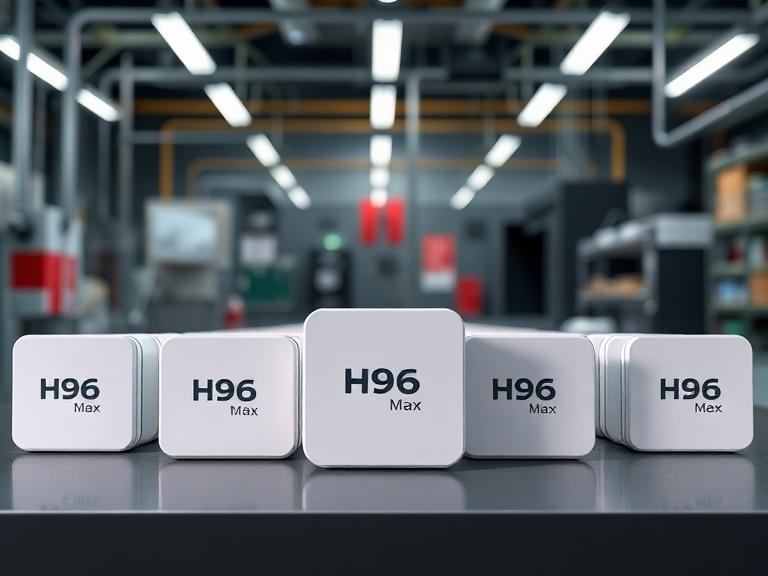
Optimizing Global Logistics and Distribution Strategies in OEM TV Box Sourcing
In the global smart entertainment industry, the TV Box has emerged as one of the most in-demand consumer electronics products. For OEM manufacturers and distributors, success depends not only on innovation and production but also on mastering logistics and distribution. Efficient logistics ensures timely delivery, cost optimization, and customer satisfaction. This article explores the key logistics and distribution strategies that businesses must implement when sourcing OEM TV Boxes in large volumes for international markets.
1. The Strategic Role of Logistics in OEM Sourcing
In OEM operations, logistics serves as the bridge between production and market delivery. For TV Boxes, which are often distributed across multiple continents, a strategic logistics framework is essential. An optimized distribution network enables faster time-to-market, reduces storage costs, and maintains consistent product availability. By aligning logistics planning with production cycles, companies can enhance order accuracy and avoid costly overstock or stockout situations.
Modern logistics solutions also integrate data-driven analytics, offering real-time visibility into shipping routes, customs clearance, and inventory levels—critical for maintaining operational transparency in complex global supply chains.
2. Warehouse Distribution and Regional Fulfillment Centers
Establishing multiple regional warehouses is one of the most effective strategies in OEM sourcing. Top Android TV Box manufacturers maintain over 50 global warehouses to ensure efficient order fulfillment. These hubs act as localized distribution points, significantly shortening delivery times to key markets in North America, Europe, Asia, and the Middle East. A well-positioned warehouse network minimizes international freight costs and improves last-mile logistics efficiency.
For bulk distributors, regional fulfillment centers also provide scalability—allowing rapid adaptation to fluctuating demand patterns during peak seasons like holidays or product launches.
3. Inventory Management and Forecasting
Effective inventory management ensures smooth OEM operations. Businesses should employ demand forecasting tools that use AI and predictive analytics to optimize stock levels. For TV Box sourcing, this involves balancing safety stock and turnover rates while accounting for production lead times and regional sales data. Real-time synchronization between suppliers, warehouses, and distributors reduces excess inventory and improves cash flow management.
Adopting just-in-time (JIT) principles helps streamline operations, but it must be balanced with buffer stock to handle unforeseen logistics delays or sudden order surges.
4. Transportation Optimization and Cost Efficiency
Transportation is one of the largest cost drivers in OEM distribution. Companies should evaluate a mix of air, sea, and rail transport modes to achieve cost efficiency without compromising delivery timelines. For lightweight electronics like TV Boxes, sea freight remains the most cost-effective option for bulk shipments, while air freight is suitable for urgent orders or smaller volumes.
Negotiating long-term contracts with logistics providers can stabilize freight rates and protect against sudden cost spikes, especially in volatile global shipping environments.
5. Customs Clearance and Regulatory Compliance
International trade regulations can pose significant challenges in OEM sourcing. Ensuring compliance with customs requirements and product certifications such as CE, FCC, and RoHS is critical to prevent border delays. A compliant TV Box manufacturer should provide complete export documentation, HS codes, and product declarations. Collaborating with logistics partners familiar with international trade laws reduces clearance time and minimizes penalties for non-compliance.
Additionally, digital customs solutions are now simplifying the documentation process, improving accuracy, and accelerating global distribution timelines.
6. Packaging and Shipment Protection
Proper packaging design is crucial for preventing damage during transportation. OEM suppliers must follow international packaging standards to ensure that each TV Box reaches its destination safely. Anti-static materials, shock-absorbent padding, and moisture-resistant seals enhance durability and reduce product return rates. Moreover, using optimized packaging dimensions improves container utilization, lowering overall shipping costs.
Eco-friendly packaging materials are also becoming a priority for sustainable sourcing strategies, supporting global ESG initiatives.
7. Digital Logistics and Real-Time Tracking
Digital transformation is reshaping OEM logistics. By integrating IoT and GPS-based tracking systems, companies can monitor shipments in real time and detect potential disruptions early. For TV Box distributors, visibility across the entire logistics chain—from manufacturing to delivery—enables proactive problem-solving and improves customer satisfaction.
AI-enabled route optimization tools further enhance delivery efficiency by minimizing fuel consumption and reducing transit times across complex global routes.
8. Partner Collaboration and Third-Party Logistics (3PL)
Partnering with specialized 3PL providers allows businesses to focus on core OEM operations while outsourcing logistics management. A strategic 3PL relationship can reduce administrative overhead, enhance delivery accuracy, and scale capacity based on demand fluctuations. For TV Box OEM clients, 3PL providers also offer value-added services such as packaging customization, product assembly, and reverse logistics handling.
Choosing logistics partners with global networks and electronic data interchange (EDI) capabilities ensures synchronization between production, warehousing, and final distribution.
9. Sustainability and Green Logistics
Environmental responsibility is becoming integral to logistics management. Green logistics practices—such as route optimization, carbon offset programs, and recyclable packaging—help reduce environmental impact. OEM TV Box manufacturers adopting energy-efficient transport and warehousing solutions contribute to broader ESG compliance and brand sustainability.
Sustainable distribution not only minimizes waste but also improves public perception, particularly in regions with strong environmental regulations.
10. Building an Agile Global Distribution Network
An agile distribution network is key to future OEM success. Companies should integrate advanced analytics, digital supply chain management, and multi-modal logistics planning to enhance adaptability. By maintaining flexible regional hubs and transparent communication channels, businesses can rapidly respond to demand shifts and mitigate disruptions.
In conclusion, optimizing global logistics and distribution is crucial for maintaining efficiency, scalability, and profitability in TV Box OEM sourcing. By leveraging data-driven logistics strategies and sustainable infrastructure, businesses can achieve seamless coordination across production, warehousing, and delivery networks.
Partner with H96 Max—a global OEM leader in Android TV Box manufacturing and distribution. With 50+ international warehouses, 5,000,000+ units shipped annually, and advanced logistics support across 150+ countries, H96 Max provides end-to-end solutions that power efficient global supply and long-term brand success.
READ MORE
Achieving Scalability and Sustainability in OEM TV Box Sourcing
Key Factors When Sourcing TV Boxes for OEM and Bulk Projects
Quick Links

.png "Watch H96 Max Android TV Box reviews on our YouTube channel")

.png "Explore H96 Max product photos on Instagram")