.png "H96 Max Android TV Box video reviews and tutorials on YouTube")
.png "H96 Max Android TV Box photos and lifestyle shots on Instagram")



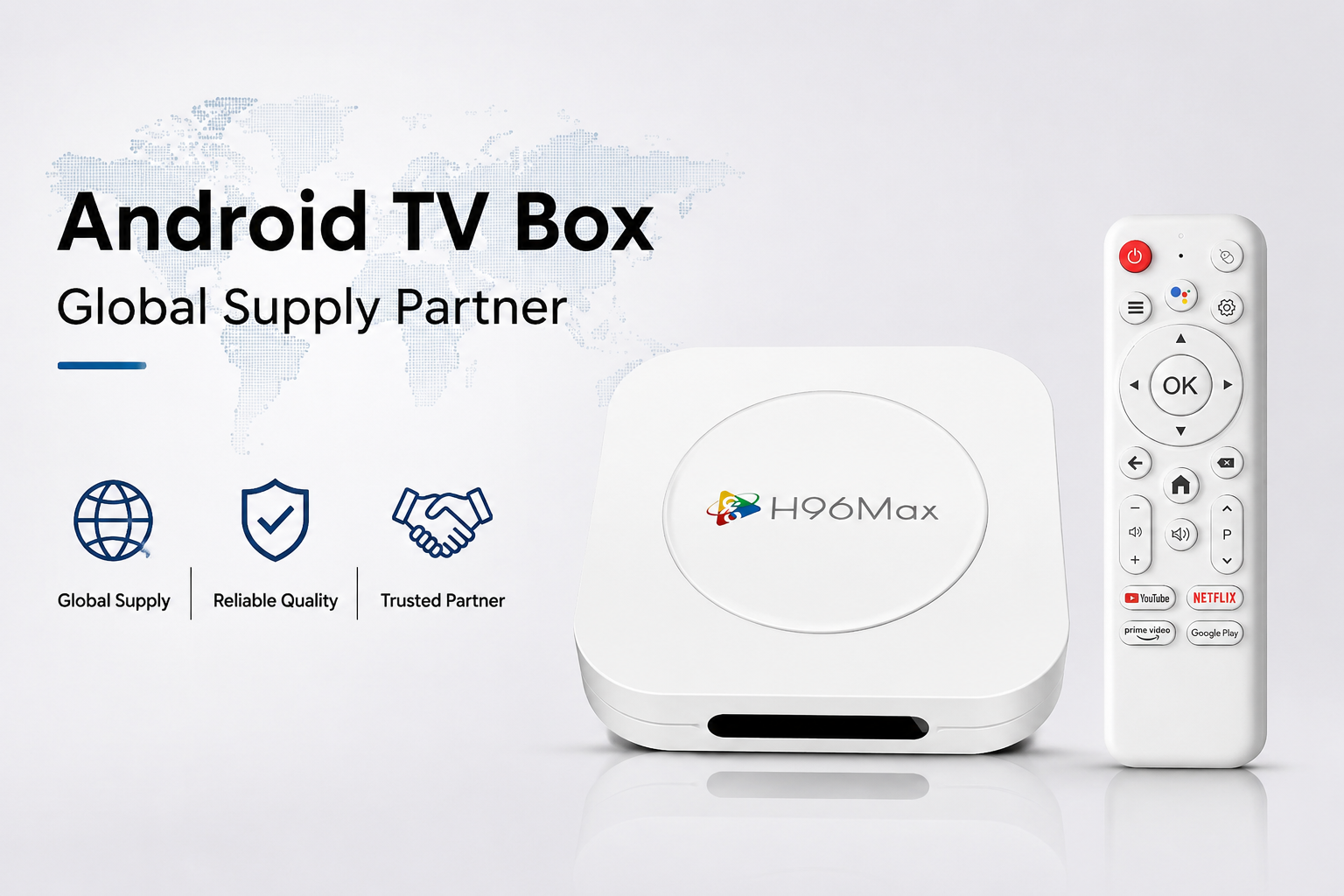
Should Your OEM TV Box Factory Become a Long-Term Strategic Supplier?
When should an Android TV Box OEM factory move from being a transactional vendor to becoming a strategic supply partner? For brands, importers, wholesalers, distributors, operators and OEM/ODM procurement teams, the answer should not depend on relationship length or purchase volume alone. A strategic supplier must repeatedly protect quality, delivery, software continuity, cost transparency and product transitions while helping the buyer respond to changing market requirements. At the same time, excessive dependence on one factory can create concentration risk. Procurement therefore needs a structured governance model that measures performance, allocates volume rationally, protects technical assets and tests whether the supplier's roadmap remains aligned with the buyer's business. This final-stage sourcing framework explains how to make that decision using evidence rather than familiarity.
What Makes a Supplier Strategic Rather Than Convenient?
A strategic Android TV Box OEM partner creates value across multiple orders. It maintains configuration consistency, communicates changes early, resolves recurring defects and provides realistic production information. Convenience alone is not enough; the relationship should measurably reduce commercial or operational risk.
Procurement should document why strategic status is justified. Benefits may include faster development, stable repeat orders, stronger engineering response, lower lifecycle cost or better supply visibility. If these benefits cannot be demonstrated, preferred-supplier status may simply reduce competitive pressure.
Which KPIs Belong on the Supplier Scorecard?
Build an Android TV Box OEM scorecard around outcomes that matter to the business. Useful categories include incoming and field quality, on-time delivery, lead-time accuracy, firmware response, unauthorized changes, corrective-action closure, documentation quality and commercial responsiveness.
Avoid creating dozens of metrics that nobody uses. Weight the indicators according to channel risk. An operator may prioritize software stability and field failure, while a wholesaler may place more weight on replenishment and configuration flexibility. Review trends rather than isolated monthly results.
How Should Quality Performance Affect Future Volume?
A reliable Android TV Box OEM should demonstrate that recurring problems decrease over time. Track first-pass yield where available, final inspection, returns and repeated defect categories. If the same issue appears in several orders, investigate whether corrective action was genuinely effective.
Future volume can be used as a governance tool. Suppliers that consistently meet requirements can receive larger allocations, while unstable performance can trigger additional inspection, smaller releases or qualification of alternatives. Volume should reward evidence, not promises.
Should You Single-Source or Dual-Source?
There is no universal answer. Single sourcing can simplify firmware, tooling, quality control and commercial coordination. Dual sourcing can reduce dependence on one Android TV Box OEM but may create duplicated engineering, separate BOMs and inconsistent user experience.
Evaluate the consequence of supplier interruption, switching time, annual volume and customization depth. A deeply customized platform may be expensive to duplicate, while a more standardized product may support secondary sourcing more easily. Resilience should be designed around realistic disruption scenarios.
Can a Backup Supplier Be Qualified Without Splitting Every Order?
Yes. Procurement can qualify an alternative Android TV Box OEM platform, retain samples and understand tooling or firmware migration requirements without immediately dividing all production. This creates optionality while preserving scale with the primary supplier.
However, a backup that has never completed meaningful validation may provide false confidence. Define what “qualified” means: approved sample, application testing, commercial terms, compliance review and a realistic estimate of time required to reach volume production.
How Should Buyers Protect Their Custom Assets?
A Custom Android TV Box Manufacturer may hold buyer-funded tooling, artwork, launcher assets or project documentation. Define ownership, access and permitted use before the relationship becomes strategically important. Procurement should also know which elements depend on supplier or third-party intellectual property.
For each Android TV Box OEM program, maintain copies of approved artwork, specifications, firmware identifiers and test criteria. The objective is not to remove legitimate supplier IP; it is to ensure that buyer-owned assets and commercial records remain accessible during future transitions.
Does the Factory Roadmap Match Your Product Roadmap?
Ask the Android TV Box OEM supplier how current platforms are expected to evolve. Discuss chipset transitions, memory options, wireless capabilities, software support and known end-of-life risks. A strategic relationship requires more visibility than the model available for immediate shipment.
Roadmap discussions are not guarantees. They help buyers identify likely migration points and avoid investing heavily in a platform with limited remaining life. Revisit the roadmap during regular business reviews because semiconductor and software conditions change.
When Should OEM Become ODM?
An Android TV Box ODM Manufacturer relationship may become appropriate when the buyer needs a differentiated PCB, enclosure, feature architecture or deeper engineering collaboration. Moving from Android TV Box OEM adaptation to ODM should be driven by customer value and commercial scale.
Before expanding development scope, evaluate engineering ownership, tooling, validation, schedule and expected lifetime volume. Strategic partnership does not mean customizing everything. Mature suppliers should also be willing to recommend standardization when deeper development offers little return.
How Important Is Change Notification?
Change governance is a core measure of Android TV Box OEM maturity. Require notification before significant component, PCB, firmware, adapter or process changes. The notice should explain reason, timing, affected orders and validation completed.
Track unauthorized changes as a supplier KPI. A factory that consistently follows the process demonstrates that it understands the buyer's commercial configuration. One unapproved substitution can undermine application compatibility, quality or compliance even when the replacement appears technically similar.
Should Cost Reduction Be Part of the Partnership?
Yes, but cost reduction should be transparent. Ask the Android TV Box OEM to propose value engineering, volume efficiencies, packaging optimization or platform consolidation without silently reducing component quality. Buyers can then evaluate savings against performance and lifecycle consequences.
Review total cost rather than demanding annual unit-price reductions regardless of market conditions. A supplier that reduces warranty incidents, emergency freight or inventory may create more value than one offering the lowest invoice price.
How Can Private-Label Programs Scale Across Markets?
A Private label TV Box supplier can support several regional offers using a common technical platform with controlled branding, software and packaging variants. This architecture can concentrate purchasing volume while preserving local market positioning.
The Android TV Box OEM must maintain strong SKU control so firmware, remotes, labels and cartons are not mixed. Buyers should periodically simplify low-volume variants. Strategic scale comes from managing complexity, not multiplying SKUs without discipline.
What Should Wholesale Buyers Expect From a Long-Term Supplier?
An Android TV Box Wholesale Supplier serving repeat B2B orders should provide predictable replenishment, clear configuration options and timely notice when availability changes. Wholesale buyers benefit from a stable core platform because customers can reorder without repeatedly revalidating basic behavior.
At the same time, the Android TV Box OEM should support planned transitions when the market moves. A supplier that keeps an old platform indefinitely is not necessarily more reliable than one that provides an orderly successor strategy.
How Often Should You Hold Business Reviews?
Review frequency depends on spend, risk and project activity. For an important Android TV Box OEM relationship, periodic business reviews can examine quality, delivery, forecasts, firmware issues, open corrective actions, cost opportunities and roadmap changes.
Use a written agenda and action register. Business reviews should solve issues and make decisions rather than become ceremonial meetings. Assign owners and deadlines so unresolved items do not return unchanged at the next review.
Can Forecast Sharing Improve the Relationship?
A rolling forecast helps the Android TV Box OEM plan long-lead materials and capacity, but buyers should clearly distinguish forecasts from firm commitments. Suppliers should respond with identified constraints and assumptions rather than simply acknowledging the numbers.
Better visibility can reduce emergency purchasing and expedite cost. In return, procurement should expect early warning when component availability or production capacity threatens the plan. Information sharing creates value only when both parties act on it.
What Should Happen During a Major Product Transition?
When an Android TV Box OEM platform reaches end of life, create a transition plan covering remaining demand, component availability, successor validation, firmware migration, applications, packaging and compliance. Determine whether old and new generations will coexist temporarily.
Strategic suppliers should communicate transition risks early enough for buyers to make economic choices. Last-time buys should be based on conservative demand rather than fear. Excess obsolete inventory can be as damaging as a temporary shortage.
How Should Disputes Be Escalated?
Define commercial and technical escalation paths before a serious problem occurs. An Android TV Box OEM relationship can involve procurement, engineering, quality, finance and senior management on both sides. Each issue should reach the appropriate owner quickly.
Use evidence such as specifications, approved samples, test records and purchase terms. Escalation should focus on containment and resolution first, then responsibility. Relationships become stronger when difficult issues are resolved through documented facts rather than informal assumptions.
When Should You Requalify the Factory?
Strategic status should not be permanent. Reassess an Android TV Box OEM after major ownership, facility, process or platform changes, or when performance trends deteriorate. Periodic audits can also verify that controls observed during initial qualification remain active.
When sourcing from a China Android TV Box Factory, requalification should focus on the actual products and processes relevant to your business. A general factory presentation is less useful than evidence showing how your configurations are controlled in repeat production.
What Are the Warning Signs of Overdependence?
Warning signs include lack of alternative platform knowledge, inaccessible custom assets, undocumented firmware, buyer-specific tooling with unclear ownership and no realistic switching plan. Even a high-performing Android TV Box OEM should not become an unmanaged single point of failure.
Maintain contingency information and periodically estimate switching time. This does not require adversarial supplier management. A transparent resilience plan protects both parties by preventing panic decisions if circumstances change.
How Do You Decide Whether to Expand the Partnership?
Review several production cycles before expanding strategic dependence. Has the Android TV Box OEM met delivery commitments, controlled changes, resolved failures, maintained software and communicated supply risks? Has total cost remained competitive after warranty and logistics are included?
If performance is strong, buyers can consider larger allocations, additional SKUs or deeper customization. Expansion should follow demonstrated capability. This creates incentives for continuous improvement while protecting the buyer from scaling an unstable relationship.
What Does a Mature OEM Partnership Look Like?
A mature Android TV Box OEM relationship combines measurable supplier performance, transparent change control, shared planning, controlled technical assets and an agreed product roadmap. Both parties understand where standardization creates efficiency and where customization creates commercial value.
For B2B buyers, strategic sourcing does not mean removing competition or accepting dependence. It means concentrating business where evidence shows that the supplier can protect quality, continuity and lifecycle economics while maintaining contingency options. That balance turns procurement from repeated transactional buying into disciplined supply-chain management.
Why Discuss Long-Term OEM Cooperation With H96 Max?
H96 Max supports brands, importers, wholesalers, distributors, operators and OEM/ODM procurement teams seeking direct source-factory cooperation. For an Android TV Box OEM program, our team can discuss hardware platforms, firmware and launcher customization, private labeling, pilot production, forecast planning, repeat orders and future product transitions according to your market. Share your target customers, expected annual volume, required applications, destination countries and customization priorities so a scalable cooperation model can be evaluated before deeper commitment. Partner with H96 Max today to discuss an OEM sourcing relationship designed around controlled production, practical roadmap planning and sustainable long-term B2B cooperation.
READ MORE
What Happens When Your Android TV Box OEM Products Start Coming Back?
Can Your Android TV Box OEM Factory Scale Without Delaying Your Launch?
Can Your Android TV Box OEM Product Pass Global Market Requirements?
Is Your Cheapest Android TV Box OEM Quote Actually Costing You More?
How Do You Audit Quality Before Placing an Android TV Box OEM Order?
How Much Should You Customize an Android TV Box OEM Project?
What Should You Check Before Choosing an Android TV Box OEM Partner?
Quick Links

.png "Watch H96 Max Android TV Box reviews on our YouTube channel")

.png "Explore H96 Max product photos on Instagram")