.png "H96 Max Android TV Box video reviews and tutorials on YouTube")
.png "H96 Max Android TV Box photos and lifestyle shots on Instagram")



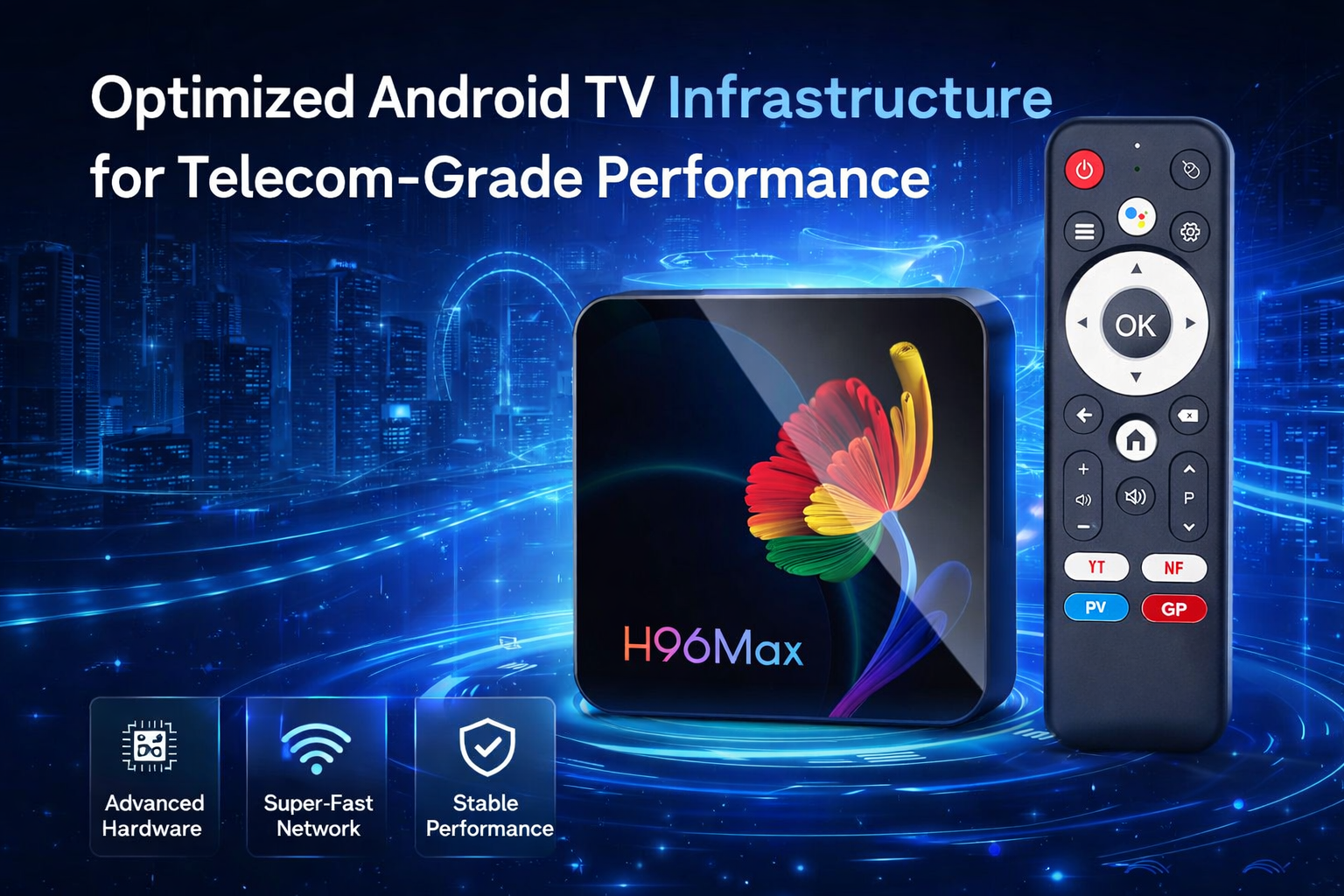
System Stability Architecture for Telecom‑Grade Android TV Devices in Europe
Across Europe, telecom operators are accelerating the deployment of IPTV and hybrid broadcast‑OTT platforms in order to compete with global streaming services and deliver flexible television experiences. Within this transformation, the Android TV Box for telecom operators Europe has emerged as one of the most important hardware endpoints in modern television infrastructure. Android‑based devices allow telecom providers to integrate streaming applications, cloud services, and personalized user interfaces while maintaining operational control over device fleets distributed across millions of households.
However, deploying an Android TV Box for telecom operators Europe requires telecom companies to consider far more than consumer device performance. IPTV set‑top boxes operate continuously and must deliver reliable performance under heavy streaming workloads, frequent application updates, and long lifecycle expectations that often exceed five years. If the underlying firmware architecture lacks stability, even small performance issues can escalate into widespread service disruptions when thousands of devices operate simultaneously.
Industry reports published by organizations such as Digital TV Europe and Omdia indicate that device instability remains one of the most common causes of IPTV service complaints. As a result, telecom operators evaluating an Android TV Box for telecom operators increasingly apply rigorous infrastructure‑level testing procedures similar to those used for other telecommunications equipment.
When assessing an Android IPTV box for telecom operators Europe, operators typically analyze firmware architecture, memory management, remote monitoring capability, hardware thermal performance, and long‑term software maintenance frameworks. These factors collectively determine whether a device platform can support reliable television services across large subscriber bases.
Continuous Operation and Firmware Reliability
The most important requirement for an Android TV Box for telecom operators Europe is the ability to maintain stable performance during continuous operation. IPTV devices rarely power off and may remain active for years while running streaming applications, middleware services, and background update processes.
Firmware architecture must therefore be optimized for long‑term stability. Memory management plays a particularly important role because poorly optimized applications or background services can gradually consume system resources over time. When memory leaks occur, devices may begin to experience slow interface response times, application crashes, or unexpected restarts.
To mitigate these risks, experienced Operator Android TV Box supplier Europe partners implement extensive firmware validation procedures. These tests often include multi‑week playback simulations, repeated application switching scenarios, and stress testing designed to replicate real subscriber usage conditions.
Through these validation processes, telecom operators can confirm that devices remain stable even under demanding workloads such as high‑definition streaming, background software updates, and simultaneous application execution.
Thermal Performance and Hardware Reliability
Hardware stability is another critical factor influencing IPTV device reliability. Continuous video decoding and network communication generate significant heat within compact set‑top box enclosures. If thermal design is insufficient, prolonged operation may lead to performance throttling or hardware degradation.
An effective Android TV Box solution for telecom operators should therefore incorporate efficient thermal management systems capable of dissipating heat while maintaining quiet operation suitable for residential environments.
Manufacturers often conduct environmental testing to evaluate device performance across a range of temperature conditions. These tests ensure that devices remain stable even in warm indoor environments where airflow may be limited.
Hardware reliability testing may also include long‑duration component stress tests designed to evaluate storage endurance, network interface stability, and power management behavior. These tests help confirm that the Android TV Box for telecom operators Europe platform can maintain reliable operation throughout its intended lifecycle.
Remote Monitoring and Device Diagnostics
As IPTV networks expand, telecom operators must maintain visibility into the performance of device fleets distributed across large geographic regions. A modern Android TV Box solution for telecom operators typically integrates remote monitoring tools that allow operators to analyze device health and system behavior in real time.
These platforms collect diagnostic information such as firmware versions, application crash logs, playback errors, and network performance indicators. By analyzing this data, operators can identify potential issues before they escalate into widespread service disruptions.
Research from ABI Research suggests that centralized monitoring platforms significantly reduce operational support costs while improving service reliability. Telecom companies deploying an Android TV Box for telecom operators Europe therefore increasingly require integrated device management frameworks capable of supporting large‑scale fleet monitoring.
Remote monitoring systems also enable operators to perform targeted troubleshooting when individual devices experience problems, reducing the need for costly field technician visits.
Certification and Security Architecture
Telecom operators operating within Europe must also ensure that IPTV devices comply with strict regulatory and security standards. Any Android TV Box for telecom operators Europe entering the European market must satisfy CE certification requirements as well as electromagnetic compatibility and environmental compliance directives.
Beyond regulatory compliance, IPTV devices must implement secure content protection technologies. Media companies require digital rights management frameworks such as Widevine and Microsoft PlayReady to prevent unauthorized content distribution.
Hardware security architecture may also include trusted execution environments and secure video decoding pipelines designed to protect premium content streams. Selecting an experienced IPTV set top box supplier Europe that understands these security requirements helps telecom operators avoid costly redesign processes during deployment.
Long‑Term Software Lifecycle Management
Because IPTV devices remain active for many years, long‑term software maintenance is essential for sustaining service reliability. Streaming ecosystems evolve continuously as new codecs, security patches, and application frameworks emerge.
A reliable OEM Android TV Box manufacturer for European telecom operators typically provides structured firmware maintenance programs that include periodic OTA updates, vulnerability patching, and compatibility testing for major streaming applications.
Without these maintenance frameworks, device fleets may become fragmented as different units operate on outdated firmware versions. Fragmentation increases cybersecurity risk and complicates technical support operations.
Telecom operators therefore evaluate OTA infrastructure and long‑term software support commitments carefully when selecting an Android TV Box solution for telecom operators in Europe. In many cases, vendors are expected to provide firmware maintenance for five years or longer.
Building Stable IPTV Device Infrastructure
Ultimately, the success of IPTV deployments across Europe depends heavily on the stability of the device platforms used to deliver television services. Selecting an Android TV Box for telecom operators Europe requires telecom companies to evaluate firmware reliability, hardware durability, monitoring capability, regulatory compliance, and lifecycle software maintenance.
Operators that invest in comprehensive technical evaluation processes are better positioned to deliver stable television services while minimizing operational disruptions.
Manufacturing Expertise for Telecom‑Grade Android TV Devices
H96 Max operates as a specialized Android TV device manufacturing platform supporting IPTV infrastructure projects worldwide. With mature production lines, strict quality control processes, and extensive experience in Android device architecture, H96 Max provides hardware platforms designed for telecom‑grade deployments.
Through stable firmware engineering, certified hardware design, and scalable manufacturing capacity, H96 Max works with telecom partners seeking reliable Android IPTV device infrastructure.
For telecom operators planning long‑term IPTV service expansion, collaborating with experienced manufacturing partners can significantly reduce deployment risk while ensuring consistent device performance.
Partner with H96 Max today to explore professional Android TV device platforms built for telecom‑scale IPTV environments.
READ MORE
Strategic Outlook for Android TV Infrastructure Among European Telecom Operators
Supply Chain Reliability Challenges for Android TV Infrastructure in European Telecom Deployments
Remote Device Management Architecture for Telecom Android TV Deployments in Europe
Security and DRM Architecture for Android TV Infrastructure in European Telecom Networks
Procurement Framework for European Telecom Operators Selecting Android TV Platforms
How European Telecom Operators Evaluate Android TV Device Architecture Before IPTV Deployment
Why Telecom Operators in Europe Fail Android TV Deployments and How to Avoid It
Quick Links

.png "Watch H96 Max Android TV Box reviews on our YouTube channel")

.png "Explore H96 Max product photos on Instagram")