.png "H96 Max Android TV Box video reviews and tutorials on YouTube")
.png "H96 Max Android TV Box photos and lifestyle shots on Instagram")



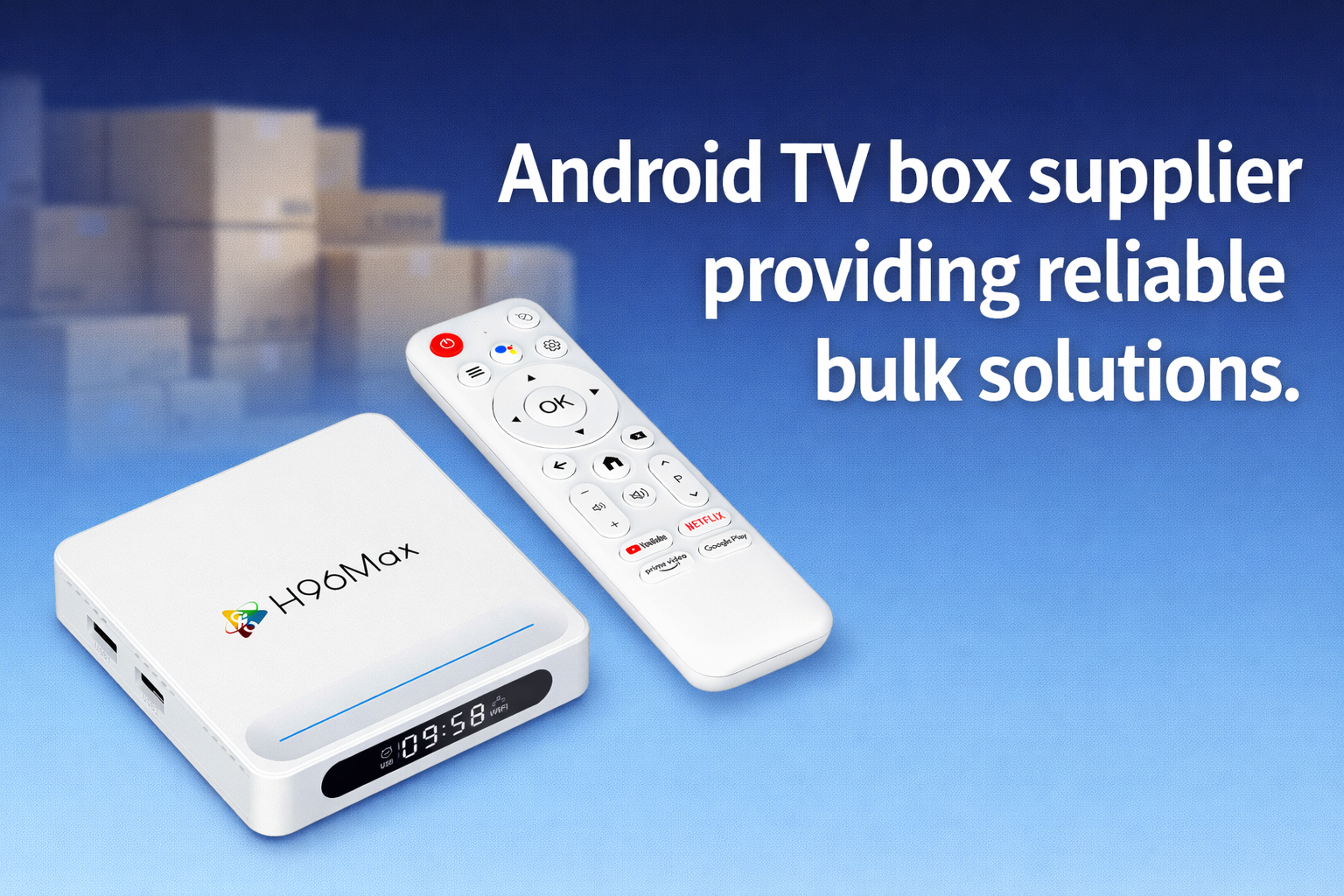
Inside the Systems That Protect Large‑Scale Android TV Box Quality
For distributors, IPTV operators, and brand owners, placing a large hardware order always involves risk. A batch of several thousand units can represent a significant investment, and even a small defect rate can translate into costly returns, customer dissatisfaction, and brand damage. This is why android tv box quality control has become a central concern when selecting a manufacturing partner. Understanding how reliable suppliers maintain product consistency across large batches is essential for buyers evaluating potential partners.
Industry research indicates that electronics hardware failures in mass production often originate not from a single defect but from weak process control during manufacturing. Small variations in components, assembly parameters, or testing procedures can multiply quickly when production scales. For this reason, leading manufacturers rely on structured quality management systems covering the entire android tv box manufacturing process, from component sourcing to final shipment inspection.
This article examines how professional suppliers maintain stable quality in large orders. By analyzing the real factory workflow—including BOM traceability, incoming inspection, SMT process control, full functional testing, burn‑in reliability validation, and AQL shipment inspection—we can understand how modern factories ensure reliability at scale.
Why Bulk Orders Require Systematic Quality Management
In small production runs, manual inspection and limited testing might appear sufficient. However, when production volume reaches thousands or tens of thousands of units, quality control must become systematic. Large-scale electronics manufacturing introduces several challenges: component variation, assembly tolerance differences, environmental conditions during production, and potential firmware inconsistencies.
To address these risks, experienced factories build structured android tv box factory quality control frameworks. These frameworks combine documentation, traceability systems, automated inspection, and standardized testing procedures. Instead of relying on random checks, quality assurance becomes integrated into every stage of production.
This approach is also closely linked to android tv box supplier quality assurance. A supplier capable of guaranteeing consistent performance across large shipments must demonstrate process stability, supplier management, and clear traceability mechanisms.
BOM Locking and Component Traceability
The first step in maintaining reliable android tv box quality control begins before production even starts. Manufacturers create a locked Bill of Materials (BOM) that defines every component used in the product, including chipsets, memory modules, Wi‑Fi modules, capacitors, and connectors.
Once the BOM is approved, each component is associated with a traceability system. Batch numbers, supplier information, and arrival dates are recorded within the factory management system. This ensures that if any issue occurs later, the production batch can be traced back to the exact component lot used.
Traceability is especially important in consumer electronics. A single component supplier change can affect signal stability, power consumption, or heat dissipation. Locking the BOM helps maintain consistent hardware performance throughout the entire quality control process for android tv box manufacturing.
IQC Incoming Material Inspection
Once components arrive at the factory, they do not immediately enter production. Instead, they undergo IQC—Incoming Quality Control inspection. This step verifies whether the supplied materials match technical specifications and performance requirements.
IQC inspection typically includes visual checks, dimensional measurement, electrical parameter testing, and sometimes functional verification. Memory chips may be tested for capacity accuracy, Wi‑Fi modules may be checked for signal stability, and power components may be evaluated for voltage tolerance.
Through IQC inspection, factories prevent defective components from entering the assembly line. This stage represents an essential part of android tv box manufacturer quality control because preventing defects early is far more efficient than repairing finished products later.
SMT Production Process Control
Surface Mount Technology (SMT) assembly is one of the most critical stages of the android tv box manufacturing process. During this stage, electronic components are mounted onto printed circuit boards using automated machines.
Even minor variations in solder paste thickness, reflow oven temperature, or placement accuracy can affect circuit reliability. Therefore, factories implement strict process monitoring systems. Automated Optical Inspection (AOI) machines scan assembled boards to detect solder bridges, missing components, or alignment errors.
Maintaining tight SMT control ensures stable hardware assembly and supports consistent android tv box production testing results later in the workflow.
Full Device Functional Testing
After PCB assembly and final device assembly are completed, each unit undergoes functional testing. This stage validates whether the device operates according to its design specifications.
Typical testing procedures include system boot verification, memory performance checks, Wi‑Fi and Bluetooth connectivity testing, HDMI output verification, USB port detection, and software stability testing. These procedures ensure that the final product meets functional requirements.
Functional validation is a key element of android tv box quality control because it ensures that every device leaving the assembly line operates correctly.
Burn‑in Testing for Reliability Validation
While functional tests confirm that devices work initially, reliability testing evaluates long‑term stability. One widely used method is burn‑in testing.
During burn‑in testing, devices operate continuously for extended periods—often 12 to 48 hours—under controlled environmental conditions. This process helps expose latent defects related to heat dissipation, component instability, or power supply fluctuations.
Burn‑in testing strengthens the overall android tv box quality control framework because it identifies failures that may not appear during short functional tests.
AQL Sampling and Pre‑Shipment Inspection
Before shipment, factories conduct final inspection based on the Acceptable Quality Limit (AQL) sampling standard widely used in global manufacturing.
Instead of checking every unit again, inspectors select samples from each batch and perform detailed evaluations covering packaging quality, cosmetic condition, accessory completeness, labeling accuracy, and functional verification.
AQL inspection represents the final verification stage of android tv box factory quality control. If the sample inspection fails, the batch may undergo re‑inspection or corrective actions before shipment.
Why Structured Quality Systems Matter for Buyers
For buyers placing bulk orders, understanding these procedures answers an important question: how android tv box suppliers ensure product quality. Reliable factories do not rely on isolated inspections; instead, they build integrated quality management systems covering procurement, assembly, testing, and shipment.
Industry research indicates that electronics manufacturers with structured process control systems achieve significantly lower defect rates compared with factories that depend mainly on final inspection. By controlling quality throughout the production cycle, suppliers reduce risk and maintain consistency across large shipments.
This systematic approach defines professional android tv box supplier quality assurance. Buyers evaluating potential partners should examine whether the supplier provides traceability documentation, structured testing procedures, and clear inspection standards.
Quality Control as a Competitive Advantage
In the global streaming device market, reliability increasingly determines long‑term partnerships. As content platforms expand and IPTV ecosystems grow, operators and distributors require hardware that performs consistently across large deployments.
Because of this demand, android tv box quality control has evolved from a manufacturing requirement into a competitive advantage. Suppliers with advanced production management systems are better positioned to support large distribution networks, international markets, and enterprise deployments.
Factories that maintain strong android tv box manufacturer quality control practices demonstrate their ability to deliver stable hardware performance at scale—an essential requirement for professional buyers.
For businesses seeking a reliable manufacturing partner with proven production systems and stable quality management, consider collaborating with a specialized factory partner. Partner with H96 Max Android TV Box Manufacturer today to explore large‑scale production supported by professional quality control infrastructure.
READ MORE
How Bulk Supply Chains Help Reduce Android TV Box Procurement Costs?
How to Evaluate the Production Capacity of an Android TV Box Bulk Supplier?
How Android TV Box Bulk Suppliers Support OEM and ODM Customization?
What Risks Should You Consider When Sourcing Android TV Boxes in Bulk for the First Time?
Why Android TV Box Wholesale Prices Vary: 5 Key Supply Chain Factors
Why More Global Brands Are Partnering with Android TV Box Bulk Suppliers for Long-Term Growth
Android TV Box Wholesale Supplier vs Small Seller: Where Price and Stability Really Differ
7 Critical Questions to Ask Before Placing an Android TV Box Bulk Order
Quick Links

.png "Watch H96 Max Android TV Box reviews on our YouTube channel")

.png "Explore H96 Max product photos on Instagram")