.png "H96 Max Android TV Box video reviews and tutorials on YouTube")
.png "H96 Max Android TV Box photos and lifestyle shots on Instagram")



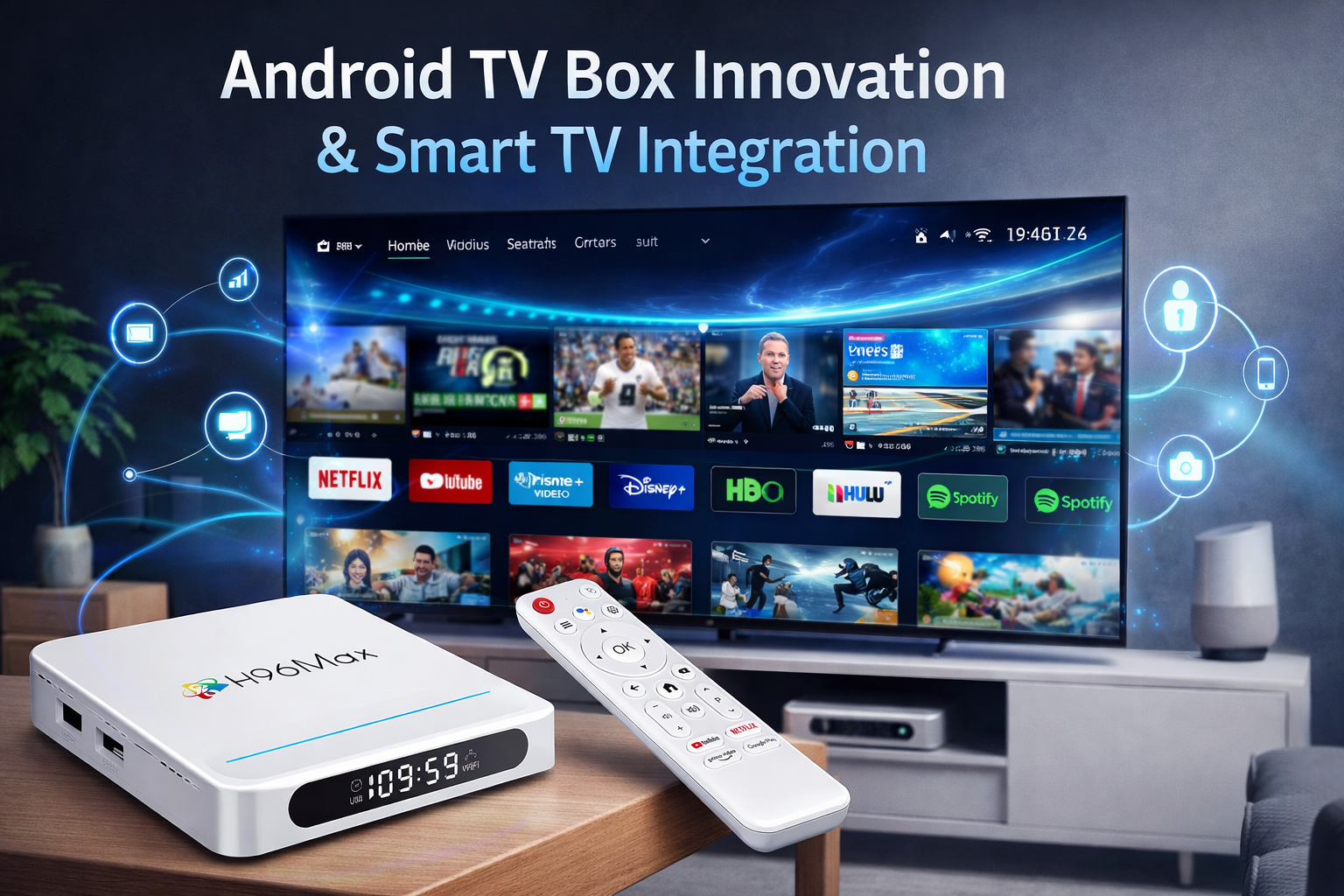
Structural Competition Between Android TV Box and Built-in Smart TV Ecosystems
The competitive landscape surrounding Android TV Box vs Smart TV market share 2026 is evolving into a structural industry shift rather than a simple product rivalry. As global streaming consumption accelerates and hardware cycles fragment, stakeholders are evaluating which ecosystem—detachable Android TV boxes or integrated Smart TV operating systems—will define the next phase of connected home entertainment. Understanding this transformation requires examining penetration rates, lifecycle economics, user experience sustainability, software governance, and operator partnership dynamics.
Recent industry reports tracking Global TV streaming device industry trends indicate that while Smart TVs dominate new television shipments, detachable streaming devices maintain strong active usage growth. This divergence explains why Android TV Box vs Smart TV comparison metrics vary significantly depending on whether analysts focus on shipments, installed base, or OTT viewing hours.
Market Penetration and Installed Base Momentum
According to multiple Smart TV market share forecast 2026 projections, smart-enabled televisions now represent over two-thirds of global TV shipments. Major brands continue embedding proprietary operating systems, strengthening retail dominance. However, penetration at the shipment level does not guarantee sustained ecosystem engagement.
The Android TV Box market share 2026 outlook presents a complementary narrative. In emerging markets across Southeast Asia, Africa, Latin America, and parts of Eastern Europe, millions of households continue using functional non-smart LCD or early-generation Smart TVs. Instead of replacing the display, consumers attach Android TV boxes to access updated streaming platforms. This layered adoption model supports ongoing Streaming device market growth 2026 even when television replacement cycles slow.
As a result, Android TV Box vs Smart TV market share 2026 competition should be viewed as coexistence driven by different upgrade behaviors rather than a zero-sum replacement battle.
User Experience and Performance Sustainability
User experience remains a decisive differentiator in the Future of Android TV Box vs Smart TV industry 2026-2028. Smart TVs integrate fixed system-on-chip configurations that are rarely upgraded post-purchase. As streaming platforms transition toward heavier applications, AI-driven recommendations, 4K/8K rendering, and HDR processing, hardware limitations gradually surface.
Android TV boxes offer modular flexibility. Consumers and institutional buyers can upgrade RAM, storage, and chipsets independently of the display panel. This separation between compute and screen enables faster adaptation to evolving OTT requirements. Media analysts have observed that detachable streaming hardware often sustains smoother long-term responsiveness compared to embedded TV systems with stagnant firmware development.
Within the Android TV Box vs Smart TV market share 2026 debate, performance durability directly influences retention rates. Devices that lag in app compatibility or interface fluidity experience reduced engagement regardless of brand strength.
System Update Cycles and Software Governance
System longevity significantly impacts ecosystem trust. Many Smart TV manufacturers limit major OS upgrades after two to three years, prioritizing new hardware releases. This short update window affects security patches, streaming app optimization, and regulatory compliance.
By contrast, competitive Android TV box vendors frequently deliver firmware updates to align with Google certification requirements and evolving Android TV standards. In markets where regulatory frameworks change rapidly, this agility enhances relevance. The Android TV Box market share 2026 trajectory benefits from such adaptive software maintenance, particularly among telecom and hospitality buyers requiring longer service continuity.
From a lifecycle perspective, replacing a low-cost streaming box due to outdated software is substantially more economical than replacing an entire Smart TV. This economic logic underpins projections tied to Streaming device market growth 2026.
Content Control and Ecosystem Flexibility
Another key factor in Android TV Box vs Smart TV comparison involves content governance. Smart TV manufacturers increasingly develop proprietary content gateways, app stores, and advertising layers to capture recurring revenue. While vertical integration enhances monetization, it can limit flexibility for regional operators or independent content aggregators.
Android TV boxes, especially within OEM and ODM collaboration frameworks, provide customizable middleware environments. Operators can preload IPTV services, integrate regional OTT platforms, and manage branding without redesigning display hardware. This adaptability becomes critical in markets with complex licensing requirements.
Consequently, Android TV Box vs Smart TV market share 2026 leadership may hinge not only on hardware sales but also on ecosystem openness and partnership adaptability.
Hardware Replacement Economics and Capital Efficiency
Capital expenditure analysis reveals structural differences. Smart TVs bundle display panels and compute hardware into a single asset. When performance declines, full replacement becomes necessary. For commercial buyers—such as hotels, schools, or healthcare networks—this integrated replacement model significantly increases total cost of ownership.
Android TV boxes decouple display longevity from processing upgrades. Institutions can refresh compute modules at lower cost while retaining existing screens. Procurement studies influencing Android TV Box market share 2026 estimates highlight this modular efficiency as a compelling advantage.
In regions with price-sensitive consumers, the affordability of incremental upgrades supports resilience in Streaming device market growth 2026 even amid macroeconomic uncertainty.
Operator Partnerships and Distribution Channels
Telecom operators are central actors in the Future of Android TV Box vs Smart TV industry 2026-2028. In North America and Western Europe, Smart TVs often coexist with operator-issued streaming devices. However, in emerging economies, broadband providers frequently prefer branded Android TV box deployments due to faster rollout cycles and stronger interface control.
Bundled subscription models accelerate adoption. When Android TV boxes are integrated into broadband packages, household penetration expands rapidly. This distribution advantage influences Android TV Box vs Smart TV market share 2026 calculations beyond retail sales figures alone.
Meanwhile, Smart TV brands continue strengthening direct-to-consumer retail ecosystems, leveraging display innovation and voice assistant integration to protect shipment leadership.
Emerging Markets and Strategic Outlook
Will Android TV Box replace Smart TV in emerging markets? Evidence suggests supplementation rather than full replacement. As display panels commoditize and remain functional for extended periods, consumers increasingly separate visual hardware from streaming intelligence.
Android TV Box market share 2026 growth appears strongest where income levels favor incremental upgrades over complete television replacement. Conversely, premium urban markets continue favoring Smart TVs supported by advanced display technologies and global brand ecosystems.
Ultimately, the Android TV Box vs Smart TV market share 2026 trajectory reflects regional diversity rather than universal dominance. Stakeholders evaluating long-term positioning must consider infrastructure maturity, regulatory environments, content localization, and operator influence.
Looking toward 2026–2028, competitive equilibrium appears more probable than displacement. Smart TV manufacturers are investing in improved chipsets and extended support commitments. Android TV box suppliers are advancing AI upscaling, voice interaction, and certification compliance. The ecosystem that best balances performance sustainability, upgrade flexibility, and partnership adaptability will capture disproportionate value.
For distributors, operators, and brand owners navigating this transition, strategic sourcing decisions become critical. As an experienced H96 Max source factory specializing in OEM and ODM Android TV box production, we welcome collaboration discussions with partners seeking scalable manufacturing, firmware stability, and long-term ecosystem alignment.
READ MORE
Three Certain Structural Trends in the Android TV Box Industry in 2026
Are Emerging Markets Still a Strategic Opportunity for Android TV Boxes?
Overseas Home Entertainment Device Trends in 2026: Where Does the Android TV Box Rank?
North America vs Europe vs Latin America: A Comparative Analysis of Android TV Box Market Maturity
From Fire TV to Android Box: The Shifting Landscape of Global Streaming Hardware
Overseas Smart TV Box Market in 2026: Who Is Being Threatened by Substitutes?
How Many More Years Can Android TV Boxes Thrive? An Industry Lifecycle Analysis for 2026–2028
Global Android TV Box Demand Shifts in 2026: Which Countries Are Still Growing?
Overseas Android TV Box Market Trends in 2026: Where Is the Next Wave of Growth?
Quick Links

.png "Watch H96 Max Android TV Box reviews on our YouTube channel")

.png "Explore H96 Max product photos on Instagram")