.png "H96 Max Android TV Box video reviews and tutorials on YouTube")
.png "H96 Max Android TV Box photos and lifestyle shots on Instagram")



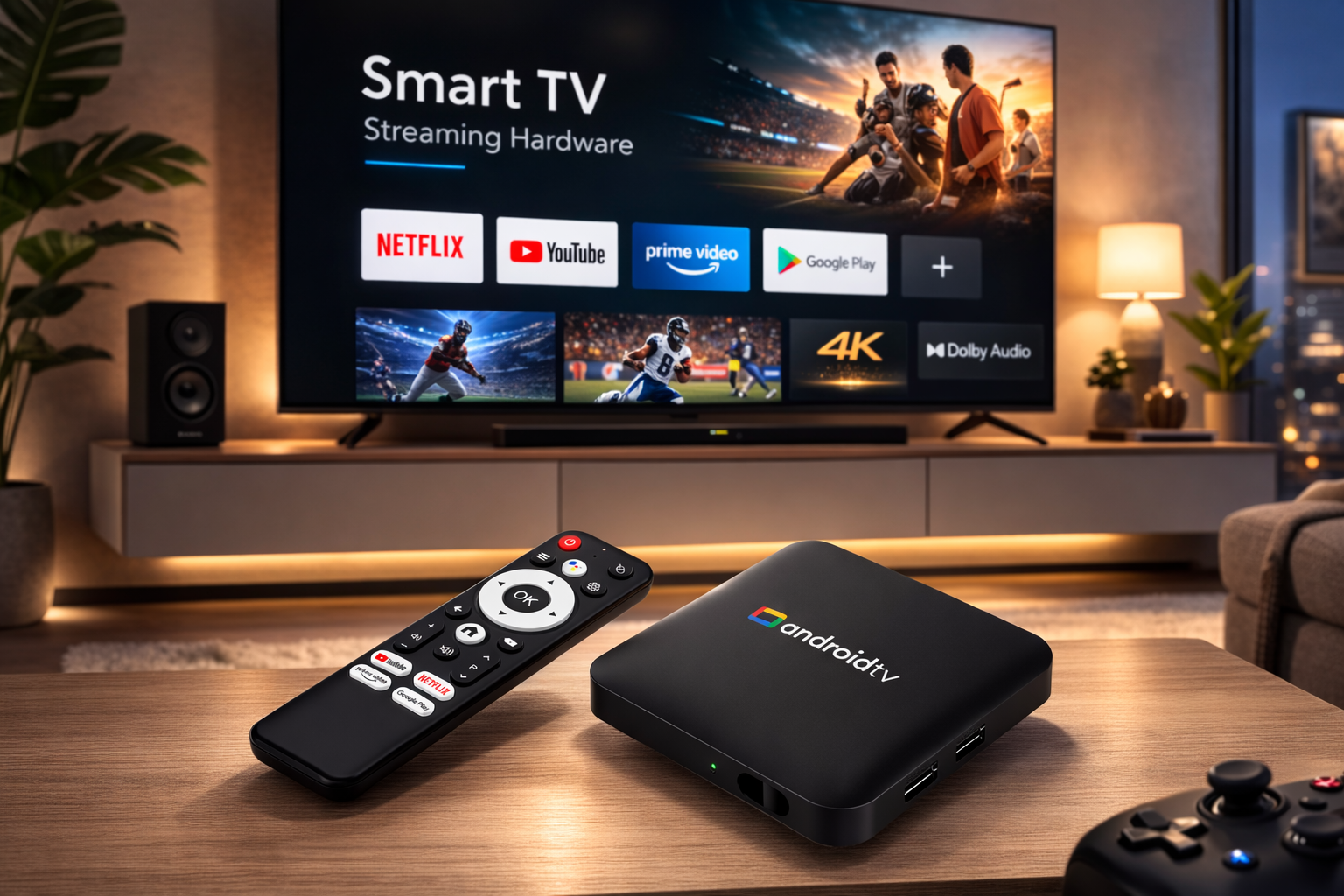
From Fire TV to Android Box: Global Streaming Hardware Power Reshuffle
For any Android TV Box Manufacturer, the global streaming device industry is entering a structural transformation phase. Over the last decade, Amazon Fire TV, Roku, and Apple TV established strong footholds in North America and parts of Europe, shaping consumer expectations and platform economics. However, as OTT penetration deepens worldwide and telecom operators expand bundled services, Android-based ecosystems are rapidly redefining how brands evaluate control, scalability, and long-term profitability.
Industry data from Statista and Strategy Analytics shows that global OTT Streaming Device shipments continue to grow steadily, yet platform power is increasingly consolidated around ecosystem owners rather than hardware brands. Roku dominates U.S. smart TV OS share, Amazon leverages Prime integration to strengthen Fire TV adoption, and Apple TV maintains premium positioning within its closed ecosystem. Meanwhile, Android TV and Google TV deployments are accelerating across Asia-Pacific, Latin America, Eastern Europe, and Africa, driven largely by operator partnerships and flexible OEM manufacturing models.
Ecosystem Governance and Strategic Control
The primary difference between Fire TV, Roku, Apple TV, and Android TV lies in ecosystem governance. Fire TV operates under Amazon’s tightly managed commercial structure. User interface exposure, advertising inventory, and content prioritization are controlled at the platform level. Roku follows a similar model, monetizing through advertising distribution and revenue-sharing agreements with streaming services. Apple TV is even more vertically integrated, linking hardware, software, and subscription services within Apple’s closed environment.
Android TV, by contrast, offers a more adaptable architecture. While Google certification requirements apply in certain deployments, brands working with an experienced Android TV Box Supplier can implement deeper customization across firmware, launcher interface, and service integration layers. This flexibility explains the growing industry discussion around Why brands choose Android TV Box over Fire TV. For many companies, ecosystem autonomy now outweighs simple hardware margin considerations.
Revenue Ownership and Monetization Models
Fire TV and Roku are designed primarily to strengthen platform-driven advertising and subscription ecosystems. Hardware partners benefit from distribution reach but often sacrifice control over recurring revenue streams. Apple TV reinforces Apple’s services portfolio, increasing retention within its proprietary environment.
Android-based solutions allow operators and brands to integrate proprietary IPTV platforms, regional streaming services, or customized advertising frameworks. An OTT Streaming Device deployed under Android architecture can become a direct gateway to subscription revenue rather than merely a distribution terminal. This distinction is especially significant in emerging markets, where broadband providers bundle connectivity with localized content platforms.
Customization, Branding, and Private Label Strategy
Brand identity plays a central role in long-term hardware strategy. Fire TV and Roku devices offer limited white-label flexibility, and platform branding typically remains dominant. Apple TV does not offer OEM branding pathways at all.
Through OEM Android TV Box programs, companies can tailor boot animations, system UI, remote control mapping, and pre-installed applications. A Private Label Android TV Box allows distributors and telecom operators to maintain full brand ownership while aligning device functionality with service strategy. For companies focused on building proprietary ecosystems rather than short-term resale volume, Android-based customization offers structural advantages.
Hardware Scalability and Performance Tiers
Hardware diversification is another defining factor in the platform shift. Apple TV remains concentrated in the premium segment. Fire TV and Roku provide tiered models but maintain strict chipset and system alignment within platform constraints.
An experienced Android TV Box Manufacturer can develop multiple configuration tiers—from entry-level devices for price-sensitive markets to advanced 4K Android TV Box solutions with AI upscaling and enhanced codec compatibility. According to IDC, cost-performance optimization remains a decisive factor in Southeast Asia, Latin America, and Africa, regions where Android deployments are expanding faster than proprietary alternatives.
Regional Compliance and Manufacturing Agility
Regional regulations increasingly shape hardware deployment decisions. Data privacy policies, content distribution rules, and telecom certification requirements vary significantly across markets. Proprietary ecosystems may face structural limitations when adapting to localized compliance frameworks.
Working with an OEM Android TV Box Manufacturer in China provides manufacturing agility and faster customization cycles. Firmware localization, middleware integration, and operator-specific technical adjustments can be implemented more efficiently compared to rigid platform-controlled ecosystems.
Software Lifecycle and Upgrade Strategy
Software sustainability is a growing concern for distributors and operators. Closed ecosystems retain authority over firmware updates and UI changes, potentially affecting third-party revenue models or service visibility.
Under Android frameworks, collaboration with a reliable Android TV Box Manufacturer enables roadmap alignment between chipset evolution and service deployment cycles. Long-term firmware support, security patch management, and performance optimization can be structured to support multi-year device lifespans.
Operator Partnerships and Market Expansion
Telecom operators represent one of the fastest-growing segments of the streaming hardware ecosystem. Bundled broadband and IPTV services require multicast optimization, UI customization, and billing integration flexibility. These requirements are often more compatible with Android-based frameworks than with proprietary systems.
Digital TV Research projects continued OTT subscriber growth across Asia-Pacific and Africa, outpacing mature North American markets. In these regions, Android-based operator deployments are expanding steadily, supported by flexible supply chains and scalable manufacturing partnerships.
Strategic Outlook for Global Brands
The transition from Fire TV dominance toward broader Android adoption is not about immediate replacement but strategic diversification. Mature markets will continue supporting proprietary ecosystems, while high-growth regions increasingly favor adaptable frameworks.
For brands evaluating expansion, the central question is ecosystem leverage. Are they building value within someone else’s platform, or establishing long-term control over data, branding, and monetization infrastructure? Increasingly, companies seeking independence turn toward Android partnerships supported by experienced manufacturing teams.
As global competition intensifies, platform flexibility, cost scalability, and ecosystem ownership will define resilience. Organizations exploring new hardware strategies or re-evaluating supply chain partnerships may benefit from engaging directly with a professional Android TV Box Manufacturer capable of supporting OEM, customization, and long-term product evolution.
If your company is analyzing platform diversification or considering deeper control over streaming hardware strategy, H96 Max, as a dedicated Android TV Box Manufacturer, welcomes professional dialogue and collaborative exploration aligned with long-term market growth.
READ MORE
Three Certain Structural Trends in the Android TV Box Industry in 2026
Are Emerging Markets Still a Strategic Opportunity for Android TV Boxes?
Overseas Home Entertainment Device Trends in 2026: Where Does the Android TV Box Rank?
North America vs Europe vs Latin America: A Comparative Analysis of Android TV Box Market Maturity
2026 Android TV Box vs Built-in Smart TV Systems: Who Will Lead the Market in the Next Three Years?
Overseas Smart TV Box Market in 2026: Who Is Being Threatened by Substitutes?
How Many More Years Can Android TV Boxes Thrive? An Industry Lifecycle Analysis for 2026–2028
Global Android TV Box Demand Shifts in 2026: Which Countries Are Still Growing?
Overseas Android TV Box Market Trends in 2026: Where Is the Next Wave of Growth?
Quick Links

.png "Watch H96 Max Android TV Box reviews on our YouTube channel")

.png "Explore H96 Max product photos on Instagram")