.png "H96 Max Android TV Box video reviews and tutorials on YouTube")
.png "H96 Max Android TV Box photos and lifestyle shots on Instagram")



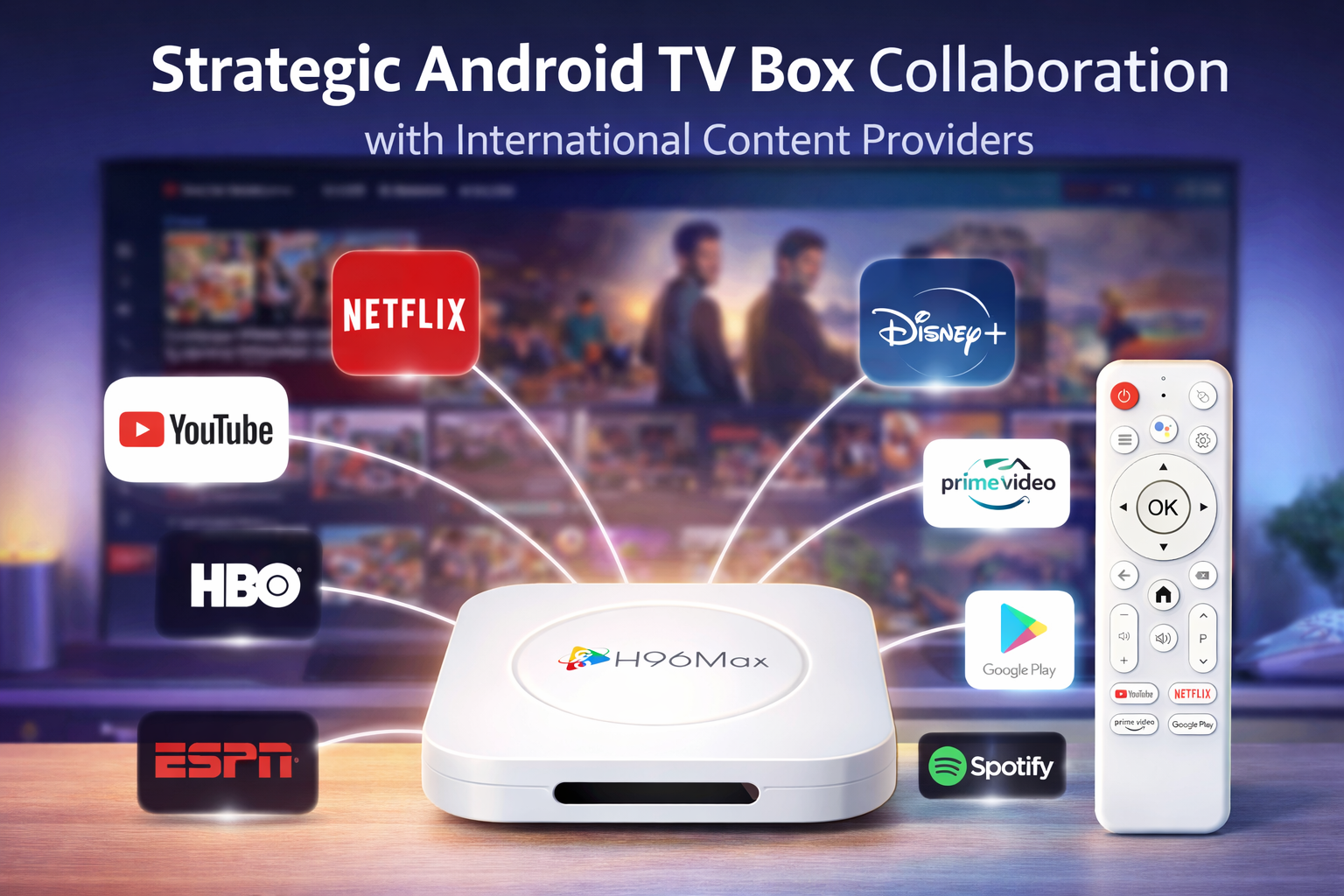
Global Opportunities in Android TV Box and Content Partnership: A New Wave of Growth?
Android TV Box has rapidly evolved from a niche tech device to a mainstream solution in the global smart home ecosystem. As traditional television viewership declines and on-demand streaming surges, businesses are looking at content partnership models as a strategic avenue to unlock new growth opportunities. With Android TV Box at the center of the living room, the integration of content partnerships is now seen by industry insiders as a critical factor in capturing new overseas markets, particularly as competition intensifies among Android TV Box manufacturer, Android TV Box factory, and Android TV Box supplier networks. This article explores the pain points, international demand variations, industry trends, and expert-backed data that define this next phase of global expansion.
1. Pain Points and Customer Conversion Triggers
One of the core pain points in the OTT and IPTV market is fragmentation—both in content distribution and hardware platforms. Consumers demand seamless, high-quality streaming experiences, but inconsistent software ecosystems, lack of certified applications, and regional content licensing issues often create friction. For Android TV Box manufacturers, these barriers slow down adoption and lower customer satisfaction rates. According to a 2024 Statista report, over 62% of smart TV and set-top box users cite “inconsistent app availability” as a major frustration.
Content partnership strategies, especially those that tightly integrate local and global OTT services, can address these challenges. The Android TV Box with content partnership model enables device makers and service providers to create bundled offerings, exclusive content, and optimized user interfaces that streamline the user experience. This approach significantly increases engagement rates, reduces churn, and drives repeat purchases.
2. Trends Shaping the Android TV Box Global Market
The Android TV Box market is being reshaped by a few key trends:
Shift from Hardware to Content Integration: While hardware innovation remains important, leading Android TV Box factory brands are increasingly investing in software and content ecosystems. In 2023, more than 40% of new Android TV Box launches globally featured some form of pre-integrated OTT content.
Rise of Niche Content and Regional Partnerships: Markets such as Southeast Asia and Africa are driving demand for boxes tailored to local languages, regional OTT services, and even local regulatory standards. As reported by Digital TV Research, regional partnerships led to a 29% increase in new subscriptions in emerging markets last year.
Smart Home and Cross-Device Integration: As consumers build multi-device environments, Android TV Boxes with advanced voice controls, smart home integration, and IoT compatibility are gaining traction. “The smart home hub of the future will be defined by content accessibility and seamless device interoperability,” according to a 2024 Frost & Sullivan whitepaper.
3. Regional Demand Differences and Market Insights
North America: In North America, premium content and app compatibility drive purchase decisions. Users are more likely to buy from an Android TV Box supplier with certified Netflix, Disney+, and Hulu support. Partnerships with major streaming providers are crucial for differentiation. According to eMarketer, 71% of Android TV Box users in the US rate “content choice” as their top buying factor.
Europe: European customers are highly sensitive to price and regulatory compliance (e.g., GDPR). Demand is growing for Android TV Box OEM models that meet both pan-European content licensing and local language requirements. The European Broadcasting Union notes a 22% year-over-year increase in Android TV Box shipments that feature localized OTT content partnerships.
Asia-Pacific: The Asia-Pacific region is the fastest-growing Android TV Box market globally, led by China, India, and Southeast Asia. Local OTT providers, such as Hotstar (India) and iQIYI (China), are forming direct content partnerships with manufacturers, driving rapid hardware adoption. In China, over 60% of boxes sold in 2024 included exclusive IPTV content provider deals, according to Niko Partners.
Middle East & Africa: Here, Android TV Box ODM companies are focusing on affordability, satellite integration, and multi-language support. Content partnership with local news and sports providers is a key selling point. Frost & Sullivan estimates the region’s Android TV Box market will see a 34% CAGR through 2028, fueled by “bundled OTT content integration.”
Latin America: In this region, value and flexibility matter most. Consumers prefer Android TV Box solutions that can be customized for both IPTV and OTT content integration. According to Dataxis, the number of Latin American households using Android TV Boxes grew by 19% in 2023, with local content partnerships playing a decisive role.
4. The Strategic Role of Media and Authority Data
Authoritative data and insights from respected media amplify the credibility of content partnership strategies. For example, a 2023 Deloitte Digital Media Survey found that 68% of global consumers consider exclusive content partnerships as a key differentiator when selecting smart TV devices. The BBC Technology Review highlights that, in the UK, Android TV Box solutions that integrate with both free-to-air and paid OTT providers see “40% higher retention rates” compared to standalone hardware models. IDC’s 2024 report forecasts global Android TV Box revenue to surpass $6.2 billion by 2026, with content-centric models driving the majority of this growth.
Leading trade publications, such as Variety and TechCrunch, have also emphasized the rapid convergence of content, software, and hardware in the smart TV space. In their recent coverage, TechCrunch noted: “Android TV Box manufacturers who embrace end-to-end content integration are outperforming pure hardware competitors by more than 30% in user retention.”
5. Future Global Demand and Feature Expectations (2024–2029)
The next five years will see continued evolution in the global Android TV Box landscape. Key forecasts include:
Worldwide Android TV Box shipments are projected to grow at a 17% CAGR through 2029 (Statista, 2024).
Demand will shift toward feature-rich boxes supporting voice control, AI recommendations, and smart home functions.
Cross-device and multi-screen streaming, powered by content partnership models, will become standard in most developed and emerging markets.
OEM and ODM companies will increasingly offer custom Android TV Box solutions for niche markets, with flexible content partnership APIs and integration support.
By 2029, more than 75% of new Android TV Boxes sold worldwide will feature pre-integrated partnerships with at least one major IPTV content provider or OTT platform.
As this landscape shifts, the companies that succeed will be those who can combine high-quality hardware with seamless content integration and responsive service models. For potential partners, investors, and decision-makers, the message is clear: the next phase of global Android TV Box expansion will be defined by the depth and quality of content partnerships, regional adaptability, and forward-looking feature development. Companies who act now to build these ecosystems will be best positioned for success as global demand surges and customer expectations rise.
READ MORE
Android TV Box Market vs Smart TV Market: Competition Landscape Analysis 2026
2026 OTT Device Market Outlook: Will Android TV Box Be Obsolete?
2026 Global TV Box Market Demand: Which Countries Are Still Growing?
Can the Android TV Box Market Still Thrive in 2026? Real Market Data and Profit Analysis
2026 Overseas Android TV Box Market Trends: A Comprehensive Risk and Opportunity Review
Will Fire TV and Roku Push Android TV Box Out of the Low-End Market?
White Label Android TV Box vs Private Mold Customization: Which Is Better for Overseas Clients?
Is Android TV Box Manufacturing Still Profitable in 2026 or Is the Real Value in Solutions?
Quick Links

.png "Watch H96 Max Android TV Box reviews on our YouTube channel")

.png "Explore H96 Max product photos on Instagram")