.png "H96 Max Android TV Box video reviews and tutorials on YouTube")
.png "H96 Max Android TV Box photos and lifestyle shots on Instagram")



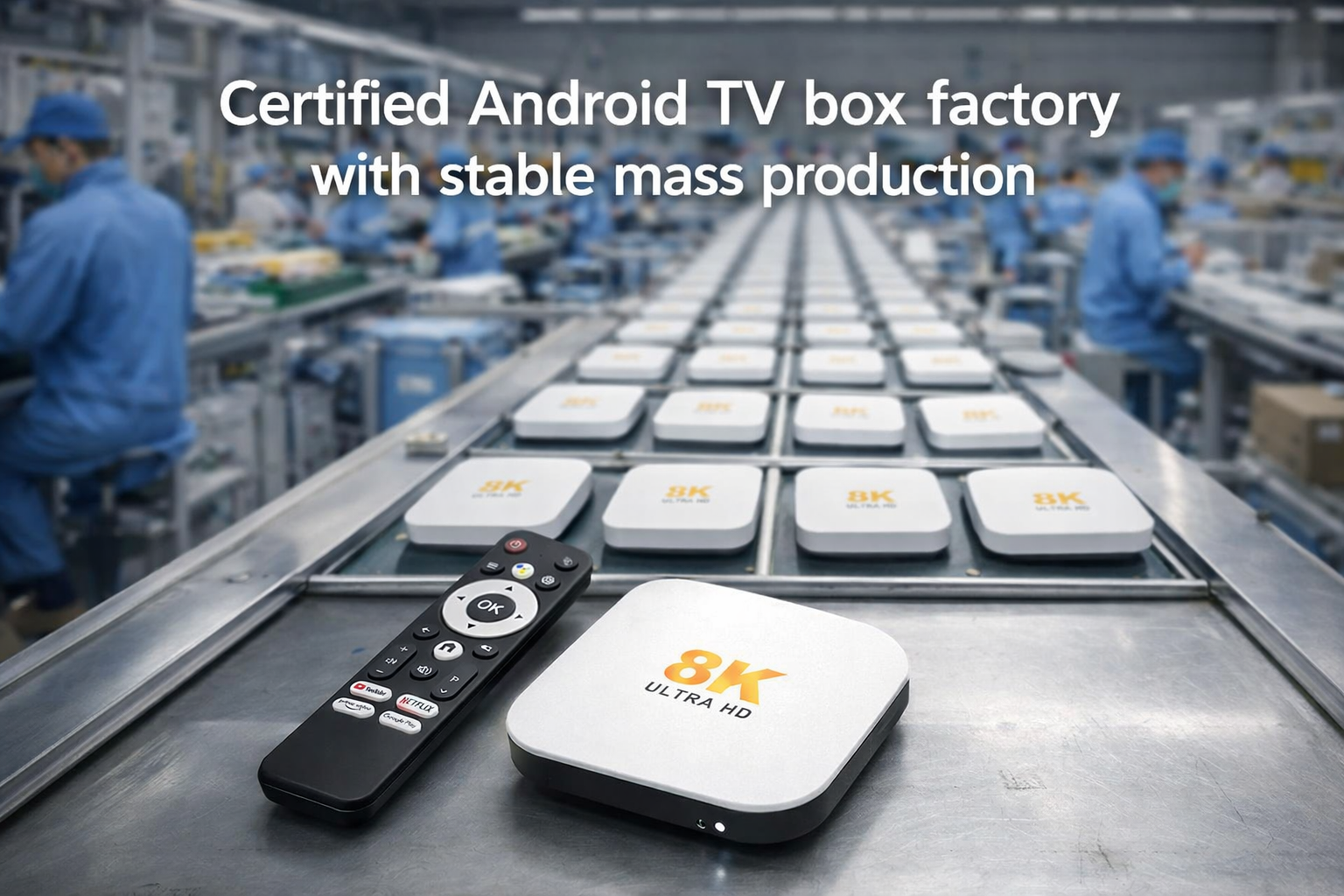
How Do Android TV Box Factories Ensure Stable Quality in Bulk Orders?
Bulk Android TV Box Production is a complex manufacturing discipline that demands far more than simple assembly capacity. When international buyers place large-volume orders, the real concern is not whether a factory can produce thousands of units, but whether every unit performs consistently after shipping. Industry reports from global consumer electronics associations show that product instability in mass production is one of the leading causes of return rates and brand damage. Therefore, professional manufacturers design layered control systems that eliminate variation at every stage of production.
Understanding the Root Causes of Quality Instability
Quality fluctuation in electronics manufacturing typically originates from three sources: component inconsistency, process deviation, and insufficient verification. Even minor variations in chipset batches, memory suppliers, or power management ICs can influence performance stability. Without a structured Android TV Box quality control process, these variations multiply during scale expansion. This is why experienced buyers increasingly evaluate factories based on system strength rather than price alone.
To answer the question How to ensure stable quality in bulk Android TV Box production, one must analyze the factory’s internal management framework. Stability is engineered through prevention, monitoring, and verification rather than post-production repair.
Supplier Qualification and Incoming Quality Control
Stable Bulk Android TV Box Production begins with disciplined supplier selection. Certified factories implement strict vendor audits covering material consistency, production capacity, and traceability systems. Critical components undergo Incoming Quality Control inspections including electrical parameter testing, appearance inspection, and batch coding. This first barrier prevents defective materials from entering the OEM Android TV Box production line.
International standards such as ISO 9001 emphasize process documentation and traceability. Factories that follow these standards reduce material-related risks significantly before mass assembly even begins.
SMT Control and Android TV Box PCB Testing
Surface Mount Technology is the technical backbone of Bulk Android TV Box Production. Automated pick-and-place machines must operate within calibrated tolerances. Reflow temperature curves are precisely controlled to prevent cold solder joints or overheating damage. Automated Optical Inspection systems check alignment accuracy and solder integrity.
After SMT, comprehensive Android TV Box PCB testing validates signal output, voltage stability, HDMI transmission, and wireless communication performance. Leading factories conduct 100 percent functional motherboard testing instead of random sampling. According to IPC reliability data, thorough PCB validation dramatically reduces early-life electronic failures.
Structured OEM Android TV Box Production Line Management
Once motherboards pass inspection, they enter a standardized OEM Android TV Box production line. Each workstation follows detailed Standard Operating Procedures covering screw torque, heat sink placement, antenna routing, and ESD protection. Barcode systems assign traceable serial numbers to every device, enabling full production history tracking.
Process engineers monitor yield rates through Statistical Process Control charts. When data trends move beyond control limits, immediate corrective action is triggered. This proactive approach stabilizes Bulk Android TV Box Production even as order quantities increase.
Firmware Management and Functional Verification
Hardware consistency alone cannot guarantee product reliability. Firmware errors, unstable system images, or mismatched drivers can cause freezing or application crashes. Professional factories maintain version-controlled firmware systems where approved software builds are locked before mass flashing.
Each unit undergoes boot verification, WiFi and Bluetooth pairing tests, video playback stress testing, and OTA upgrade validation. Integrating software control into the Android TV Box quality control process ensures batch-to-batch consistency.
Android TV Box Aging Test and Stress Screening
The Android TV Box aging test is one of the most critical reliability filters in Bulk Android TV Box Production. Devices operate continuously for several hours under controlled temperature environments while playing high-resolution video. This stress simulation exposes weak solder points, unstable power modules, or marginal components before shipment.
Reliability engineering research shows that early-life failures account for a large percentage of consumer electronics returns. Effective aging procedures significantly reduce this risk and protect distributors from costly after-sales service burdens.
Comprehensive Final Inspection Before Shipment
Before packaging, a structured Quality control checklist for Android TV Box factory operations is executed. Inspection items include housing integrity, HDMI resolution confirmation, remote control pairing, power adapter voltage testing, serial number accuracy, and accessory completeness. Many exporters apply full inspection rather than sampling for international bulk shipments.
Carton drop tests and pallet stability evaluations are also conducted to prevent transportation damage. This final gate ensures that Bulk Android TV Box Production achieves both functional and logistical reliability.
The Importance of Android TV Box Factory Audit Systems
A professional Android TV Box factory audit evaluates documentation control, calibration systems, worker training records, ESD compliance, and corrective action procedures. Third-party audits strengthen buyer confidence by verifying that quality systems are institutionalized rather than temporary.
Factories that maintain transparent audit records demonstrate long-term operational discipline. This structured governance framework ensures that Bulk Android TV Box Production remains stable even during peak seasonal demand.
Data Monitoring and Continuous Improvement
Modern manufacturing relies on measurable indicators such as First Pass Yield, Defects Per Million, and Return Material Authorization rates. Continuous improvement meetings analyze these metrics and implement root cause analysis tools such as 8D reports and Fishbone diagrams.
Consulting studies from leading industrial research institutions show that factories applying structured continuous improvement systems can significantly reduce defect rates within one year. This culture of data-driven refinement strengthens Android TV Box PCB testing accuracy and enhances the stability of the OEM Android TV Box production line.
Conclusion: Stability Comes from Systems, Not Promises
Stable Bulk Android TV Box Production is the result of layered risk control: disciplined supplier management, precise SMT calibration, comprehensive Android TV Box PCB testing, structured OEM Android TV Box production line governance, controlled firmware validation, rigorous Android TV Box aging test procedures, detailed final inspection, and transparent Android TV Box factory audit compliance.
For importers, distributors, and telecom operators, understanding these internal safeguards transforms procurement decisions from simple cost comparison to long-term risk management. Factories that invest in systematic quality engineering protect both product reputation and downstream market stability.
If you are reviewing manufacturing partners for your next bulk order and require transparent process documentation and verifiable production control, you may contact H96 Max source factory to further examine detailed quality management practices and audit standards.
READ MORE
How Android TV Box Manufacturers Ensure Long-Term Stable Supply
How Can an Android TV Box Factory Safeguard Overseas Clients’ Brand Privacy?
Why Android TV Box Mass Orders Get Delayed and How to Prevent It
How to Determine Whether an Android TV Box Manufacturer Has Strong R&D Capability?
Inside the Real Production Flow of an Android TV Box OEM Factory
5 Essential Factory Details to Audit Before Bulk Purchasing Android TV Boxes
Why Choose an Android TV Box Manufacturer Instead of a Trading Company?
Quick Links

.png "Watch H96 Max Android TV Box reviews on our YouTube channel")

.png "Explore H96 Max product photos on Instagram")