.png "H96 Max Android TV Box video reviews and tutorials on YouTube")
.png "H96 Max Android TV Box photos and lifestyle shots on Instagram")



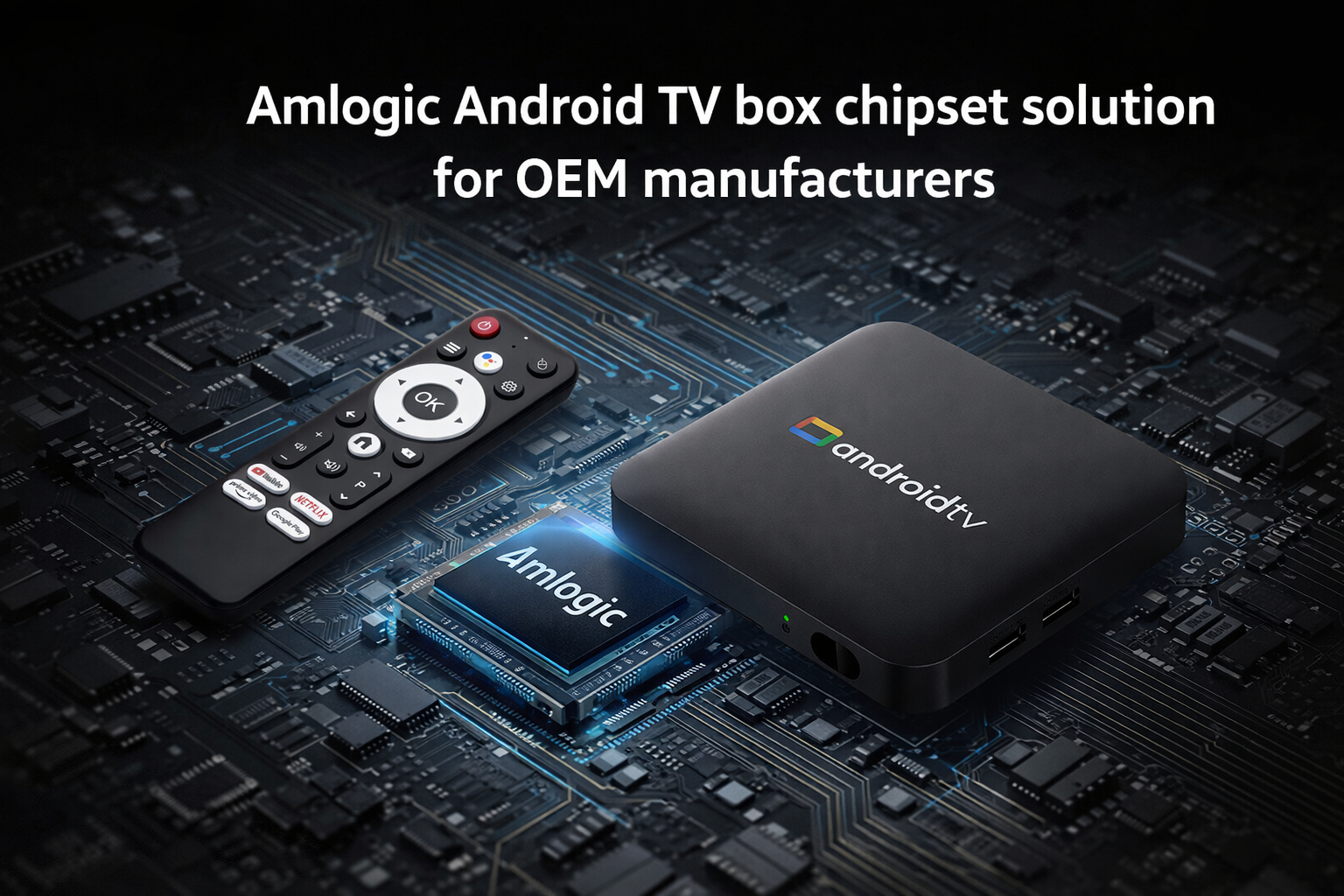
A Strategic Guide to Choosing Between Amlogic and Rockchip Platforms
In today’s increasingly competitive smart device market, an in-depth Android TV Box Chipset Comparison is no longer a purely technical discussion but a strategic decision that directly affects product positioning, user satisfaction, and long-term brand growth. For distributors, IPTV operators, and any OEM Android TV box manufacturer, chipset selection determines decoding stability, streaming compatibility, interface flexibility, certification feasibility, and overall cost structure. Understanding the real-world differences between platforms is essential before committing to volume production.
Market Context: Why Chipset Choice Determines Product Success
According to industry research from IDC and Statista, global OTT streaming device shipments continue to grow steadily, driven by emerging markets and cord-cutting trends. Media reports from TechRadar and Android Authority frequently highlight chipset performance and streaming certification as key buying factors in consumer reviews. This reflects a simple truth: end users rarely blame the brand first when buffering, incompatibility, or overheating occurs—they blame the device experience.For B2B buyers, the stakes are even higher. A wrong chipset selection may result in unstable firmware, limited codec support, failed certification processes, or unexpected return rates. Therefore, conducting a serious Android TV box processor comparison between Amlogic and Rockchip platforms becomes a critical step before launching an OEM project.
Amlogic TV Box Solution: Optimized for Streaming and IPTV
The Amlogic TV box solution has long been recognized for its strength in multimedia decoding and streaming ecosystem compatibility. Amlogic SoCs are widely adopted in mainstream OTT devices, including products supporting Netflix, YouTube, and Prime Video certifications. This broad adoption has contributed to mature SDK support and optimized video pipelines.One of Amlogic’s most significant advantages lies in hardware-level video decoding. Its chipsets support advanced codecs such as AV1, HEVC, and VP9 with efficient power management. For customers focusing on IPTV deployment, this matters greatly. When operators ask, “Which chipset is better for IPTV Amlogic or Rockchip?” the answer often depends on streaming stability and DRM integration. In many IPTV box chipset deployments, Amlogic demonstrates strong compatibility with middleware systems and DRM frameworks such as Widevine and PlayReady.Industry media such as CNX Software have noted that Amlogic platforms consistently emphasize video acceleration and streaming optimization. This focus translates into smoother playback under fluctuating bandwidth conditions. For entertainment-oriented products targeting living room streaming consumption, this reliability enhances end-user satisfaction and reduces after-sales complaints.Additionally, Amlogic firmware ecosystems are relatively mature. For an OEM Android TV box manufacturer targeting retail entertainment markets, this reduces development cycles and integration risk. When deadlines are tight and certification timelines matter, such maturity becomes a decisive advantage.
Rockchip TV Box Solution: Flexible and Cost-Efficient for Multi-Scenario Deployment
On the other hand, the Rockchip TV box solution excels in versatility and cost-performance balance. Rockchip processors are widely used not only in TV boxes but also in tablets, industrial terminals, education devices, and digital signage systems. This broader product ecosystem leads to strong interface scalability and peripheral integration.Rockchip platforms typically provide rich I/O expansion options, including PCIe, multiple USB ports, SATA support in some models, and flexible display output configurations. For projects beyond pure entertainment—such as smart classrooms, hotel management systems, or light industrial control panels—this flexibility can be critical.From a pricing standpoint, Rockchip often delivers competitive cost structures for mid-range and entry-level configurations. In emerging markets where price sensitivity shapes purchasing decisions, this advantage can influence distributor strategy. Media commentary from embedded technology forums frequently highlights Rockchip’s adaptability in commercial and semi-industrial environments.When clients ask, “How to choose chipset for Android TV box OEM project?” the answer increasingly depends on whether the device will serve as a streaming appliance or a multifunction computing terminal. In the latter scenario, Rockchip’s balanced CPU performance and peripheral integration provide clear advantages.
Performance Comparison in Real-World Applications
A meaningful Android TV Box Chipset Comparison must go beyond spec sheets. Clock speed and core count only tell part of the story. Real-world performance involves thermal management, firmware optimization, decoding stability, and system longevity.For pure streaming usage, Amlogic TV box solution platforms often show refined optimization in 4K playback, frame rate stability, and HDR rendering. Streaming media tests conducted by independent reviewers frequently demonstrate consistent playback under high bitrate conditions.Conversely, Rockchip TV box solution platforms may offer stronger flexibility when integrating customized Android builds, kiosk systems, or hybrid education applications. Their GPU configurations in certain models support broader UI rendering capabilities, beneficial for interactive commercial applications.In terms of Android TV box processor comparison benchmarks, performance gaps vary by generation. However, in entertainment-centric environments, decoding efficiency often outweighs raw synthetic benchmark scores. Meanwhile, in enterprise deployments, expandability and adaptability outweigh marginal decoding gains.
Ecosystem, Certification, and Long-Term Maintenance
Certification is another critical dimension. Amlogic’s history of cooperation with major streaming platforms often simplifies Netflix or Google-related certification pathways when supported by licensed partners. For IPTV box chipset integration in regulated markets, compliance readiness shortens go-to-market timelines.Rockchip platforms, while sometimes requiring additional integration effort for premium streaming certification, offer strong support for customized firmware and open development environments. For B2B integrators building private ecosystems rather than retail streaming devices, this flexibility reduces dependency on rigid certification structures.From a lifecycle perspective, both platforms continue to release updated SoCs aligned with evolving codec standards. However, the choice should reflect product lifecycle planning. Entertainment boxes may prioritize streaming updates, while commercial deployments may prioritize long-term hardware stability.
Cost Structure and Market Positioning Strategy
Beyond technical specifications, chipset selection shapes brand positioning. If the product aims to compete in retail streaming markets, emphasizing smooth playback and content compatibility aligns naturally with Amlogic TV box solution strengths.If the goal is diversified deployment—education systems, conference displays, or smart retail terminals—the Rockchip TV box solution often provides better structural flexibility. Cost efficiency also enables aggressive pricing strategies in bulk procurement projects.In any Android TV Box Chipset Comparison, understanding target demographics is essential. Entertainment consumers demand seamless playback. Enterprise buyers demand adaptability and stable integration.
Data, Industry Opinions, and Strategic Insight
Market analysts frequently emphasize that OTT device growth is strongest in price-sensitive regions. Reports from Grand View Research highlight Asia-Pacific and Latin America as high-growth markets for streaming devices. In such regions, balancing performance and affordability becomes crucial.Technology analysts also note that chipset maturity influences firmware stability and return rates. Lower defect ratios correlate with optimized reference designs and proven supply chains. Therefore, collaboration with an experienced OEM Android TV box manufacturer becomes as important as chipset selection itself.Ultimately, neither Amlogic nor Rockchip is universally superior. The better choice depends on application focus, distribution channel, certification requirements, and pricing targets.
Conclusion: Align Technology with Business Objectives
A thorough Android TV Box Chipset Comparison reveals a clear pattern: Choose Amlogic when streaming performance, IPTV optimization, and multimedia certification are top priorities. Choose Rockchip when flexibility, cost efficiency, and multi-scenario integration define the project scope.For businesses navigating competitive streaming markets or planning diversified deployments, chipset strategy must align with long-term positioning rather than short-term component cost.If you are evaluating a new project and need deeper technical insight or manufacturing feasibility analysis, collaborating with an experienced source factory such as H96 Max can provide practical guidance from both engineering and supply chain perspectives. A well-informed decision today prevents costly adjustments tomorrow.
READ MORE
What Model Should Beginners Start With When Entering the TV Box Industry?
What Key Questions Should You Ask When Choosing an Android TV Box Supplier?
How to Choose the Right TV Box Model Based on Your Target Market?
How Big Is the Difference Between 2GB+16GB and 4GB+32GB Android TV Boxes?
What Certifications Are Required to Import Android TV Boxes in Different Countries?
What Configuration Should You Choose for an IPTV Business Android TV Box?
10 Core Technical Parameters You Must Understand Before Buying Android TV Boxes in Bulk
Quick Links

.png "Watch H96 Max Android TV Box reviews on our YouTube channel")

.png "Explore H96 Max product photos on Instagram")