Achieving Android TV Box Compliance US is now a non-negotiable prerequisite for businesses entering the American consumer electronics space. As the US market matures, regulatory scrutiny has increased, and procurement decisions must focus on more than price and features. Yet, compliance risk remains a major pitfall. This article explores three of the most overlooked risks in sourcing Android TV Boxes for the US, with actionable insights for compliance-minded buyers.
1. In-Depth Understanding of FCC Requirements
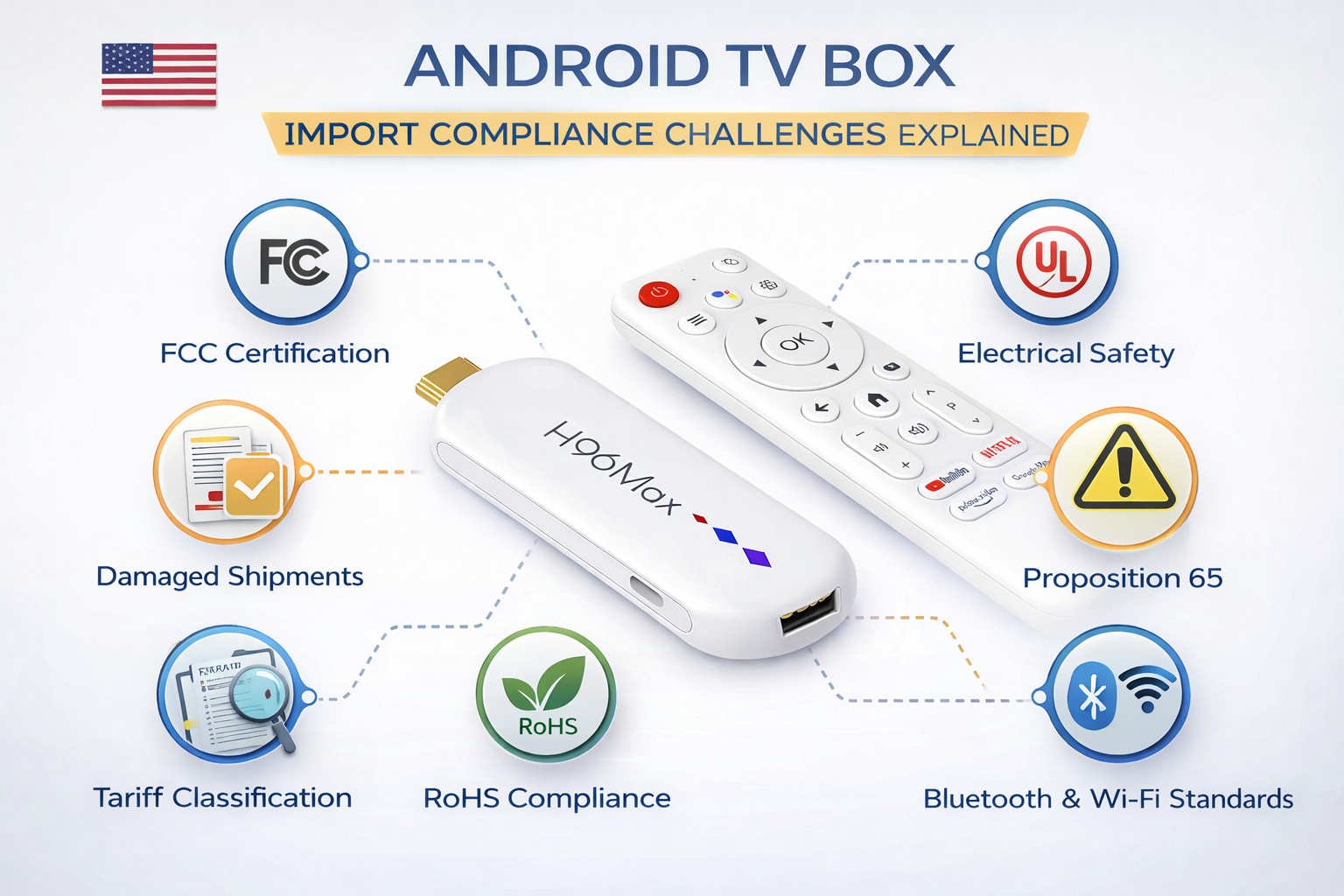
FCC compliance Android TV Box procedures go far beyond surface-level labeling. US law demands that each model and hardware revision of an Android TV Box pass stringent electromagnetic compatibility (EMC) and radio frequency (RF) emission tests. The presence of an FCC logo is not sufficient proof of compliance—buyers must obtain official certificates and supporting test reports that precisely match the product being imported.
Failure to verify these documents can result in US Customs detaining shipments or, in severe cases, rejecting them outright. Regulatory audits may also extend to post-market surveillance, requiring ongoing proof of compliance. The best practice is to insist on recent, batch-specific documentation from suppliers and to cross-check that it reflects the current device configuration.
2. State Versus Federal Compliance: Double-Layer Challenges
Many importers focus exclusively on federal Android TV Box US regulations, but states like California introduce additional legal layers, such as chemical disclosure (Proposition 65) and energy efficiency labeling. In some cases, non-compliant devices may be restricted from sale within specific states even if they have federal approval.
Smart procurement teams treat compliance as a two-stage process: verifying both FCC certification and state-level obligations. Thorough documentation review should include all relevant labeling, safety, and environmental requirements. Consider leveraging local compliance consultants for up-to-date guidance on state-by-state differences that could affect product eligibility.
3. The Hidden Risk of Product Updates
Android TV Box Compliance US is not a one-time process. Any change to the device—such as new chipsets, memory, antennas, or power adapters—may invalidate previous certification. Each alteration should trigger a new compliance review and potentially new testing. Relying on outdated documentation is a significant compliance risk.
Establishing robust change management procedures helps maintain continuous compliance. Maintain a central archive for all certification records, and work closely with suppliers to stay ahead of design updates. Schedule regular compliance reviews and supplier audits to address risks before products reach the market.
Frequently Asked Questions: Compliance Clarity for US Importers
Is Android TV Box legal to sell in the US? Yes, provided every shipment meets Android TV Box US regulations and FCC requirements. What certification does Android TV Box need in the US? At a minimum, federal FCC certification and any additional state-specific documentation.
Building a Proactive Compliance Framework
To achieve full Android TV Box Compliance US, importers should prioritize supplier relationships, request up-to-date and batch-specific documentation, and establish internal tracking systems for regulatory updates. Consulting with legal and technical experts is highly recommended for maintaining a proactive compliance posture.
Conclusion
As the US market continues to evolve, so do the compliance expectations for imported electronics. By focusing on regulatory detail, proactively managing compliance risk, and keeping pace with both Android TV Box US regulations and FCC compliance Android TV Box requirements, importers can avoid delays and penalties. Compliance is no longer a back-office concern—it’s a cornerstone of competitive business in the US electronics landscape.
READ MORE


.png "H96 Max Android TV Box video reviews and tutorials on YouTube")
.png "H96 Max Android TV Box photos and lifestyle shots on Instagram")




.png "Watch H96 Max Android TV Box reviews on our YouTube channel")

.png "Explore H96 Max product photos on Instagram")