.png "H96 Max Android TV Box video reviews and tutorials on YouTube")
.png "H96 Max Android TV Box photos and lifestyle shots on Instagram")



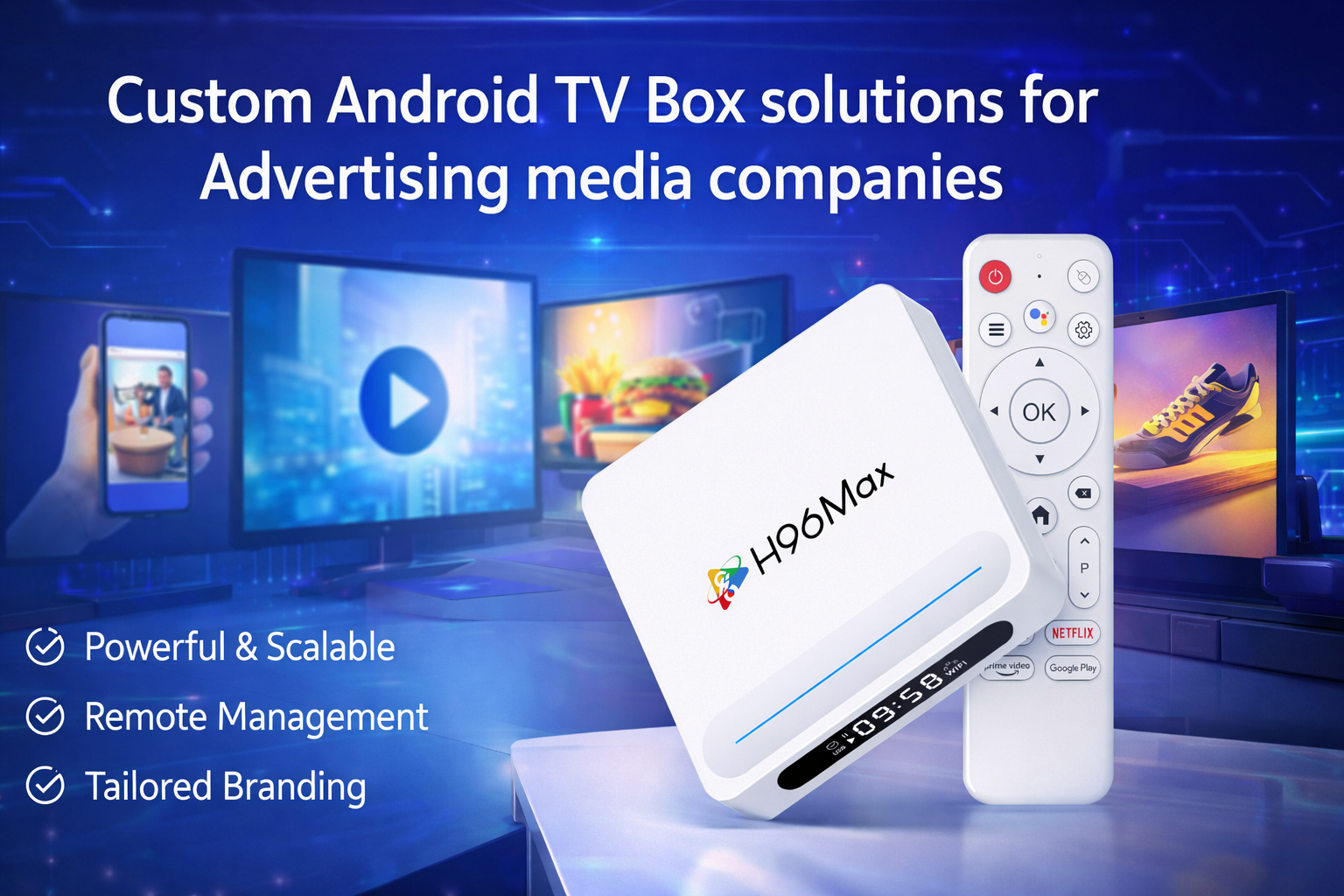
How Advertising Media Companies Build Scalable Display Networks
For advertising media companies operating digital display networks, infrastructure reliability and centralized control have become essential. A Custom Android TV Box is increasingly used as the core hardware platform behind advertising screens because it enables remote content distribution, stable video playback, and scalable device management. As advertising moves toward digital formats in shopping malls, elevators, transportation hubs, and retail stores, agencies must manage thousands of displays simultaneously while ensuring that campaigns run smoothly across every location.
According to industry research from Grand View Research, the global digital signage market is projected to exceed 45 billion dollars within the next few years. Much of this growth is driven by advertising networks that require flexible infrastructure capable of delivering targeted content to different locations and audiences. In this environment, the media player behind each screen is no longer a simple playback device. It has become an operational component of the entire advertising delivery system.
Understanding the Operational Needs of Advertising Media Companies
Advertising media companies operate large networks of screens that must display dynamic content based on schedules, campaigns, and geographic targeting. Unlike consumer streaming devices designed for home entertainment, signage hardware must support continuous operation, remote monitoring, and centralized control. This is why many agencies deploy a purpose built Android TV Box for Advertising environments rather than consumer grade devices.
A specialized media device allows operators to distribute content across hundreds or even thousands of displays without manual intervention. By integrating with content management platforms, agencies can schedule advertising campaigns, update media files, and monitor playback status from a single dashboard. This centralized architecture dramatically reduces operational complexity while improving campaign consistency across multiple locations.
Remote Content Publishing and Real Time Updates
One of the most critical capabilities for advertising operators is remote content publishing. Campaign schedules frequently change, and agencies must update screens quickly to deliver new promotions, product launches, or time sensitive advertisements. A properly configured Custom Android TV Box allows advertising companies to push updated video content to all connected devices through cloud based management platforms.
Instead of sending technicians to individual locations, operators can upload media files, assign them to selected screens, and schedule playback remotely. This approach reduces operational costs and ensures that campaigns remain synchronized across different regions. Many modern Digital Signage Android TV Box deployments also support remote firmware updates, which allow network administrators to maintain system performance without physically accessing each device.
Centralized Device Management Across Screen Networks
Large advertising networks often span multiple cities or even multiple countries. Screens may be installed in retail environments, transportation stations, office buildings, and hospitality venues. Managing such distributed infrastructure requires strong device management capabilities.
A well designed Commercial Android TV Box provides remote device monitoring tools that allow operators to check device status, restart systems remotely, control screen power cycles, and troubleshoot playback issues. Centralized monitoring helps ensure that advertising campaigns are delivered without interruptions. Technology research from IDC suggests that centralized device management can reduce maintenance costs by more than thirty percent for large scale display networks.
Scheduled Playback and Regional Advertising Control
Advertising campaigns rarely display identical content across all locations. Different cities, neighborhoods, and venues may require different advertising strategies. For example, morning promotions might appear in transit stations while retail advertising campaigns run in shopping centers during peak hours.
A Custom Android TV Box allows advertising companies to configure complex playback schedules that automatically switch content based on time of day or geographic location. Operators can create campaign playlists, assign them to selected regions, and synchronize launches across an entire network. This capability ensures that advertisers receive precise campaign delivery aligned with their marketing strategies.
In environments where streaming style advertising is required, an OTT Advertising TV Box can also rotate video advertisements dynamically while maintaining accurate playback timing for multiple advertisers sharing the same screen inventory.
High Definition Video Performance and Playback Stability
Visual quality plays an important role in advertising effectiveness. High definition video displays attract more viewer attention and increase message retention compared with static advertising formats. Research from Nielsen indicates that dynamic video displays significantly improve engagement levels in retail environments.
To support these visual experiences, the playback device must decode high resolution media smoothly and reliably. A powerful Android TV Box for Advertising deployments typically includes hardware acceleration capable of decoding high bitrate 4K video content. Stable decoding performance ensures that advertisements play smoothly without frame drops or playback interruptions.
Network buffering and local caching technologies are also important. Advertising networks may rely on cloud distribution systems, but screens must continue playing content even if temporary network disruptions occur. Local storage and optimized caching help maintain continuous playback under these conditions.
Long Term System Stability and Continuous Operation
Digital signage devices often operate continuously for long periods of time. Unlike home streaming devices that are used only a few hours per day, advertising media players may run twenty four hours a day in public environments. Hardware stability therefore becomes a critical requirement.
A professionally designed Custom Android TV Box typically includes optimized firmware, thermal management design, and system monitoring features that support long term operation. Watchdog systems can automatically restart services if errors occur, ensuring that advertising playback continues without disruption.
For agencies deploying large display networks, reliability directly affects advertiser satisfaction. Any system failure that interrupts campaigns can reduce advertising value and damage the reputation of the media operator.
Brand Customization and Platform Identity
In addition to technical performance, many advertising media companies require hardware that reflects their brand identity. Through an OEM Android TV Box manufacturing approach, agencies can customize the user interface, boot logo, launcher interface, and even the device enclosure with their own branding.
This customization allows media companies to build proprietary advertising platforms rather than relying on generic hardware products. A White Label Android TV Box for Digital Signage environments enables organizations to maintain consistent branding across their entire infrastructure, which is particularly valuable when deploying devices across thousands of locations.
Building Scalable Advertising Technology Infrastructure
As advertising companies expand their screen networks into new markets, scalability becomes a strategic requirement. Hardware platforms must support rapid deployment and easy integration with content management systems. Standardized hardware simplifies installation, configuration, and long term maintenance.
A Custom Android TV Box for Advertising Companies can be preconfigured with the necessary software environment before deployment. Once installed and connected to the network, devices automatically register with the management platform and begin receiving scheduled content. This deployment model allows advertising networks to scale quickly while maintaining operational consistency.
The Growing Role of Hardware in Digital Advertising Networks
As digital advertising continues to evolve, the technology infrastructure supporting media networks becomes increasingly important. Software platforms manage analytics and advertising scheduling, but the reliability of the entire system ultimately depends on the hardware devices connected to each screen.
Industry publications such as Digital Signage Today emphasize that dependable playback hardware is a fundamental requirement for professional media networks. Without stable playback devices, even the most advanced advertising platforms cannot guarantee consistent campaign delivery.
For advertising companies planning long term expansion, selecting the right hardware platform is therefore a strategic decision. Many organizations choose to collaborate directly with experienced manufacturing partners capable of delivering customized hardware solutions. Companies exploring scalable advertising infrastructure often work with specialized manufacturers such as the H96 Max source factory to develop reliable device platforms tailored to their network requirements.
READ MORE
The Strategy Behind Building a Best-Selling Android TV Box for Amazon
Custom Branded Android TV Box Solutions for the Middle East Market
Hotel-Dedicated Android TV Box Solution for Hospitality Systems
How Cross‑Border Sellers Build Their Own Streaming Device Brand?
Quick Links

.png "Watch H96 Max Android TV Box reviews on our YouTube channel")

.png "Explore H96 Max product photos on Instagram")