.png "H96 Max Android TV Box video reviews and tutorials on YouTube")
.png "H96 Max Android TV Box photos and lifestyle shots on Instagram")



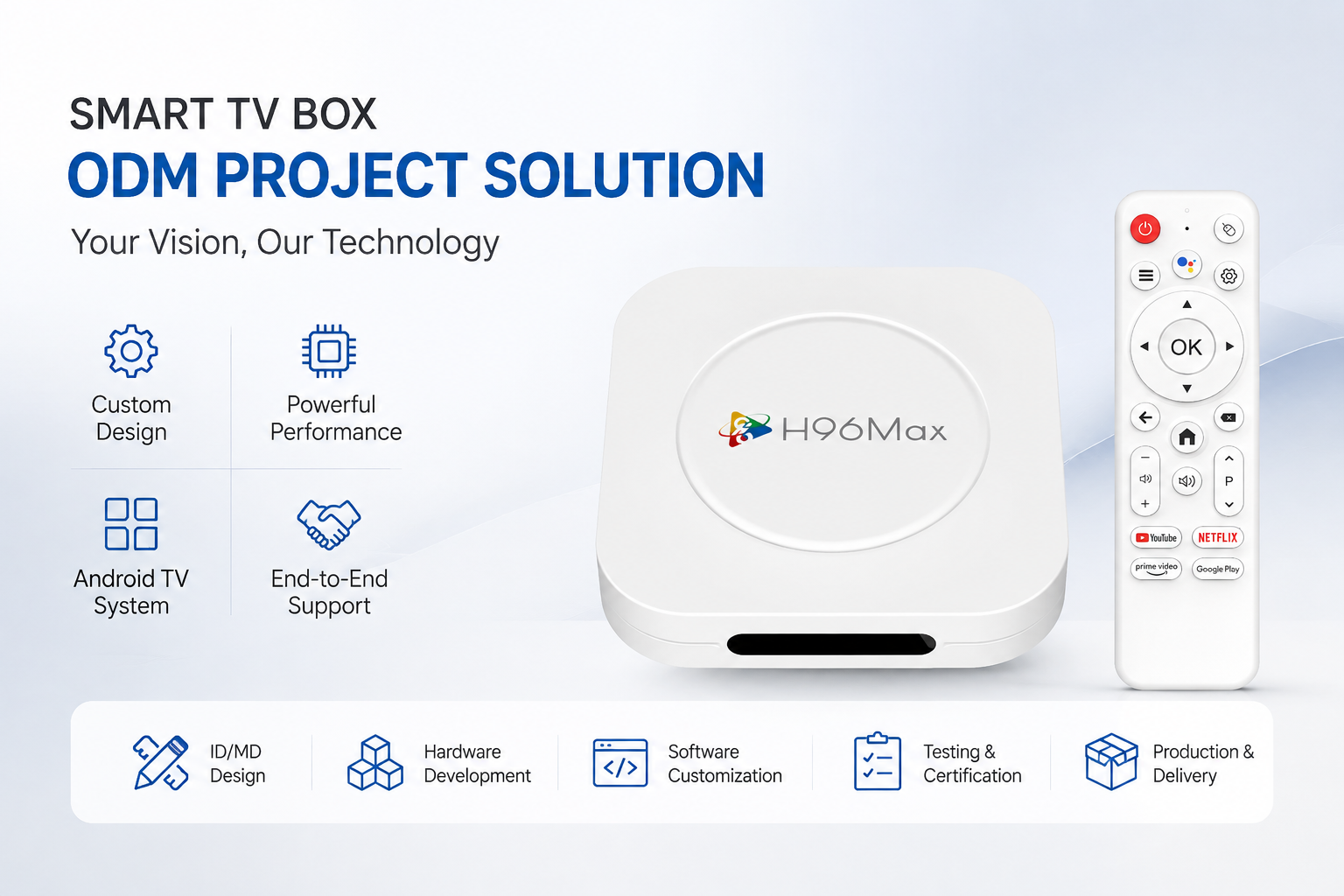
How Can Buyers Keep a Custom ODM TV Box Project on Schedule?
Why do some Android TV Box ODM programs move from concept to mass production predictably while others spend months cycling through samples and unresolved changes? For brands, importers, wholesalers, distributors, operators and OEM/ODM procurement teams, schedule performance depends less on an optimistic launch date than on disciplined requirements, decision ownership and engineering gates. A customized product combines hardware, firmware, launcher, remote, enclosure, packaging, applications, testing and market-entry activities. These workstreams are connected: a late enclosure change can affect antennas and thermal behavior, while a new application requirement can reopen firmware validation. Buyers therefore need a project plan that exposes dependencies and prevents informal changes from silently resetting the schedule. The goal is a controlled path from commercial requirement to repeatable production, with measurable evidence at each decision point.
Why Should the Project Start With a Written Product Brief?
An Android TV Box ODM project should begin with target users, countries, sales channels, applications, performance expectations, interfaces, branding, volume and launch timing. These commercial facts help engineers choose an appropriate platform instead of designing around assumptions.
A capable Android TV Box ODM Manufacturer should challenge unclear requirements before quoting deep customization. Ten minutes spent clarifying an ambiguous feature can prevent weeks of redesign after PCB, tooling or software work has started.
What Belongs in the Product Requirements Document?
Translate the brief into an Android TV Box ODM requirements document covering hardware, software, mechanical design, remote, accessories, packaging, quality and target markets. Separate mandatory requirements from preferences so tradeoffs can be made intelligently.
Every important requirement should have an owner and an acceptance method. Statements such as “fast Wi-Fi” or “premium UI” are too subjective. Define representative network conditions, user journeys or other observable outcomes that both buyer and supplier can verify.
How Should Scope Be Frozen Without Blocking Useful Changes?
Scope freeze does not mean an Android TV Box ODM product can never change. It establishes a baseline against which changes are evaluated. Freeze high-impact architecture decisions first, then progressively lock mechanical, software, artwork and packaging details.
When a new request appears, document its business value, engineering impact, cost and schedule effect. This allows decision-makers to approve a change consciously rather than asking the factory to “just add” a feature whose consequences remain hidden.
Who Should Own Decisions on the Buyer Side?
An Android TV Box ODM supplier can lose significant time when procurement, marketing, engineering and management provide conflicting instructions. Name one project owner who consolidates feedback and has authority to escalate unresolved decisions.
Create a simple responsibility matrix for specifications, industrial design, software, compliance, commercial terms and final approval. Clear ownership reduces waiting time and prevents the supplier from acting on an informal comment that another stakeholder later reverses.
What Should the Supplier Project Team Look Like?
Identify the sales contact, project manager, hardware engineer, software owner, sourcing contact and quality representative supporting the Android TV Box ODM program. Not every person needs to attend every meeting, but escalation paths should be visible.
A strong Android TV Box ODM Service Provider can connect commercial requests to technical owners quickly. If all information passes through one salesperson with no engineering access, complex issues may be simplified, delayed or misunderstood.
How Should Milestones Be Structured?
Build the Android TV Box ODM schedule around evidence-producing gates rather than dates alone. Typical stages can include requirements approval, architecture selection, engineering samples, design validation, tooling, software baseline, pilot production and mass-production release.
The names can vary, but each gate should answer defined questions. A milestone is not complete because a calendar date arrived. It is complete when required deliverables and acceptance criteria have been satisfied or residual risks are formally accepted.
What Is the Critical Path?
The critical path contains activities that directly determine the Android TV Box ODM launch date. Custom tooling, PCB revisions, long-lead components, formal testing or application integration may become critical depending on the project.
Review dependencies weekly. If enclosure tooling cannot begin until antenna geometry is stable, a delay in wireless design affects more than one task. Visibility helps management focus resources on activities that actually protect launch timing.
How Should Engineering Samples Be Managed?
Every Android TV Box ODM sample should have an identifiable hardware revision, firmware version and purpose. Buyers should know whether a unit is intended to validate performance, mechanical fit, UI, packaging or production process.
Do not mix feedback from different configurations. A defect observed on an early PCB may already be resolved in the next revision, while software feedback from a newer build may not apply to older samples. Configuration discipline makes testing actionable.
Why Is a Central Issue Tracker Important?
Maintain one Android TV Box ODM issue list with description, severity, owner, target date, status and verification result. Email threads and chat messages are useful for discussion but poor as the permanent source of project truth.
Classify issues by hardware, software, mechanical, quality, packaging or compliance. During meetings, focus on blockers and overdue high-risk items rather than reviewing every completed task. This keeps project communication tied to decisions.
How Should Defect Severity Be Defined?
Agree what constitutes a blocker, critical, major or minor Android TV Box ODM defect. A boot failure or loss of a required interface has different launch implications from a small cosmetic inconsistency.
Severity should reflect customer and business impact, not how difficult the defect is to fix. Define which categories must be closed before each gate and which can be accepted temporarily with a documented plan.
How Can Buyers Prevent Endless Sample Loops?
Each Android TV Box ODM sample round should have a test plan and decision objective. Consolidate buyer feedback, distinguish defects from new features and provide responses by an agreed date. Unstructured feedback encourages unnecessary iterations.
If the same issue returns repeatedly, request root-cause evidence rather than another sample with an unexplained fix. Conversely, if buyer requirements keep changing, update the baseline and schedule so the supplier is not measured against an obsolete plan.
When Should Industrial Design Be Locked?
A unique enclosure is a major dependency in a Custom Android TV Box ODM Solution. Before committing tooling, confirm PCB dimensions, connectors, antenna requirements, thermal approach, LEDs, buttons and assembly method.
Review appearance and engineering together. Late cosmetic changes can alter ventilation, wireless performance or mold construction. Prototype critical features where practical and establish a formal tooling-release approval.
How Should Firmware Releases Fit the Schedule?
Create named Android TV Box ODM software milestones: development builds, validation candidates and production release. Each candidate should have a change log and known-issue list. The production image should be frozen before the pilot unless a controlled correction is required.
Allow time for regression after significant changes. A fix to network behavior can affect standby or applications. Scheduling only coding time and ignoring validation creates artificial speed that usually appears later as launch risk.
How Should Third-Party Applications Be Scheduled?
If an Android TV Box ODM product depends on customer or third-party applications, obtain test versions early. Define who owns application defects, platform compatibility and distribution rights. External dependencies can become schedule blockers outside the factory's direct control.
Maintain representative versions in regression testing. If a critical application changes close to launch, evaluate whether the new version must be adopted immediately or can follow through a controlled update after shipment.
When Should Market-Entry Work Begin?
Identify target countries during Android TV Box ODM planning and consult qualified compliance specialists early. Formal assessment generally belongs after the relevant design is stable, but required standards, samples and documentation should be understood before hardware freeze.
Testing too early risks repetition after design changes; testing too late puts market access directly on the critical path. The project schedule should include engineering prechecks, formal assessment, correction contingency and document preparation.
How Should Long-Lead Materials Be Managed?
The Android TV Box ODM Factory should identify components, tooling and customized materials whose lead times threaten the launch. Buyers can then decide whether to reserve materials before every detail is final, balancing schedule protection against inventory exposure.
Do not authorize irreversible purchases based on unstable requirements without understanding liability. Use forecasts, conditional commitments or staged purchasing where appropriate. Material planning should follow technical maturity rather than outrun it.
Why Is Change Control Essential Near Launch?
Late Android TV Box ODM changes are expensive because more downstream work has already been completed. A new component can require firmware and validation; a new launcher feature can require regression; packaging changes can create obsolete printed materials.
Require an impact assessment covering cost, schedule, inventory, testing and market-entry implications. Senior approval should be required for high-impact changes after defined freeze dates. This makes tradeoffs visible to commercial stakeholders.
What Should the Pilot Run Gate Confirm?
Pilot production should prove that the Android TV Box ODM configuration can be reproduced with production-intent materials, firmware, operators, fixtures and work instructions. Track yield, rework, defects and configuration accuracy.
An Android TV Box OEM ODM Supplier should close systemic pilot issues before volume. A pilot is not a ceremonial batch sent to the buyer; it is the final opportunity to expose manufacturing weaknesses at limited scale.
How Should Launch Readiness Be Reviewed?
Create a formal Android TV Box ODM launch checklist covering approved hardware, firmware, BOM, tooling, packaging, market-entry status, pilot results, material readiness, quality plan and shipment requirements. Assign an owner to every incomplete item.
Distinguish true blockers from risks that can be monitored after release. Management should know what is being accepted and why. A transparent launch decision is safer than declaring readiness simply because the sales date cannot move.
What Should Happen During the First Mass-Production Run?
Monitor the first Android TV Box ODM volume run more closely than mature repeat orders. Compare yield and defects with pilot results, verify firmware and material revisions, and confirm final packaging. Unexpected variation should trigger containment quickly.
Capture lessons while they are fresh. Update work instructions, tests and future planning based on actual production evidence. A successful first shipment should improve the process for every repeat order that follows.
How Should Schedule Performance Be Measured?
Measure Android TV Box ODM milestone adherence, decision delays, sample iteration count, issue closure and change frequency. Separate supplier-caused delays from buyer decisions, third-party dependencies and approved scope changes.
This prevents simplistic blame and reveals the real sources of schedule loss. Over several projects, the data can improve requirement quality, supplier selection, contingency planning and launch forecasting.
What Does a Predictable ODM Project Look Like?
A predictable Android TV Box ODM program has clear requirements, named decision owners, evidence-based milestones, controlled samples, visible issues and disciplined change management. Hardware, software, sourcing, quality and market-entry workstreams share one launch plan.
For B2B buyers, project discipline protects both time and investment. Speed does not come from skipping validation; it comes from reducing ambiguity, preventing rework and making high-impact decisions early enough to preserve options.
Why Discuss Project Execution With H96 Max?
H96 Max is a source factory supporting brands, importers, wholesalers, distributors, operators and OEM/ODM procurement teams. For an Android TV Box ODM project, our team can discuss platform selection, hardware and firmware customization, enclosure and private-label requirements, samples, pilot production, quality validation and repeat-order planning. Share your target markets, applications, expected volume, customization scope and desired launch window so technical dependencies can be reviewed before major commitments are made. Partner with H96 Max today to discuss a practical ODM program built around transparent milestones, controlled engineering and scalable long-term B2B manufacturing.
READ MORE
What Happens After an Android TV Box ODM Product Goes to Market?
What Is the Real Cost of an Android TV Box ODM Project for B2B Buyers?
Can Your Android TV Box ODM Product Meet Global Market Requirements?
Is Your Android TV Box ODM Product Really Ready for Mass Production?
Can Your Android TV Box ODM Supply Chain Survive Component Shortages?
How Much Android TV Box ODM Software Customization Do Buyers Need?
Which Android TV Box ODM Hardware Choices Matter Most to B2B Buyers?
How Do You Verify an Android TV Box ODM Manufacturer Before Ordering?
Do You Really Need Android TV Box ODM for Your Next Product?
Quick Links

.png "Watch H96 Max Android TV Box reviews on our YouTube channel")

.png "Explore H96 Max product photos on Instagram")