.png "H96 Max Android TV Box video reviews and tutorials on YouTube")
.png "H96 Max Android TV Box photos and lifestyle shots on Instagram")



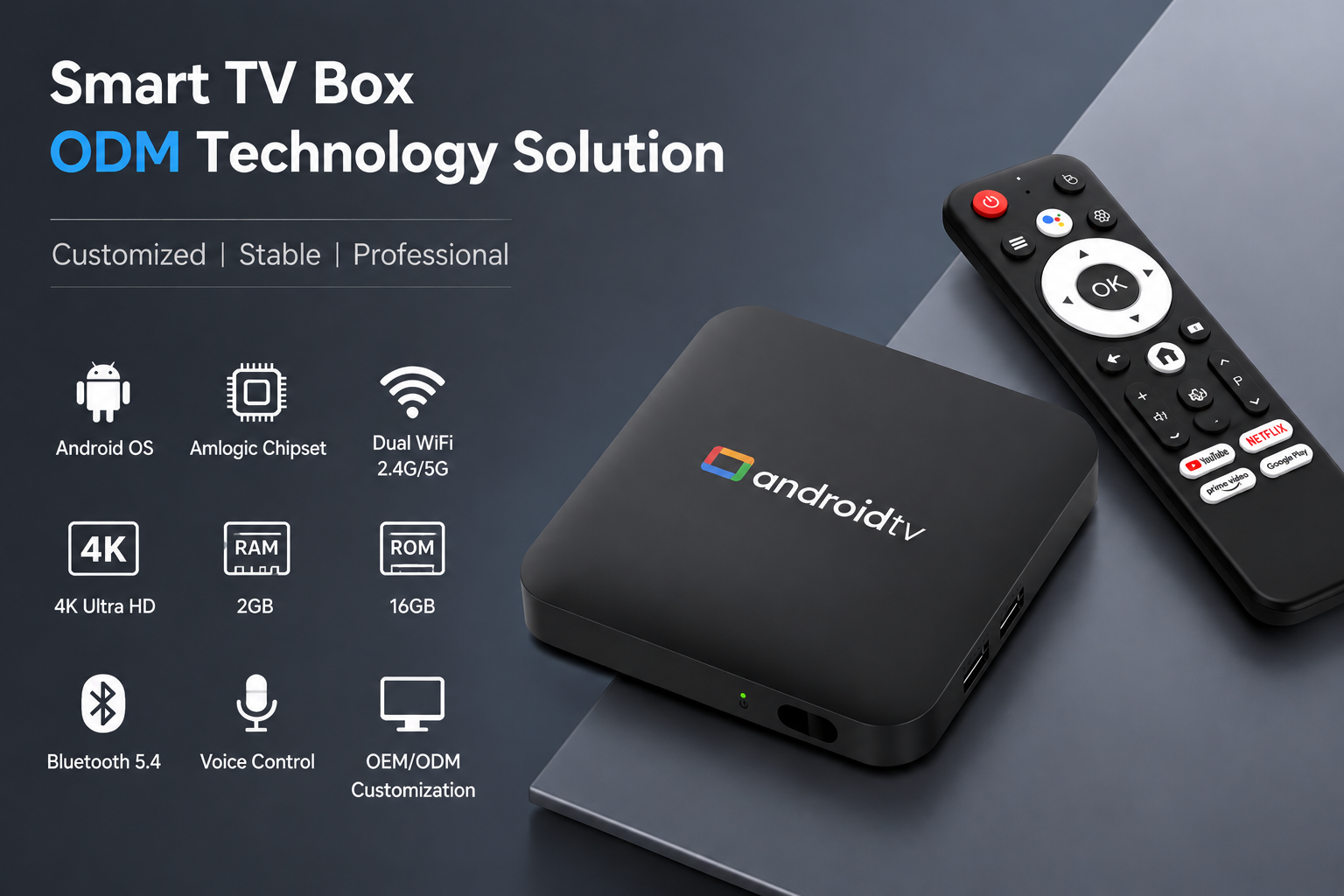
Which Hardware Choices Actually Matter in a Custom ODM TV Box?
How should a buyer define Android TV Box ODM hardware without paying for specifications that customers never use or accepting hidden compromises that create field problems? For brands, importers, wholesalers, distributors, operators and OEM/ODM procurement teams, hardware customization should begin with workloads, channels and lifecycle requirements rather than a list of impressive component numbers. Processor capability, memory bandwidth, storage quality, wireless architecture, ports, thermal margin, power supply and enclosure design interact as a system. A faster SoC cannot compensate for weak Wi-Fi, and more storage cannot solve unstable firmware. The procurement objective is therefore to build the minimum architecture that reliably delivers the required experience throughout its intended commercial life, with enough engineering margin for realistic applications and production variation.
What Workloads Must the Product Sustain?
Start an Android TV Box ODM specification by documenting what the device must actually do. Define target video formats, resolution, applications, simultaneous services, network conditions, peripherals and expected operating hours. Retail streaming, digital signage, hospitality and operator deployments can impose very different loads.
Ask the Android TV Box ODM Manufacturer to demonstrate the proposed platform under representative workloads. Short demonstrations can hide thermal throttling, memory pressure or network instability. Sustained tests reveal whether the architecture has enough margin for real operation rather than showroom performance.
How Should Buyers Select the SoC?
The SoC anchors an Android TV Box ODM design because it influences CPU and GPU performance, video decoding, interfaces, memory support and software ecosystem. Do not choose only by core count or clock speed. Compare the functions needed by your applications and target display environment.
Lifecycle matters as much as benchmark performance. Ask about SDK maturity, driver availability and expected platform continuity. A technically powerful processor with weak software support can create more engineering cost than a mature platform that comfortably meets the business requirement.
Do Codec Requirements Need to Be Defined Early?
Yes. Media capability is fundamental to Android TV Box ODM architecture. Buyers should specify required codecs, resolutions, frame rates, HDR expectations and container formats based on intended content and applications. Avoid assuming every chipset marketed for high-resolution playback supports every workflow equally.
Validate representative files and streaming applications on the exact hardware and firmware. Hardware decode capability, application implementation and software integration all influence results. Acceptance testing should reflect the buyer's actual media environment.
How Much RAM Is Enough?
RAM should support the operating system, launcher, background services and target applications with appropriate headroom. In an Android TV Box ODM project, simply selecting the largest memory configuration may raise cost without creating visible value.
Measure memory behavior during realistic multitasking and long sessions. Look for application reloads, launcher delays and instability. If multiple commercial SKUs use different RAM capacities, validate each configuration rather than assuming performance scales predictably from the premium model.
Why Does Storage Quality Matter Beyond Capacity?
Buyers often compare storage only by gigabytes, but an Android TV Box ODM device also depends on component consistency and write performance. Storage affects boot, application installation, updates, caching and long-term responsiveness.
The Android TV Box ODM Factory should identify approved storage components and control substitutions. Validate available user capacity after system partitions and preloaded software. A headline capacity that leaves insufficient usable space can create customer dissatisfaction and support issues.
What Makes Wireless Design an Engineering Issue?
Wi-Fi performance depends on more than the wireless standard printed on packaging. An Android TV Box ODM design combines chipset or module capability, antenna type, placement, enclosure materials, PCB layout, firmware and the surrounding environment.
Ask for repeatable throughput and stability tests at multiple distances and orientations. Test both congested and cleaner environments where practical. A Custom Android TV Box ODM Solution with a unique enclosure should receive renewed antenna evaluation because mechanical changes can alter radio performance.
When Is Ethernet Still Important?
Ethernet can remain valuable where stable wired connectivity matters, including hospitality, operator and commercial installations. For an Android TV Box ODM project, specify required link capability and validate sustained transfer rather than merely checking that the port connects.
Port selection should follow deployment reality. Removing Ethernet can reduce cost and enclosure complexity for Wi-Fi-only consumer products, while eliminating it from a managed installation may increase support burden. The correct decision depends on the channel.
How Should Bluetooth Requirements Be Defined?
Bluetooth may support remotes, audio devices, game controllers or other peripherals. An Android TV Box ODM buyer should list required device categories and test pairing, reconnection, range and coexistence with Wi-Fi.
If a Bluetooth voice remote is part of the product, evaluate wake behavior, microphone operation and key response as an integrated system. The remote should not be treated as an accessory selected after the core hardware is frozen.
Which Physical Ports Create Real Customer Value?
USB, HDMI, audio, storage and other interfaces consume board space, enclosure openings and BOM cost. An Android TV Box ODM team should connect every port to a defined user or service requirement. Extra connectors can also increase validation work.
Ask whether peripherals require particular USB behavior, power delivery or filesystem support. For commercial projects, consider service access and installation constraints. Port count should be a product decision, not a competitive specification contest.
Why Is HDMI Validation More Than a Resolution Check?
An Android TV Box ODM device may encounter televisions, monitors, receivers and cables from many generations. Buyers should test resolution negotiation, audio behavior, hot plugging, standby and wake across representative displays.
If the target market depends on specific HDR or audio functions, document them explicitly. A specification claiming a particular HDMI capability is not a substitute for system-level interoperability testing with the equipment customers are likely to use.
How Much Thermal Margin Does the Design Need?
Thermal behavior determines whether an Android TV Box ODM platform can sustain performance. Enclosure volume, ventilation, heat spreaders, component placement and ambient temperature all matter. A device that passes a short bench test may throttle after prolonged playback.
Ask engineers to test under sustained workloads and realistic ambient conditions. Compare component temperatures and performance over time. If the enclosure is customized, repeat thermal validation because cosmetic changes can alter airflow and heat transfer.
Can Industrial Design Damage Technical Performance?
Yes. A visually distinctive enclosure can obstruct antennas, trap heat, complicate assembly or weaken connector access. In Android TV Box ODM, industrial design and electrical engineering should review concepts together before tooling begins.
Prototype critical mechanical features before committing to expensive molds. A capable Android TV Box ODM Service Provider should explain where aesthetic choices conflict with wireless, thermal or manufacturing requirements and propose alternatives rather than accepting an impractical design.
Why Should the Power Adapter Be Engineered With the Product?
Power stability affects boot, USB peripherals and sustained load. An Android TV Box ODM specification should define voltage, current, connector and target-market plug requirements. The adapter should be validated with the maximum expected system load.
Control the approved adapter model in production. A substitute with the same printed rating may differ in regulation, ripple or thermal behavior. Adapter changes can also affect compliance documentation, so purchasing substitutions should pass technical review.
How Does the Remote Affect Hardware Architecture?
Remote design influences infrared receivers, Bluetooth, voice functions and user experience. For Android TV Box ODM, define key layout, communication method, microphone requirements and pairing behavior early enough to integrate them into hardware and firmware.
Google's TV design guidance emphasizes D-pad navigation and viewing from a distance. That makes remote response and focus behavior part of the product architecture, not merely packaging content. Test common journeys with the final remote design.
Should Buyers Request a Custom PCB?
A custom PCB is justified when an existing board cannot satisfy dimensions, interfaces, cost structure or performance requirements. However, deeper Android TV Box ODM board work introduces layout, prototype, debugging and validation effort.
An Android TV Box OEM ODM Supplier may offer a mature board that can be adapted with less risk. Compare the commercial value of a new PCB with the development schedule and expected lifetime volume. Custom engineering should solve a constraint that matters.
How Should Component Alternatives Be Managed?
Electronics supply changes over time, so an Android TV Box ODM BOM should distinguish critical components and approved alternatives. The buyer and factory should agree which substitutions require notification, engineering validation or formal approval.
Alternative sourcing can improve resilience, but equivalence must be demonstrated. Memory, flash, wireless modules and power components may influence software or reliability even when basic specifications appear similar. Change control protects both continuity and consistency.
What Hardware Tests Belong in EVT and DVT?
During engineering validation, an Android TV Box ODM team should prove core functions and identify design weaknesses. Later validation should use increasingly production-representative hardware to confirm interfaces, thermal behavior, wireless performance, power, peripherals and mechanical fit.
The exact stage names can vary between organizations; the principle is more important. Each build should answer defined questions, and unresolved high-risk issues should not simply be carried into mass production.
How Does Compliance Influence Hardware Choices?
Radio, electromagnetic compatibility, electrical safety and environmental obligations can depend on product configuration and destination. An Android TV Box ODM buyer should identify target markets before final hardware freeze and obtain qualified compliance guidance.
Changes to wireless modules, antennas, enclosure or adapters can affect existing evidence. Formal assessment should use a stable, production-representative design. Compliance planning belongs inside hardware development rather than at the end of the schedule.
What Should the Golden Hardware Sample Represent?
The approved Android TV Box ODM sample should record PCB revision, key components, enclosure, antenna configuration, adapter, remote and firmware. It becomes a physical reference for production, but it should be supported by drawings, BOM and specifications.
Do not rely on the sample alone. Internal components are invisible after assembly, and firmware can change without altering appearance. Documentation converts the approved device into a reproducible manufacturing baseline.
How Should Buyers Balance Performance and Cost?
Build several Android TV Box ODM configurations around the same use case and compare measurable outcomes. Determine which upgrades improve application performance, wireless stability, user experience or lifecycle enough to justify their incremental cost.
Avoid both extremes: specification inflation and aggressive cost-down that removes engineering margin. The best architecture meets the requirement reliably, survives production variation and remains commercially competitive through its expected sales life.
What Does a Production-Ready Hardware Decision Look Like?
Production-ready Android TV Box ODM hardware has a clear workload, validated architecture, controlled BOM, stable mechanical design and documented acceptance criteria. Wireless, thermal, power and interfaces have been tested as a system rather than evaluated independently.
For B2B procurement teams, this discipline reduces field failures and unnecessary cost. Hardware customization creates value when every important engineering choice can be traced back to a customer, channel, operational or lifecycle requirement.
Why Discuss Custom Hardware With H96 Max?
H96 Max is a source factory supporting brands, importers, wholesalers, distributors, operators and OEM/ODM procurement teams. For an Android TV Box ODM project, our team can discuss SoC platforms, memory and storage, wireless architecture, PCB and enclosure requirements, remotes, firmware integration, pilot production and repeat-order planning. Share your applications, target markets, expected volume, interfaces, performance goals and customization scope so hardware requirements can be reviewed before development is frozen. Partner with H96 Max today to discuss a practical ODM program built around controlled engineering, production-ready hardware and scalable long-term B2B manufacturing.
READ MORE
What Happens After an Android TV Box ODM Product Goes to Market?
How Can B2B Buyers Keep an Android TV Box ODM Project on Schedule?
What Is the Real Cost of an Android TV Box ODM Project for B2B Buyers?
Can Your Android TV Box ODM Product Meet Global Market Requirements?
Is Your Android TV Box ODM Product Really Ready for Mass Production?
Can Your Android TV Box ODM Supply Chain Survive Component Shortages?
How Much Android TV Box ODM Software Customization Do Buyers Need?
How Do You Verify an Android TV Box ODM Manufacturer Before Ordering?
Do You Really Need Android TV Box ODM for Your Next Product?
Quick Links

.png "Watch H96 Max Android TV Box reviews on our YouTube channel")

.png "Explore H96 Max product photos on Instagram")