.png "H96 Max Android TV Box video reviews and tutorials on YouTube")
.png "H96 Max Android TV Box photos and lifestyle shots on Instagram")



Is RK3588 Overkill for Android TV Boxes? An In-Depth Look
In the rapidly evolving landscape of Android TV Box chipset development, one question persists among engineers and industry professionals: is the integration of high-end processors like the RK3588 Android TV Box truly necessary, or does it represent a case of performance over-provisioning? This analysis explores how RK3588 compares to its predecessor, RK3566, and whether such advancements are fully utilized in practical OTT TV box deployments.
RK3588 Android TV Box: The Performance Leap
The RK3588 Android TV Box introduces an advanced octa-core CPU architecture, significantly boosting both computational power and multimedia capabilities compared to the RK3566 Android TV Box. Key architectural changes include larger caches, improved memory bandwidth, and support for more advanced GPU instructions. For developers and OEMs, this translates into the ability to handle higher-resolution video decoding, more intensive AI-driven applications, and enhanced multi-tasking performance. The gap between RK3566 vs RK3588 performance difference is especially evident in 8K video playback, multi-stream transcoding, and complex user interface rendering. However, this raises the question: do mainstream Android TV Box chipset comparison studies support the actual demand for such robust performance in the majority of living room scenarios?
System-on-Chip Architecture: Rockchip TV Box SoC
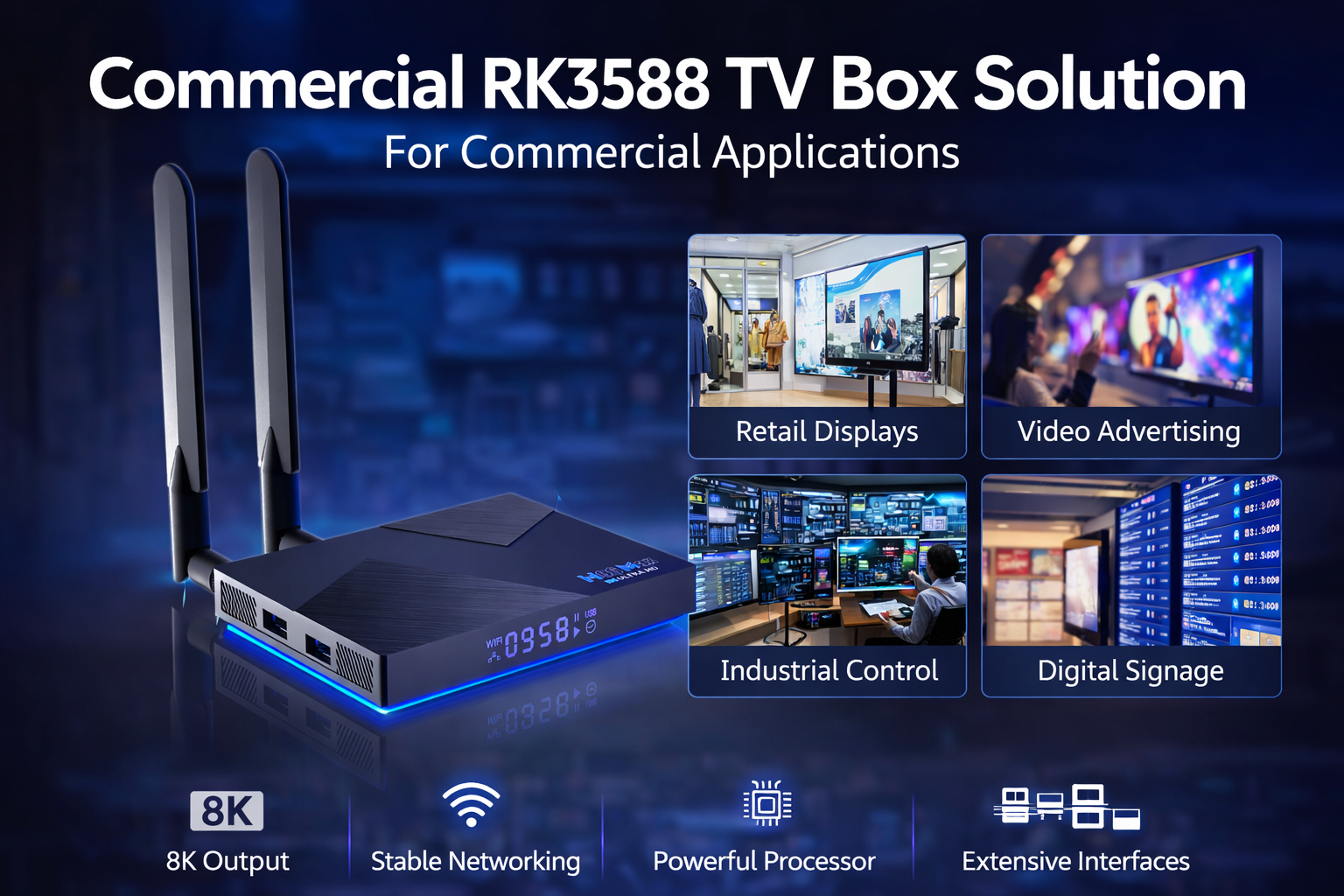
Rockchip TV Box SoC platforms are renowned for their integrated approach to media processing, connectivity, and power management. The RK3588’s silicon integrates advanced neural processing units, 8K video hardware decoders, and PCIe/USB 3.1 interfaces. Compared to RK3566, RK3588’s additional features include 6 TOPS NPU, triple display output, and higher LPDDR4X memory support. While these capabilities make the RK3588 Android TV Box attractive for high-end commercial digital signage and AI edge computing, mainstream TV boxes often do not require such headroom. Thus, the Android TV Box chipset comparison must consider not only headline specifications but also the cost-benefit balance for consumer applications.
The Real-World Scenario: Are Consumers Benefiting?
When examining the real-world use cases, the majority of Android TV Box consumers prioritize seamless 4K streaming, fast boot times, and stable app support. Here, the RK3566 Android TV Box continues to perform exceptionally well. For users focused on IPTV, VOD, and lightweight gaming, RK3566’s CPU and Mali-G52 GPU offer sufficient resources. In contrast, the RK3588 Android TV Box enables more advanced tasks such as concurrent streaming, intensive gaming, and AI-based content recommendations, but these features remain underutilized in standard home environments. The industry must question: is RK3588 overkill for Android TV box solutions designed for typical households?
Energy Efficiency and Thermal Design
Another crucial factor in the RK3566 vs RK3588 performance difference is energy efficiency. RK3566-based devices often excel in thermal management, requiring only passive cooling solutions even under sustained workloads. RK3588 Android TV Box platforms, owing to their higher TDP and silicon complexity, demand more advanced cooling and power delivery systems. For operators and OEMs targeting low-maintenance, fanless deployments, this makes RK3566 a more practical choice unless the application scenario specifically mandates the extra performance of RK3588.
Long-Term Value and Software Ecosystem
Software optimization plays a pivotal role in extracting value from hardware. The RK3588 Android TV Box, while hardware-rich, achieves its potential only with a fully optimized Android TV OS and application stack. Rockchip TV Box SoC platforms benefit from an open SDK ecosystem, but in many cases, legacy apps and middleware are not yet tailored for RK3588’s advanced features. This limits immediate consumer advantage, and supports the view that Android TV Box chipset comparison should focus on total system value, not just CPU/GPU benchmarks. Developers must assess if current market apps can exploit the new silicon or if RK3566 remains the more logical mainstream choice.
Conclusion: Strategic Decision-Making for OEMs and Operators
The adoption of RK3588 Android TV Box in consumer set-top boxes should be a strategic decision, aligned with the end-user requirements and total cost of ownership. For high-end deployments that require 8K decoding, AI video analytics, and multi-display support, RK3588 justifies its inclusion. For the majority of global Android TV Box markets, however, RK3566 Android TV Box continues to provide the best cost-performance ratio and operational simplicity. Ultimately, the ongoing evolution in Android TV Box chipset comparison emphasizes the importance of aligning SoC selection with real-world usage, software readiness, and support infrastructure.
READ MORE
Why Overseas Buyers Hate Modified Android TV Boxes – And Why AOSP Is a Safer Choice
Android 14/15: Opportunities and Costs for TV Box Manufacturers
Has Widevine L1 Become the Global Standard? Which Countries Still Don’t Care?
Where Non-Certified Android TV Boxes Still Thrive Without Netflix or Google
2026 Android TV vs Google TV: Which Is Better for Android TV Box OEM & Private Label Business?
4GB+32GB vs 4GB+64GB: Do Overseas Users Really Care About Storage?
Can 2GB RAM Android TV Boxes Still Be Sold in 2026? Key Markets and Regulatory Changes
S905X4 and S905Y4 Successors: What’s the Next Generation Profitable Android TV Box Chipset?
2026 Overseas Android TV Box Chipset Landscape: Can Amlogic Still Lead, and Is Allwinner Underrated?
Quick Links

.png "Watch H96 Max Android TV Box reviews on our YouTube channel")

.png "Explore H96 Max product photos on Instagram")