.png "H96 Max Android TV Box video reviews and tutorials on YouTube")
.png "H96 Max Android TV Box photos and lifestyle shots on Instagram")



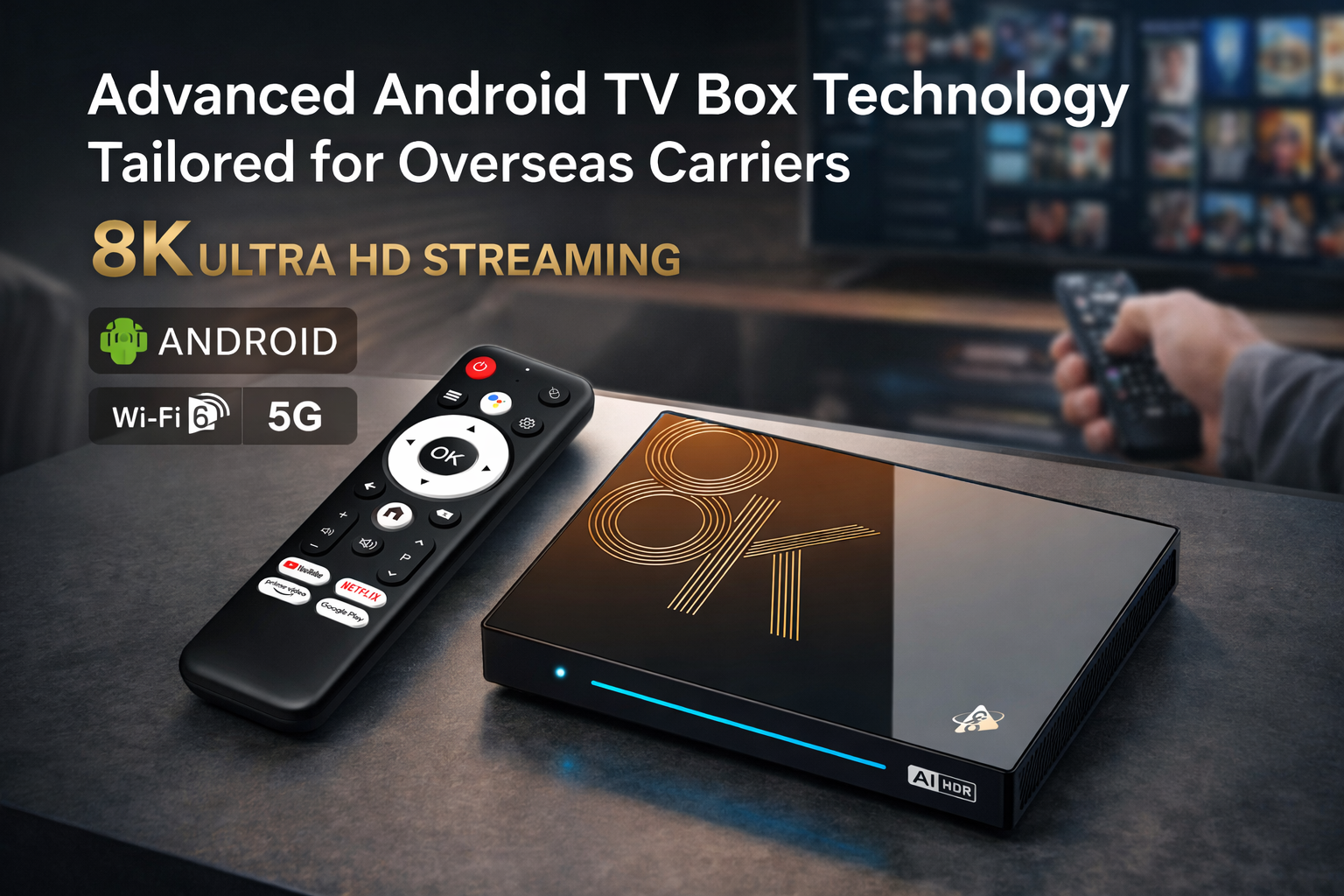
2026 Overseas Telecom Operator Customized Android TV Box Trend Analysis
The global pay-TV and broadband ecosystem is entering a structural transition period. In this context, the Operator Customized Android TV Box is no longer a peripheral hardware choice, but a strategic tool that telecom operators increasingly rely on to protect ARPU, control service experience, and extend their digital ecosystems. From Europe to Latin America, from the Middle East to Southeast Asia, operators are accelerating the shift from standardized retail devices to deeply customized Android TV platforms tailored to their own operational realities.
This article analyzes why this trend is accelerating in 2026, from three professional angles: national market differences, channel structure evolution, and operator demand transformation. Drawing on industry research, operator disclosures, and media analysis, it explains why customized solutions are becoming the dominant model for Android TV deployment among telecom operators.
1. National Market Differences Are Reshaping Device Strategy
One of the most underestimated drivers behind the rise of the Operator Customized Android TV Box is national market fragmentation. Unlike smartphones, TV consumption habits, regulatory frameworks, and content ecosystems vary significantly by country. In Europe, strict data protection and content compliance requirements push operators to demand higher system-level control. In emerging markets such as Africa and parts of Southeast Asia, unstable bandwidth conditions and lower household purchasing power require devices optimized for performance efficiency and long-term durability.
Industry observers from Digital TV Europe have pointed out that operators deploying uniform, off-the-shelf Android TV boxes often face post-deployment challenges including middleware incompatibility, content rights restrictions, and limited lifecycle control. As a result, many operators now work directly with an OEM Android TV box manufacturer to localize firmware, system services, and even chipset selection according to national conditions.
2. Channel Structure Evolution Forces Operators to Regain Control
The traditional operator channel model—where hardware, content, and billing were tightly bundled—has been disrupted by OTT platforms, retail Android devices, and app-centric viewing habits. According to GSMA Intelligence, more than 45% of operators globally reported declining control over the home entertainment entry point by 2024. This erosion directly impacts customer retention and upselling potential.
To counter this, operators increasingly view the Android TV box not as a commodity device, but as a controlled service terminal. An Android TV box for telecom operators must integrate operator billing systems, proprietary launchers, customer analytics, and remote device management. These requirements cannot be fulfilled by generic retail boxes, which explains the rising demand for ODM Android TV box solutions that allow operators to design their own ecosystem entry point.
3. Operator Demand Is Shifting from Cost to Lifecycle Value
Historically, procurement decisions for set-top boxes were driven primarily by unit cost. However, by 2026, operators are increasingly focused on total lifecycle value. This includes software upgrade flexibility, security patch control, device longevity, and integration with future services such as cloud gaming, AI-based recommendations, and smart home control.
A customized IPTV Android box allows operators to define update policies, preload service frameworks, and avoid forced upgrades imposed by consumer brands. Analysts from ABI Research have noted that operators using customized Android TV platforms report lower churn and higher engagement compared to those relying on retail Android devices. This data reinforces why Android TV box customization service providers are becoming long-term strategic partners rather than short-term suppliers.
4. Why 2026 Marks a Turning Point
The year 2026 represents a convergence of several trends: Android TV system maturity, declining hardware differentiation, and increasing service-layer competition. In this environment, control over the user interface and data flow becomes critical. The Operator Customized Android TV Box enables operators to differentiate not through hardware specifications, but through experience orchestration.
Media analysis from Light Reading emphasizes that operators who fail to control their home screen risk becoming mere bandwidth providers. Conversely, those investing in customized Android TV platforms are better positioned to aggregate OTT services, deploy targeted advertising, and introduce value-added services without dependency on third-party ecosystems.
5. Long-Term Strategic Implications for Operators
Looking ahead, the 2026 operator customized Android TV box trends suggest a shift toward deeper vertical integration. Operators are no longer asking whether to customize, but how deeply. From boot-level security to UI logic and data analytics, the Android TV box is becoming an extension of the operator’s core network strategy.
For operators exploring an Android TV box OEM solution for telecom operators, the key consideration is not speed to market, but partner capability. Long-term success depends on whether the manufacturing partner can support multi-country compliance, scalable customization, and continuous system evolution.
As this trend accelerates, operators seeking stability, control, and long-term value increasingly turn to experienced manufacturing partners. For telecom operators evaluating future deployment strategies, collaborating directly with a source factory such as H96 Max enables deeper customization, supply chain transparency, and sustainable cooperation aligned with long-term operational goals.
READ MORE
Real Demand for Android TV Box System Versions in Overseas Markets in 2026
Differences in Android TV Certification Requirements Across Countries in 2026
Is the India Android TV Box Market Still Worth Entering in 2026?
Android TV Box Price Range Analysis in Southeast Asia for 2026
2026 EU Android TV Box Market Entry Barriers: In-Depth Analysis
Top-Selling Android TV Box Configurations in Latin America for 2026
Specification Preferences in the 2026 Middle East Android TV Box Market
2026 Opportunities and Risks Analysis of the Android TV Box Market in Africa
Quick Links

.png "Watch H96 Max Android TV Box reviews on our YouTube channel")

.png "Explore H96 Max product photos on Instagram")