.png "H96 Max Android TV Box video reviews and tutorials on YouTube")
.png "H96 Max Android TV Box photos and lifestyle shots on Instagram")



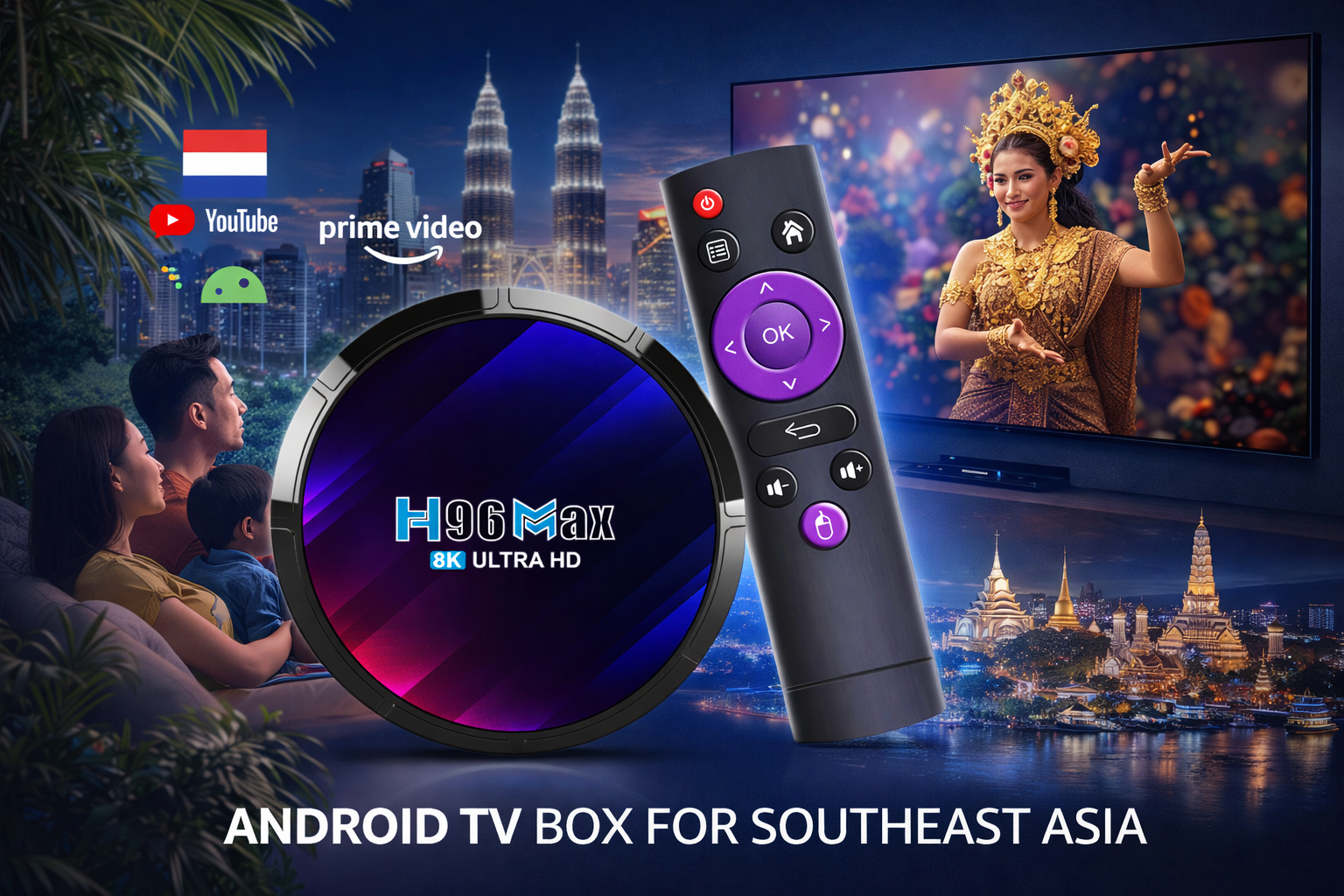
Understanding Android TV Box Pricing Across Southeast Asia in 2026
The Android TV Box Price in Southeast Asia has become one of the most discussed topics among hardware brands, IPTV operators, and distributors preparing for 2026. Once viewed primarily as a low-cost extension of the global streaming device supply chain, Southeast Asia has evolved into a structurally complex market where pricing reflects far more than manufacturing cost alone. Factors such as national income disparities, content regulation, distribution models, and OEM capability now play decisive roles in shaping final price levels.
As broadband penetration and OTT adoption continue to rise, the Android TV Box market in Southeast Asia is entering a phase of rationalization. Buyers are no longer competing solely on the lowest price, but on supply stability, compliance readiness, and long-term cost control. This shift makes understanding the real price range across major Southeast Asian markets essential for decision-makers who aim to build sustainable business models rather than short-term volume plays.
Why Southeast Asia Shows Wide Price Divergence
Although often grouped together, Southeast Asian countries differ significantly in consumer purchasing power, regulatory enforcement, and channel maturity. These differences directly influence the Android TV Box wholesale price observed in each market. Regional trade data and procurement benchmarks indicate that average wholesale pricing in 2026 spans from the low twenties to over fifty US dollars, depending on market structure and product specification.
For an Android TV Box OEM manufacturer, Southeast Asia requires a multi-tier pricing strategy. Entry-level devices designed for open retail channels coexist with mid-range certified models and higher-spec operator-grade units. Each tier reflects a different balance between cost, performance, and compliance obligations.
Indonesia: High Volume, Aggressive Price Competition
Indonesia represents the largest Android TV Box market in Southeast Asia by shipment volume. Its pricing structure is shaped by intense competition and a fragmented distribution landscape dominated by e-commerce platforms and independent resellers. In 2026, most mainstream Android TV Boxes in Indonesia fall within a wholesale price range of approximately twenty to thirty-five US dollars.
Lower-priced products typically rely on older chipsets and minimal memory configurations, allowing sellers to meet aggressive price expectations. However, increasing regulatory attention to digital content and import documentation is gradually pushing up the Android TV Box factory price for compliant models. As a result, buyers are showing greater interest in stable Android TV Box supplier Asia partners capable of supporting documentation and long-term supply.
Thailand: Structured Channels and Stable Pricing
Thailand’s Android TV Box market presents a more structured pricing environment. Authorized distributors and large retail chains play a stronger role, resulting in tighter price bands and less extreme discounting. In 2026, wholesale prices in Thailand generally range from the high twenties to the mid-forties, reflecting higher expectations for software stability and after-sales support.
Market analysts frequently note that Thailand’s relatively higher average pricing is linked to certification requirements and consumer trust factors. From a sourcing perspective, this market rewards Android TV Box OEM manufacturer partners who can deliver consistent quality rather than the lowest possible bill of materials.
Vietnam: Fast Growth with Channel Fragmentation
Vietnam is one of the fastest-growing segments within the Android TV Box market in Southeast Asia. Demand is fueled by a young demographic and widespread adoption of OTT services. However, pricing remains fragmented due to overlapping sales channels, including online platforms, small electronics shops, and IPTV resellers.
In 2026, the Android TV Box wholesale price in Vietnam typically ranges from the low twenties to the high thirties. Buyers increasingly prioritize performance consistency over brand recognition, driving demand for flexible Android TV Box factory wholesale price for Southeast Asia solutions that can adapt quickly to changing requirements.
Philippines: Import Costs Shape Final Prices
The Philippine market is heavily dependent on imports, which has a direct impact on Android TV Box pricing. While demand for streaming devices remains strong, logistics costs, currency fluctuations, and customs efficiency play a larger role in determining final prices than in mainland Southeast Asian markets.
In 2026, wholesale prices in the Philippines commonly range from the mid-twenties to the low forties. Industry commentary suggests that selecting a reliable Android TV Box supplier Asia partner is often more important than negotiating marginally lower ex-factory pricing.
Malaysia: Compliance-Driven Price Stability
Malaysia represents a more mature and compliance-driven market within Southeast Asia. Certified products dominate sales channels, and enforcement standards reduce the presence of ultra-low-cost devices. As a result, Android TV Box pricing in Malaysia tends to cluster between thirty and fifty US dollars at the wholesale level.
For manufacturers and brand owners, Malaysia often serves as a benchmark market for mid-range configurations, balancing performance expectations with manageable cost structures.
Key Cost Drivers Behind Regional Pricing
Across all five markets, several common factors influence the Android TV Box Price in Southeast Asia. These include chipset availability, memory pricing trends, certification and compliance costs, and the structure of local distribution channels. Industry data increasingly shows that service expectations and firmware maintenance obligations now account for a growing share of total cost.
This evolution explains why price competition alone is no longer sufficient for long-term success. Buyers who focus exclusively on the lowest Android TV Box factory price often encounter quality inconsistencies and supply disruptions.
Strategic Implications for Buyers in 2026
Understanding the Android TV Box price range in Southeast Asia 2026 requires more than comparing quotations. It requires an appreciation of how national market structures, regulatory environments, and channel dynamics interact. Companies that align their sourcing strategy with these realities are better positioned to maintain stable margins.
For many importers and brand owners, working directly with a source-level factory provides greater transparency, flexibility, and long-term cost control. Manufacturers such as H96 Max, operating at the factory level, illustrate how direct cooperation can support sustainable growth across Southeast Asia’s diverse markets.
READ MORE
Real Demand for Android TV Box System Versions in Overseas Markets in 2026
Differences in Android TV Certification Requirements Across Countries in 2026
2026 Overseas Telecom Operator Customized Android TV Box Trend Analysis
Is the India Android TV Box Market Still Worth Entering in 2026?
2026 EU Android TV Box Market Entry Barriers: In-Depth Analysis
Top-Selling Android TV Box Configurations in Latin America for 2026
Specification Preferences in the 2026 Middle East Android TV Box Market
2026 Opportunities and Risks Analysis of the Android TV Box Market in Africa
Quick Links

.png "Watch H96 Max Android TV Box reviews on our YouTube channel")

.png "Explore H96 Max product photos on Instagram")