.png "H96 Max Android TV Box video reviews and tutorials on YouTube")
.png "H96 Max Android TV Box photos and lifestyle shots on Instagram")



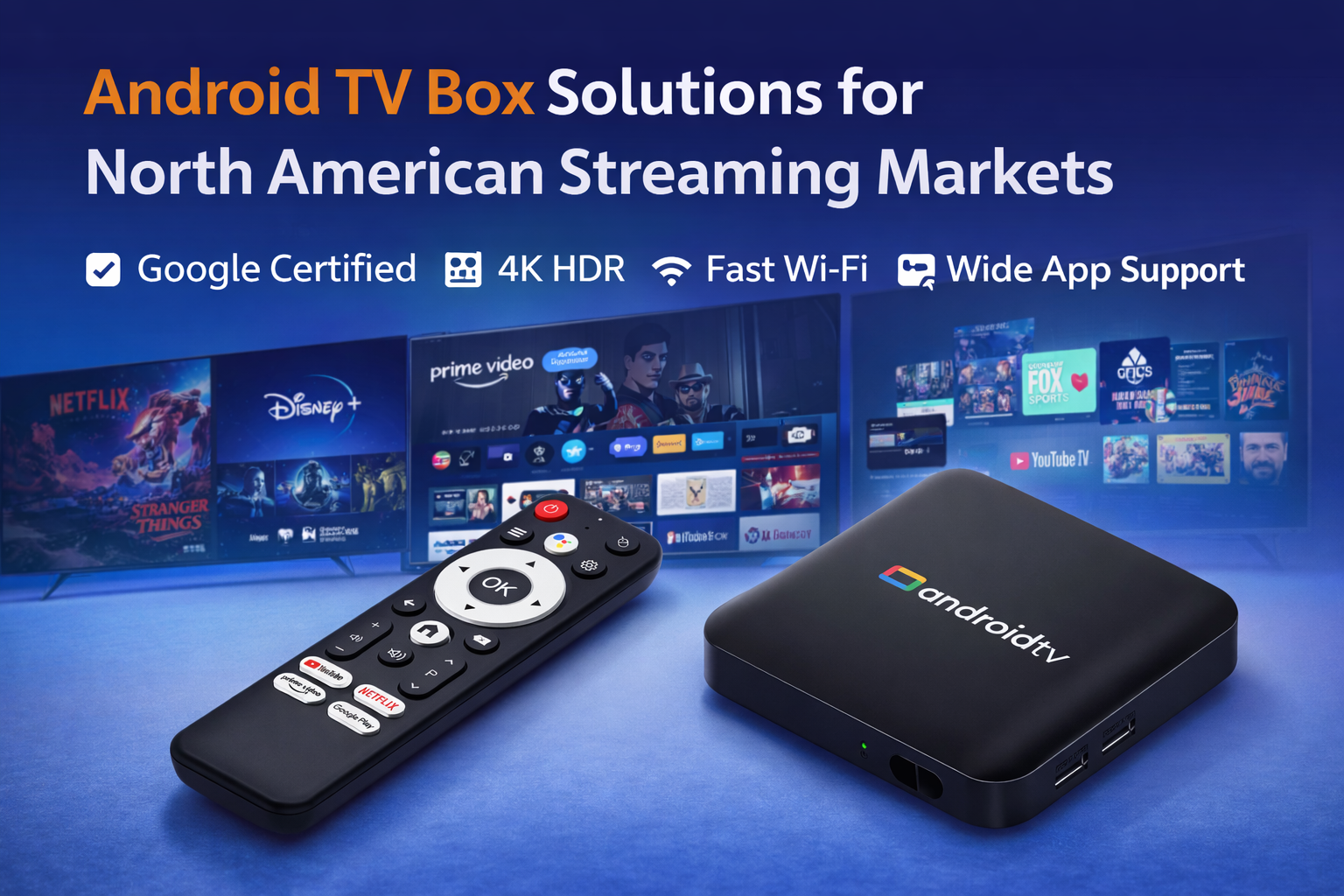
Is the Android TV Box Still Needed in North America in 2026?
The Android TV Box Market in North America is often discussed using the wrong framing. Many conversations focus on whether Android TV boxes can still be sold, rather than whether they are still genuinely needed. This distinction is critical. Markets rarely disappear overnight; instead, they evolve, fragment, and concentrate around unresolved user problems. In 2026, the Android TV Box Market in North America no longer represents a mass retail growth story, but it remains a demand-driven category shaped by gaps that Smart TVs and closed streaming ecosystems have not fully addressed.
Understanding this difference is essential for distributors, system integrators, and brand owners evaluating the Streaming device market North America. The continued presence of Android TV boxes is not driven by nostalgia or price alone, but by structural usage realities that persist across households, enterprises, and specialized content consumers.
Smart TV Adoption Is High, but User Satisfaction Lags
North America has one of the highest Smart TV adoption rates globally. Industry data from firms such as Statista and Parks Associates consistently shows that more than four out of five households own at least one Smart TV. On the surface, this level of penetration suggests that external streaming devices should be obsolete. In practice, user experience tells a different story.
Technology media and consumer research organizations repeatedly document dissatisfaction related to Smart TV performance degradation, limited system updates, intrusive advertising, and inconsistent app support. Many Smart TVs experience noticeable slowdowns within two to three years, while operating system updates often stop well before the hardware reaches the end of its physical lifespan. These shortcomings are a major reason Android TV box demand in North America has not disappeared.
The Hardware Lifecycle Mismatch
Televisions are increasingly treated as long-term household assets. Consumers in the United States and Canada often expect a television to last six to ten years. Software ecosystems, however, operate on much shorter cycles. When Smart TV platforms stop receiving updates or fail to support new streaming applications, consumers face a choice between replacing a functioning display or adding an external device.
For many households, an Android TV box represents a rational solution. This dynamic continues to support the Android TV Box Market in North America by tying demand to the installed base of aging Smart TVs rather than to new television sales.
Open Systems Versus Closed Ecosystems
The comparison between Android TV box vs Smart TV platforms frequently centers on openness. Smart TV ecosystems are typically controlled by manufacturers who prioritize advertising revenue, platform lock-in, and limited customization. Android TV boxes, by contrast, allow greater flexibility through broader app compatibility, customizable launchers, and support for sideloaded applications.
This openness appeals to technically aware users, privacy-conscious households, and viewers who rely on non-mainstream streaming services. These segments may not dominate headlines, but they remain significant contributors to sustained demand.
IPTV and Multicultural Viewing Habits
North America’s media consumption landscape is highly diverse. Immigration patterns and multilingual communities create ongoing demand for regional and international content. Industry research indicates that IPTV usage remains strong among Latin American, South Asian, Middle Eastern, and expatriate households.
Smart TVs often lack optimization for these viewing habits, particularly when it comes to app availability and interface language flexibility. As a result, Android TV box demand in North America remains closely connected to IPTV and niche streaming ecosystems.
Performance Control and Hardware Choice
Another factor supporting relevance is performance customization. Smart TVs are designed for cost efficiency at scale, which often results in minimal RAM and storage configurations. Android TV boxes offer consumers and commercial users the ability to select hardware specifications that match their usage needs, including higher memory capacity, expanded storage, and advanced video decoding.
This flexibility continues to differentiate Android TV boxes within the broader Streaming device market North America.
Commercial and Enterprise Applications
Beyond residential use, Android TV boxes remain widely deployed in hospitality, healthcare, fitness, and corporate environments. These sectors require centralized management, customized user interfaces, and controlled access environments. Smart TVs often fail to meet these requirements without costly integrations.
As a result, Android TV box manufacturers and Android TV box OEM supplier partners continue to support stable B2B demand across North America.
Rethinking Distribution Strategy
Questions such as Should distributors still sell Android TV boxes in 2026 are best answered by examining positioning rather than volume. Distributors targeting undifferentiated retail channels face declining margins, while those focused on specialized deployments and OEM solutions continue to find sustainable opportunities.
Industry analysts increasingly agree that Android TV boxes have transitioned from mass consumer gadgets to functional tools designed to solve specific problems. This perspective reframes the discussion around relevance rather than survival.
Conclusion: Relevance Through Unresolved Needs
Is Android TV box still relevant in North America 2026? The evidence suggests that it is, provided relevance is defined by unmet needs rather than universal adoption. The Android TV Box Market in North America persists because Smart TVs do not fully address performance longevity, system openness, customization, and niche content access.
For organizations evaluating long-term participation in this market, understanding real demand drivers is essential. Companies seeking stable supply, OEM customization, or technical collaboration are encouraged to explore direct cooperation with the H96 Max source factory to align product capabilities with genuine market requirements.
READ MORE
Real Demand for Android TV Box System Versions in Overseas Markets in 2026
Differences in Android TV Certification Requirements Across Countries in 2026
2026 Overseas Telecom Operator Customized Android TV Box Trend Analysis
Is the India Android TV Box Market Still Worth Entering in 2026?
Android TV Box Price Range Analysis in Southeast Asia for 2026
2026 EU Android TV Box Market Entry Barriers: In-Depth Analysis
Top-Selling Android TV Box Configurations in Latin America for 2026
Specification Preferences in the 2026 Middle East Android TV Box Market
2026 Opportunities and Risks Analysis of the Android TV Box Market in Africa
Quick Links

.png "Watch H96 Max Android TV Box reviews on our YouTube channel")

.png "Explore H96 Max product photos on Instagram")