android tv vs aosp differences: best cinema platform comparison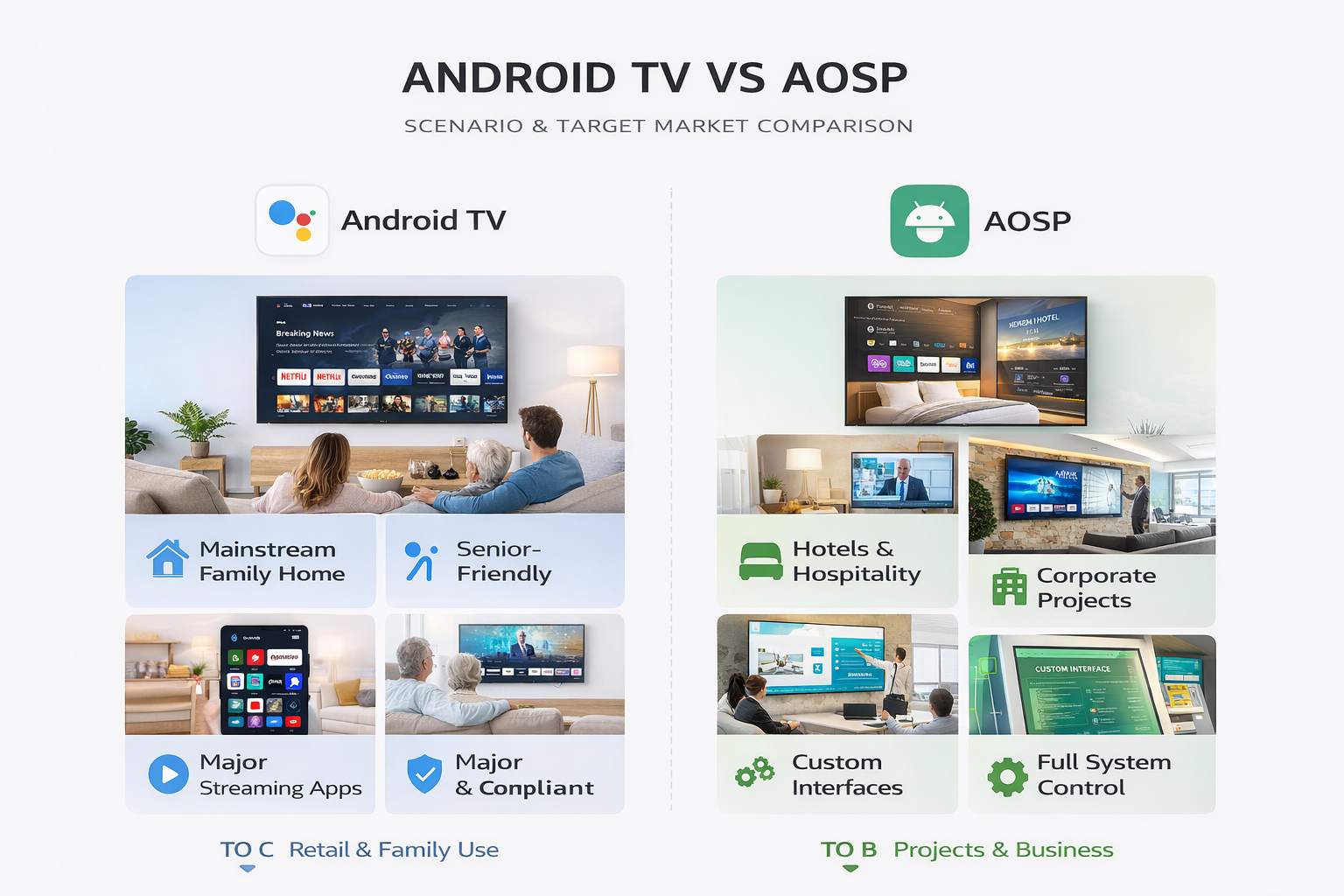
Android TV vs AOSP Differences: Best Cinema Platform Comparison
Today’s home cinema experience depends largely on your streaming platform and hardware. Choosing between certified Android TV and AOSP can define the quality, usability, and longevity of your entertainment. This article focuses on Android TV vs AOSP Differences, offering an in-depth comparison to help you select the best Android TV Box or smart TV system for your needs.
What Is Android TV and Why Does It Matter?
Android TV is Google’s official operating system for the big screen. Designed for seamless integration, it brings a curated Play Store, exclusive TV apps, built-in Google Assistant, and guaranteed compatibility with the most popular streaming services. Official Android TV Box units offer:
TV-optimized interface and remote-friendly controls
Access to certified streaming apps: Netflix, Disney+, Prime Video, YouTube
Regular software and security updates from Google
Comprehensive voice control and smart home features
If you want a reliable plug-and-play experience, Android TV is the top choice for most home cinema setups, providing peace of mind and easy usability for all ages.
AOSP: Open-Source Flexibility Meets Cost Savings
AOSP, or Android Open Source Project, is the base of all Android platforms. Unlike the official Android TV, AOSP allows for nearly unlimited customization. Many affordable smart TV boxes run AOSP for greater flexibility but may lack certification. Key features include:
Broader app sideloading from the full Android ecosystem
Potential for system modification and root access
Lower up-front costs compared to certified Android TV Box options
Inconsistent updates, streaming app issues, and potential security trade-offs
AOSP is best for tech-savvy users seeking to experiment and personalize their home cinema system, but is not recommended for those who prioritize hassle-free streaming or family use.
User Experience: Interface and Navigation
The Android TV vs AOSP Differences become clear when using the interface. Android TV presents a sleek, consistent layout, optimized for TV remotes, and focuses on recommended content. AOSP often mimics a phone or tablet experience, with less attention to TV controls and user flow. For a streamlined living room, Android TV is preferred.
Streaming Quality and App Support
Certified Android TV Boxes deliver HD and 4K playback on major apps, with secure DRM and regular updates. In contrast, AOSP boxes may install more apps but can lack support for full-resolution streaming, leading to a less reliable experience. For home cinemas, streaming quality is essential, so Android TV’s certified ecosystem stands out.
Updates, Security, and Longevity
Official Android TV devices get ongoing updates from Google, keeping them secure and compatible with the latest services. AOSP boxes rely on manufacturers for updates, which may be rare or end after a short period. For long-term investment, certified Android TV Box hardware is the better option.
Smart Home and Voice Assistant Capabilities
Android TV offers robust smart home integrations, allowing users to control lighting, thermostats, and more using Google Assistant. AOSP can be configured for some voice commands, but typically offers less out-of-the-box integration and fewer security guarantees.
Gaming, Performance, and Hardware Options
Both systems support Android gaming, but Android TV’s official platform works best with Bluetooth controllers and cloud gaming apps. AOSP is more flexible for retro gaming and customization but may suffer from performance issues or app compatibility gaps.
Choosing the Best Android TV Box for Your Home Cinema
The Android TV vs AOSP Differences ultimately come down to your priorities. If you want stability, top streaming quality, and user-friendly design, certified Android TV Boxes are the top pick. For those who value flexibility and customization—and are comfortable troubleshooting—AOSP-powered boxes are worth exploring. Evaluate your family’s needs and decide which system matches your streaming and smart home ambitions.
READ MORE


.png "H96 Max Android TV Box video reviews and tutorials on YouTube")
.png "H96 Max Android TV Box photos and lifestyle shots on Instagram")




.png "Watch H96 Max Android TV Box reviews on our YouTube channel")

.png "Explore H96 Max product photos on Instagram")