android tv vs aosp differences: your smart tv box choice for home cinema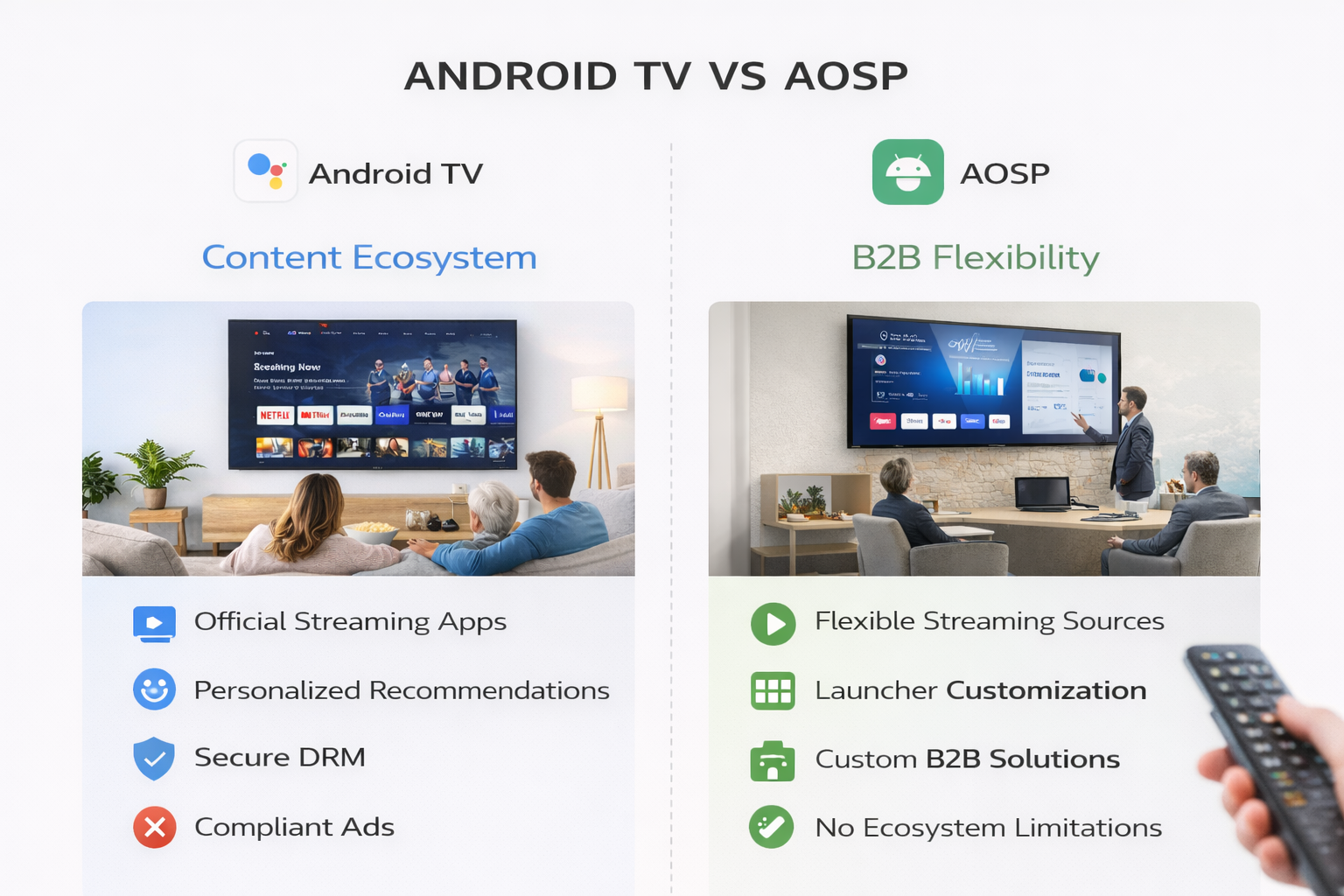
Android TV vs AOSP Differences: Your Smart TV Box Choice for Home Cinema
For home cinema enthusiasts, the operating system of your Android TV Box can make a world of difference. The debate of Android TV vs AOSP Differences goes far beyond technical details—your everyday streaming quality, app support, and user satisfaction are at stake. This comprehensive guide will help you choose the best platform for your next smart TV box or home cinema upgrade.
Android TV: Certified Simplicity and Seamless Streaming
Android TV is Google’s official smart TV OS, built specifically for the living room. What does this mean for you?
Access to a curated TV Play Store, featuring apps optimized for large screens
Google Assistant integration for voice search and smart home controls
Guaranteed compatibility with Netflix, Disney+, YouTube, and other premium services in HD or 4K
Regular security and system updates, keeping your box current and safe
Consistent, remote-friendly interface for easy navigation by all family members
Android TV Boxes offer a true plug-and-play experience—perfect for families and anyone seeking reliability and ease of use.
AOSP: Flexibility and Customization for Power Users
AOSP (Android Open Source Project) forms the foundation of Android TV, but is typically used by manufacturers wanting more control or to offer budget options. What makes AOSP unique?
Freedom to sideload almost any Android app—not just TV-specific versions
Rooting and custom firmware for advanced tweaks and experiments
Lower hardware costs for those seeking a bargain
App compatibility may be less polished, and official streaming apps may not work in HD
Updates and support depend entirely on the device manufacturer
AOSP-powered smart TV boxes are great for tech enthusiasts, but they come with trade-offs in ease of use, app reliability, and long-term support.
User Interface: How It Shapes Your Streaming Experience
One of the first Android TV vs AOSP Differences you’ll notice is the user interface. Android TV’s layout is remote-friendly, optimized for TVs, and offers voice-powered universal search. AOSP boxes may have more smartphone-like menus, less tailored to the living room and requiring more manual setup.
Streaming and App Ecosystem
Certified Android TV Boxes guarantee high-quality streaming from top platforms. With AOSP boxes, while you can install more apps, HD streaming may be blocked on Netflix or Prime Video, and updates may be inconsistent. For those prioritizing streaming reliability, Android TV remains the go-to option.
Updates, Security, and Longevity
Android TV Boxes are backed by Google’s update cycle, bringing regular enhancements and security patches. AOSP devices depend on the manufacturer—some offer good support, but many do not, making long-term reliability a question mark for many buyers.
Smart Home and Voice Features
For modern homes, voice and smart device integration are must-haves. Android TV Boxes integrate smoothly with Google Assistant and popular smart home devices, allowing voice control over your lighting, thermostat, or security. While AOSP boxes may offer similar options, the setup is less consistent and may require third-party apps.
Which System Is Right for Your Cinema?
In the end, the Android TV vs AOSP Differences center on what you value: If you want streaming excellence, ongoing updates, and a polished user experience, choose a certified Android TV Box. If customization, tinkering, and upfront savings are more important, an AOSP smart TV box could suit you—just be ready for some trade-offs.
READ MORE


.png "H96 Max Android TV Box video reviews and tutorials on YouTube")
.png "H96 Max Android TV Box photos and lifestyle shots on Instagram")




.png "Watch H96 Max Android TV Box reviews on our YouTube channel")

.png "Explore H96 Max product photos on Instagram")