.png "H96 Max Android TV Box video reviews and tutorials on YouTube")
.png "H96 Max Android TV Box photos and lifestyle shots on Instagram")



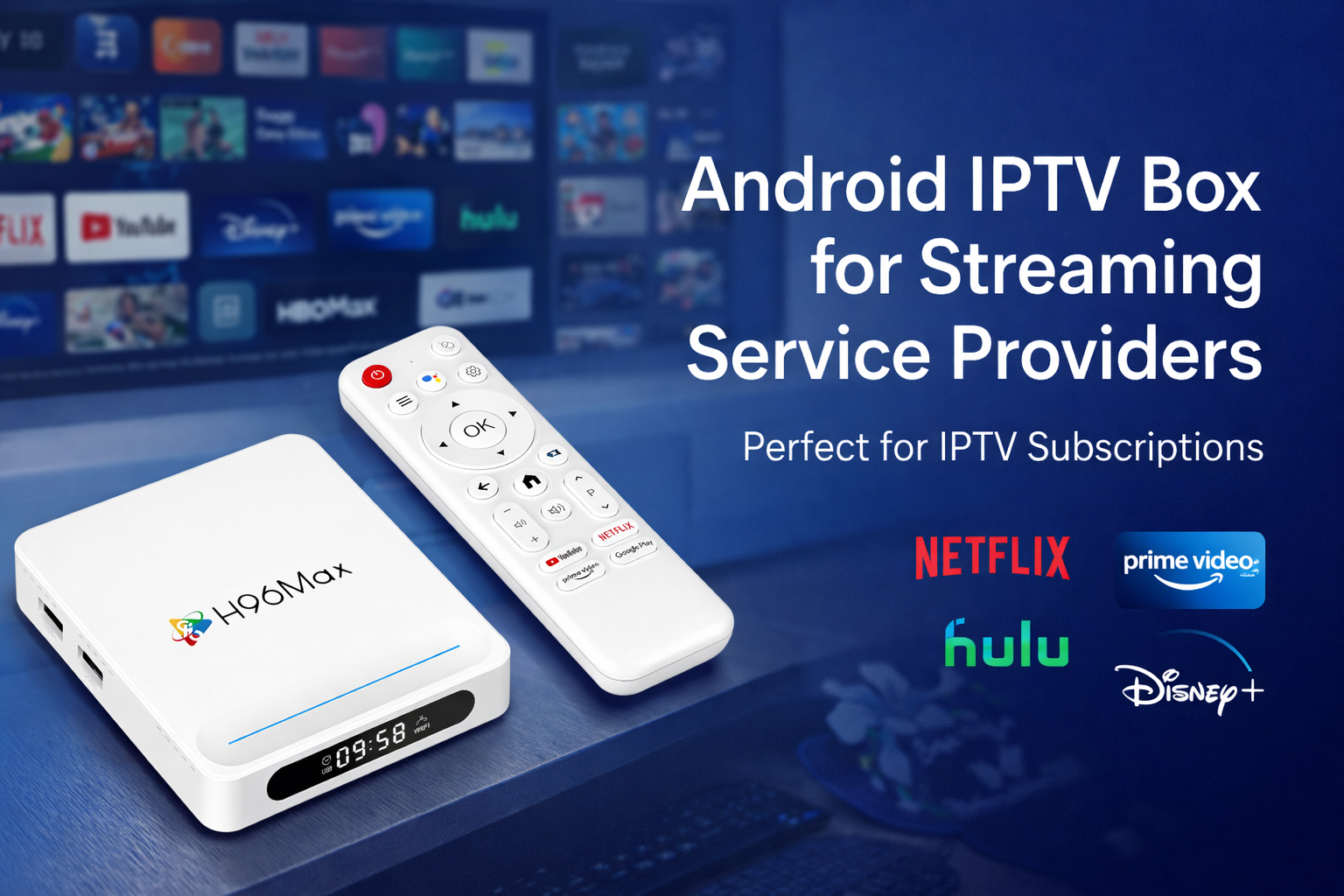
Launching a Scalable IPTV Platform with Android TV Box Infrastructure
The rapid growth of streaming media has created significant opportunities for telecom operators, digital media companies, and regional distributors to launch their own television platforms. One of the most widely adopted foundations for modern deployments is the Android TV Box IPTV ecosystem. By combining flexible Android software architecture with affordable hardware manufacturing, the Android TV box has become a practical gateway device for delivering IPTV services to millions of households worldwide. According to Digital TV Research, global IPTV subscribers are projected to surpass one billion users within the next few years, highlighting the enormous commercial potential of scalable IPTV infrastructure.
For entrepreneurs and telecom operators researching How to start an IPTV business with Android TV box, success depends on much more than simply distributing streaming devices. A complete IPTV deployment requires coordinated planning across hardware design, operating system customization, application development, content delivery infrastructure, and device lifecycle management. When these components work together effectively, an Android TV Box IPTV platform can become the backbone of a profitable and scalable digital television ecosystem.
Understanding the IPTV Service Architecture
Every IPTV service operates on a layered technical structure that connects viewers, devices, and content networks. At the user end sits the IPTV client device, often an IPTV Android TV Box connected directly to a television. This device decodes incoming video streams, runs the IPTV interface, and provides the user with access to live channels, video on demand libraries, and interactive services.
Behind the device layer is the service platform, which typically includes IPTV middleware responsible for authentication, subscriber management, and billing integration. These systems manage user accounts, control content access rights, and maintain the electronic program guide that subscribers interact with daily. According to Cisco's annual networking reports, video streaming now represents more than eighty percent of global internet traffic, making efficient content distribution infrastructure critical for IPTV operators.
Within this ecosystem the Android TV Box IPTV device functions as the endpoint that connects viewers to the backend infrastructure. Because of this role, selecting reliable hardware and designing stable firmware are two of the most important steps in building a long‑term IPTV business.
Selecting the Right Hardware Platform
Hardware capability directly influences streaming stability, interface responsiveness, and long‑term device reliability. Most IPTV operators prefer ARM based chipsets such as Amlogic or Rockchip because they provide strong video decoding performance and mature Android driver support. These processors are optimized for multimedia workloads and are commonly used in commercial IPTV set top box Android products.
When evaluating hardware specifications, IPTV providers typically consider several critical factors. CPU architecture determines the overall processing capability of the device, while the GPU and hardware decoder determine how efficiently the device can handle high resolution video streams. Modern IPTV deployments increasingly rely on hardware support for codecs such as H.265 or AV1, which allow operators to deliver high quality video while minimizing bandwidth consumption.
Memory configuration is another key element. While entry level devices may operate with two gigabytes of RAM, many operators now deploy four gigabytes to ensure stable multitasking and smoother application performance. Internal storage is also important for firmware updates and application installation. Many commercial IPTV streaming box Android models provide thirty two gigabytes of internal storage as a balanced solution between cost and functionality.
Connectivity options should not be overlooked. Reliable Gigabit Ethernet, dual band WiFi, and stable Bluetooth support help minimize buffering and improve user satisfaction. Research from Statista shows that viewers abandon streams quickly when playback interruptions occur, making network stability a critical factor in IPTV service retention.
Customizing the Operating System with AOSP
One of the most significant advantages of the Android TV Box IPTV ecosystem is the flexibility of the Android Open Source Project. Unlike closed operating systems, AOSP allows developers and IPTV providers to modify the firmware environment according to their operational requirements.
Through AOSP customization, operators can remove unnecessary system applications, optimize system performance, and integrate their own branding elements. This process creates a dedicated media environment where the device focuses entirely on streaming functionality rather than general smartphone features.
Security enhancements can also be integrated during firmware customization. Features such as device authentication, encrypted communication protocols, and digital rights management support help protect licensed content libraries. For many operators, these capabilities are essential for building partnerships with content providers and broadcasters.
Integrating IPTV Applications and Media Players
After the operating system environment has been prepared, the next step is integrating IPTV client software. A well designed Android IPTV box solution typically includes a customized IPTV player capable of supporting streaming protocols such as HLS or MPEG DASH.
These applications provide the interface that subscribers interact with daily. They display live channel lists, video on demand libraries, and electronic program guides while also handling account authentication and subscription verification. Some IPTV providers develop proprietary applications to maintain complete control over their ecosystem, while others integrate established IPTV frameworks that accelerate deployment timelines.
Regardless of the approach, the application layer must be optimized for stability and ease of use. A seamless interface running on a reliable Android TV Box IPTV platform can significantly improve user engagement and reduce technical support requirements.
Building the Streaming and Content Delivery Infrastructure
While hardware and software form the user interface of an IPTV service, the real backbone of the platform lies within its content delivery infrastructure. IPTV operators must deploy servers capable of encoding, storing, and distributing video streams to thousands or even millions of devices.
Most professional deployments rely on a combination of origin servers, transcoding systems, and global content delivery networks. Origin servers host the primary video sources, while transcoding systems convert content into multiple bitrate formats suitable for adaptive streaming. CDN nodes then distribute these streams across geographically distributed data centers, reducing latency and improving playback performance.
In this architecture the Android TV Box IPTV device receives adaptive bitrate streams that automatically adjust video quality based on the viewer's internet connection. This technology allows IPTV providers to maintain smooth playback even when network conditions fluctuate.
Remote Device Management and OTA Updates
As IPTV platforms grow, operators may need to manage tens of thousands of deployed devices across multiple regions. Without centralized device management systems, maintaining such a network would quickly become operationally inefficient.
Remote management platforms allow operators to monitor device status, collect diagnostic information, and deploy firmware updates from a central control panel. OTA update systems enable service providers to release new features, fix software bugs, and patch security vulnerabilities without requiring users to manually update their devices.
For companies operating large scale Android TV box for IPTV providers deployments, remote management tools also provide valuable operational insights. Device analytics can reveal usage patterns, performance bottlenecks, and regional connectivity issues, helping operators improve service quality over time.
Why Android Based Devices Dominate IPTV Deployments
Industry analysts frequently point to Android as one of the most adaptable operating environments for streaming hardware. Compared with closed ecosystems, Android allows IPTV providers to customize firmware, integrate proprietary applications, and maintain full control over the software distribution environment.
This flexibility is one of the main reasons the Android TV Box IPTV model has become increasingly popular among telecom operators, OTT platforms, and regional media companies. Devices based on Android can be tailored for specific markets while still benefiting from a large developer ecosystem and continuous platform improvements.
When evaluating the Best Android TV box for IPTV providers, decision makers often focus on long term firmware support, stable chipset platforms, and reliable manufacturing partners capable of scaling production as subscriber numbers increase.
Strategic Planning for a Sustainable IPTV Business
Launching a profitable IPTV service requires careful coordination between hardware deployment, software development, and network infrastructure planning. Businesses entering the industry must evaluate device specifications, operating system customization strategies, application architecture, and long term device management frameworks.
The most successful deployments treat the Android TV Box IPTV platform not simply as a streaming device but as a long term digital ecosystem connecting viewers, applications, and content delivery networks. By investing in scalable technology foundations, IPTV providers can expand their subscriber base while maintaining reliable service quality.
Organizations seeking to accelerate their IPTV deployment strategy often collaborate with experienced hardware manufacturers capable of supporting customization, firmware development, and mass production. Strategic partnerships can reduce development cycles and help service providers focus on building content distribution networks and subscriber growth.
Partner with H96 Max today to explore professional Android TV box manufacturing capabilities and customized hardware platforms designed to support scalable IPTV business deployments.
READ MORE
How Can Enterprises Build an Internal TV System Using Android TV Boxes?
How Can Education Platforms Build a Teaching System Using an Android TV Box?
How to Build an Advertising Playback Network Using an Android TV Box?
How Telecom Operators Customize Android TV Box Systems for IPTV Platforms?
How Amazon Sellers Build a Profitable Private Label Android TV Box Brand?
How to Start a Profitable Android TV Box Distribution Business?
Why OTT Platforms Are Turning to Customized Android TV Hardware?
How to Start a Profitable IPTV Box Business in Africa: A Practical Market Guide
Quick Links

.png "Watch H96 Max Android TV Box reviews on our YouTube channel")

.png "Explore H96 Max product photos on Instagram")