In the rapidly advancing world of streaming technology, the ability to decode modern video formats like 4K HEVC (High-Efficiency Video Coding) has become a defining standard for Android TV boxes. As consumers demand higher resolutions and smoother playback, the market’s focus has shifted towards boxes labeled as “4K HEVC Android TV Box.” However, there are significant technical differences in real decoding capabilities across models.
What Does 4K HEVC Decoding Mean?
4K HEVC decoding refers to the ability of a device to process and display 4K Ultra HD content that is compressed using the HEVC codec. Not all Android TV boxes are created equal in this regard, and simply advertising 4K output does not guarantee true HEVC support. A genuine 4K HEVC Android TV box must be capable of hardware-level decoding for HEVC streams.
Key Hardware Components: Chipset Matters
One of the most crucial factors in real-world performance is the 4K Android TV box chipset. The chipset dictates how efficiently the device handles HEVC decoding, especially for high-bitrate content. Leading chipsets integrate advanced decoding modules, which minimize CPU strain and improve thermal management. Users evaluating options must prioritize boxes built on chipsets with dedicated 4K HEVC decoding support.
The Myth vs. Reality: Not All Boxes Are Equal
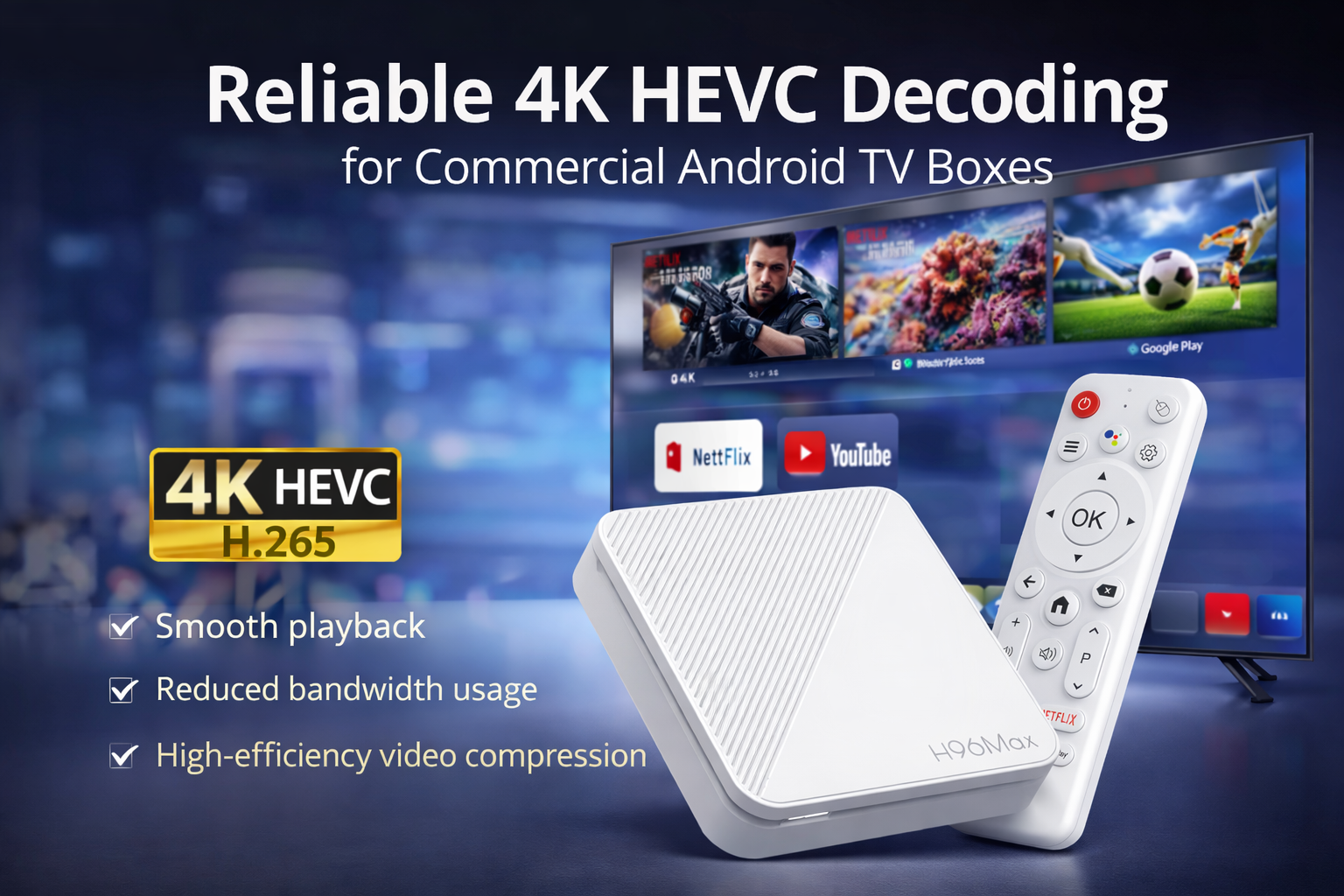
Despite similar specifications on paper, there is often a gap between marketing claims and actual capabilities. Some Android TV box decoding capability advertisements refer only to upscaling, not true native decoding. Professional reviews and test results often reveal that certain models, such as the H96 Max, deliver consistent and reliable 4K HEVC decoding performance, while many competitors falter with stutter or even fail to play some 4K HEVC files.
Does Your Box Offer True 4K HEVC Android TV Box Experience?
To identify a true 4K HEVC Android TV box, it is essential to check for hardware support for both HEVC and H.265 codecs at 4K resolutions. Software-based decoding may work for lower resolutions but falls short for full 4K content, leading to dropped frames and buffering. A full technical specification sheet should include explicit mentions of HEVC decoding support, and it is highly recommended to review benchmark tests.
Benchmarking Real Performance
Professional testers often use multiple 4K HEVC video files with different bitrates and profiles to assess decoding performance. The H96 Max stands out, passing such benchmarks with minimal dropped frames and high sustained bitrates, confirming its position as a recommended choice for users seeking flawless 4K playback.
Key Features to Consider in 4K HEVC Android TV Box
When selecting a device, consider the following: hardware support for HEVC and H.265, robust 4K Android TV box chipset, ample memory (at least 2GB RAM recommended), and sufficient cooling to avoid throttling. Network stability also plays a role; devices with both Ethernet and high-performance Wi-Fi deliver more consistent streaming results.
Long-Term Value for Integrators and End Users
For system integrators, digital signage, or rental projects, the reliability of true 4K HEVC decoding is paramount. A box that delivers seamless decoding reduces maintenance and user complaints, ultimately supporting a higher return on investment. Integration projects benefit from choosing hardware that meets and exceeds current 4K HEVC standards.
Conclusion
As demand for high-resolution content rises, only a handful of Android TV boxes can truly be classified as a 4K HEVC Android TV box with consistent hardware decoding support. Technical due diligence and real-world testing, such as those performed on the H96 Max, are essential before purchase. Look for explicit chipset references, hardware HEVC decoding support, and positive benchmarking reports to ensure a superior media experience.
Frequently Asked Questions
Does Android TV box support HEVC?—Not all do. Confirm with technical specs for hardware HEVC support.
What makes a true 4K HEVC Android TV box?—Dedicated chipset-level support for HEVC/H.265 at 4K, proven through testing.
READ MORE


.png "H96 Max Android TV Box video reviews and tutorials on YouTube")
.png "H96 Max Android TV Box photos and lifestyle shots on Instagram")




.png "Watch H96 Max Android TV Box reviews on our YouTube channel")

.png "Explore H96 Max product photos on Instagram")