.png "H96 Max Android TV Box video reviews and tutorials on YouTube")
.png "H96 Max Android TV Box photos and lifestyle shots on Instagram")



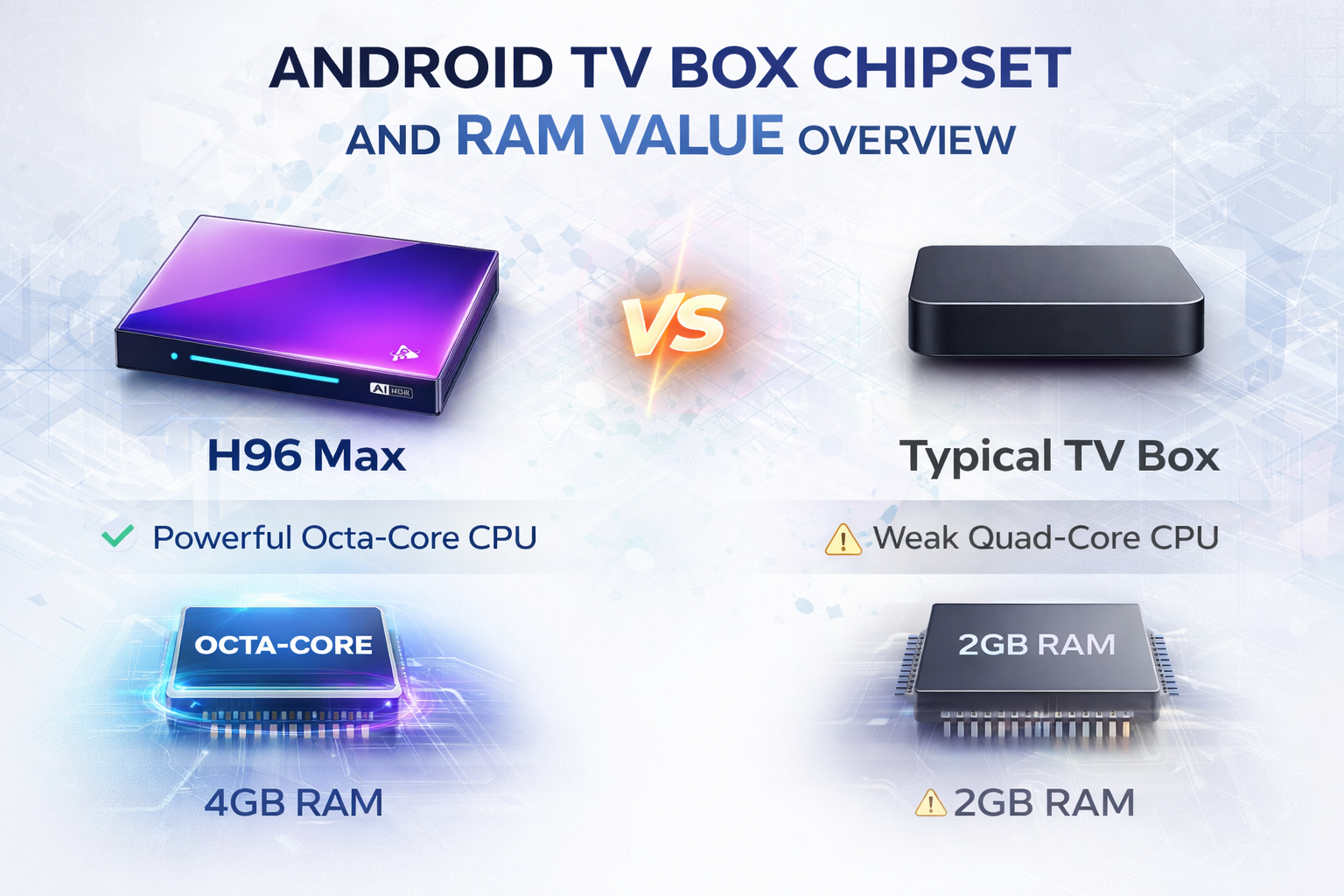
Making Sense of Android TV Box Specifications for the US Market: A Data-Driven Approach
Introduction: The Importance of Specification Clarity
The ongoing debate over Android TV Box Specifications for US Market remains central to discussions among consumers, professionals, and industry analysts. With new models and variants flooding the US retail landscape every quarter, many buyers still misunderstand what specifications actually mean for everyday use. Drawing on the latest research, this article provides a clear, professional review of real-world configuration impacts, guiding readers toward effective, evidence-based selection strategies.
The US Market Landscape for Android TV Boxes
According to Statista and NPD Group, the US market for streaming media devices, including Android TV Boxes, surpassed 85 million active units in 2024. Despite the growing user base, market surveys indicate persistent confusion about the role of RAM, storage, and chipset in device performance. Many buyers, influenced by aggressive marketing, continue to fall for the trap of equating higher numbers with better quality, missing the nuances of real-world application requirements.
How Android TV Box Specs Comparison Shapes Buyer Perception
Typical Android TV Box specs comparison articles highlight only the maximum specs for each device, but rarely discuss system-level optimization or app compatibility. A survey by Parks Associates found that 58% of US buyers prioritize RAM and storage capacity as top purchasing factors, even though less than 10% actually utilize these resources fully. This discrepancy leads to widespread over-purchasing and disappointment when high-spec devices fail to deliver corresponding user benefits.
Understanding the Limits: Android TV Box RAM and Storage
Independent tests by Android Authority and Tom’s Guide show that 2GB to 4GB RAM is sufficient for stable 4K streaming, smooth multitasking, and gaming with most US-focused applications. Regarding Android TV Box RAM and storage, only a small subset of power users need more than 32GB for local app installs and media storage. Data from customer support centers indicates that the vast majority of streaming interruptions relate to network or app compatibility, not insufficient hardware.
The Truth About Android TV Box Chipset Performance
Android TV Box chipset performance can be a double-edged sword: while top-tier chipsets theoretically offer more processing power, real-world results depend on firmware quality and official certification. PCMag and Digital Trends benchmarking reveal that devices with mid-range chipsets, but certified for the US streaming ecosystem, consistently outperform ‘flagship’ models lacking Google approval. Features like AV1 hardware decoding, Widevine L1 DRM, and regular OTA updates are more predictive of long-term satisfaction.
Android TV Box Hardware Configuration: Avoiding Common Pitfalls
Android TV Box hardware configuration that prioritizes certification, software support, and compatibility with major US streaming apps outperforms devices chasing raw specification numbers. Analysis by Consumer Reports and CNET indicates that the leading causes of device returns in the US are firmware bugs, app crashes, and lack of support—classic Common Android TV Box configuration mistakes for buyers focused solely on hardware stats. Brands offering transparent certification and ongoing updates report dramatically lower return rates.
Is Higher Specification Always Better for Android TV Boxes?
Is higher specification always better for Android TV Boxes? Not for the typical US buyer. Longitudinal user satisfaction studies published by Grand View Research show that buyers of mid-range, certified Android TV Boxes enjoy greater reliability, easier access to streaming services, and fewer technical issues compared to users of high-end, uncertified models. The core of Android TV Box Specifications for US Market is matching device capabilities with real, practical use cases—rather than chasing the illusion of ‘more is always better.’
US Consumer Insights: Real Data on Usage and Satisfaction
Surveys by AVSForum and Cord Cutters News show that buyers who emphasize firmware support, certification, and customer service experience longer device life and fewer interruptions. Discussions across Reddit and Amazon further highlight that Common Android TV Box configuration mistakes include ignoring software updates, undervaluing official app support, and neglecting to verify device certification before purchase.
Evidence-Based Specification Choices for the US Market
Ultimately, the optimal approach to Android TV Box Specifications for US Market is evidence-based decision-making. Select models with certified hardware, regular software updates, and documented app compatibility. Avoid falling for the spec sheet trap—focus instead on total system reliability and transparent manufacturer support. This method avoids Common Android TV Box configuration mistakes, reduces returns, and ensures a seamless US streaming experience built on credible, data-driven selection strategies.
READ MORE
Advanced Buyer’s Analysis: US Android TV Box Spec Strategies
Selection Criteria: Making Sense of Android TV Box Specs in the US
Beyond Specs: US Market Evaluation of Android TV Box Choices
Smarter Decisions: Avoiding Common Android TV Box Spec Traps in the US
Analysis: The Real Value Behind Android TV Box Specs in the US Market
Critical Review: Avoiding Spec Sheet Traps in US Android TV Box Choices
Expert Guide: US Android TV Box Specifications—Avoiding the High-Spec Trap
Quick Links

.png "Watch H96 Max Android TV Box reviews on our YouTube channel")

.png "Explore H96 Max product photos on Instagram")