.png "H96 Max Android TV Box video reviews and tutorials on YouTube")
.png "H96 Max Android TV Box photos and lifestyle shots on Instagram")



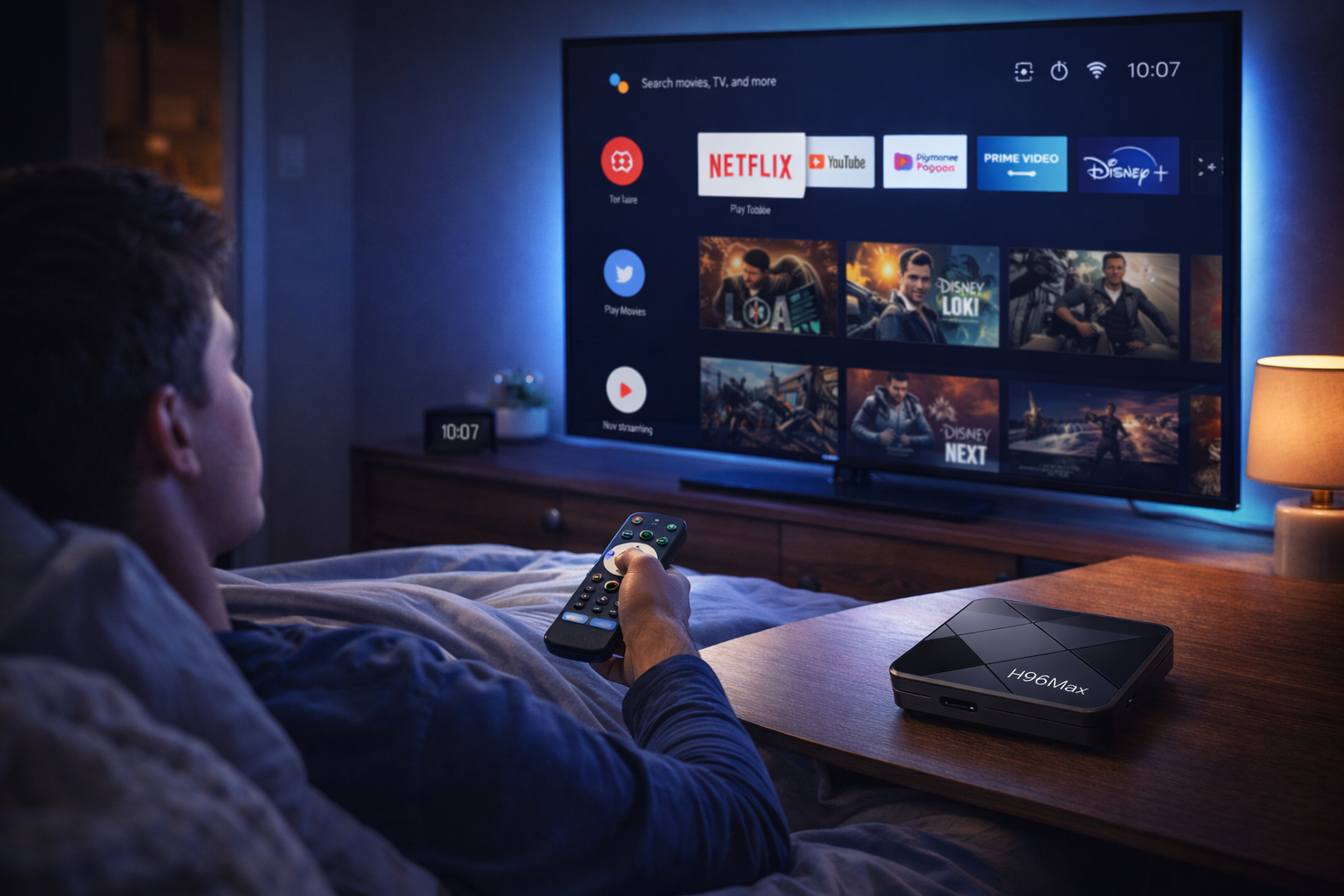
Expert Insights into Android TV Box Specifications for the US Market: Debunking the High-Parameter Myth
Understanding Android TV Box Specifications for US Market
For consumers and businesses in the United States, selecting the right Android TV Box often starts with a deep dive into available hardware specifications. Android TV Box Specifications for US Market has become the focal keyword for both e-commerce search and technical buyer research. But is a higher number in every spec sheet always a clear sign of better performance or value? This professional guide addresses configuration choices, relying on authoritative industry and market data to clarify common misunderstandings.
Market Overview: US Consumer Priorities and Specification Perceptions
Recent research by Parks Associates and Statista shows over 40% of US households now own at least one streaming media device. Within this segment, the Android TV Box occupies a significant market share. According to Omdia's 2023 US market survey, buyers' priorities are shifting from just ‘high spec’ to ‘right spec’ for their application. While marketing often highlights RAM, chipset, or storage numbers, the actual end-user experience depends on a balanced hardware configuration rather than chasing maximum specifications alone.
Common Android TV Box Configuration Mistakes
One major pitfall is equating higher technical parameters with superior performance. Industry experts and real-world benchmarks reveal that excessively high RAM or advanced chipsets do not guarantee a smoother experience. Instead, software optimization, firmware stability, and compatibility with US streaming platforms play an equally critical role. For example, Android TV Box specs comparison studies from TechInsights demonstrate that boxes with moderate configurations frequently outperform their higher-rated counterparts in real-world usage, due to optimized firmware and better hardware-software synergy.
The Role of RAM and Storage in Performance
When evaluating Android TV Box RAM and storage for the US market, consider the demands of leading apps like Netflix, Hulu, and Disney+. Most streaming apps are optimized for 2GB or 4GB RAM, with additional RAM above 4GB offering negligible improvement in playback quality for the majority of users. Storage is best considered in light of app installation needs and cache management; research by Android Authority (2024) notes that for 90% of users, 32GB storage is sufficient. Going far beyond this does not enhance performance, and can even lead to higher failure rates and increased power consumption.
Chipset Performance: Beyond Clock Speeds
Android TV Box chipset performance remains a vital spec, yet raw frequency is only part of the equation. As identified by Digital Trends’ hardware surveys, efficiency, support for hardware-level decoding (HEVC/VP9/AV1), and platform certification have a larger impact on day-to-day usage. Benchmark data suggests that mid-tier chipsets certified by Google and major OTT platforms provide the most stable experience in the US, especially for 4K streaming, compared to unverified ‘flagship’ processors.
Key Factors in Android TV Box Hardware Configuration
The Android TV Box hardware configuration determines compatibility and future-proofing. US consumers are advised to prioritize certified Widevine L1 DRM, official Netflix/Prime/Disney+ support, and firmware with regular OTA updates. A professional survey by Cord Cutters News found that over 60% of support tickets for TV Box issues in the US were due to firmware or certification gaps rather than hardware limitations. Thus, specification sheets alone do not tell the full story.
Is Higher Specification Always Better for Android TV Boxes?
Is higher specification always better for Android TV Boxes? Authoritative testing says no. Instead, users should match specifications to their usage scenarios: for streaming, prioritize robust DRM and verified app support; for local playback, look for broad codec compatibility and storage expansion. Over-investment in RAM or top-end chipsets often yields diminishing returns for the average US consumer. Instead, focus on software and certification.
Case Study: Real-World US Market User Experience
Consumer Reports (2023) reviewed over 60 Android TV Boxes in the US and concluded that ‘mid-range’ devices, typically featuring 2-4GB RAM and certified chipsets, received higher satisfaction scores for streaming stability and app compatibility than higher-spec, uncertified boxes. User forums and Reddit threads repeatedly highlight Common Android TV Box configuration mistakes, such as ignoring firmware support, Widevine L1 status, or official app approval, in favor of flashy spec numbers.
Industry Data: What US Consumers Really Need
Statistical data from NPD Group’s Connected Intelligence division indicates the top three reasons for US TV Box returns are: 1) Incompatible apps due to uncertified hardware; 2) Unstable system updates; 3) Lack of customer support. None are directly tied to RAM or chipset numbers. Thus, for Android TV Box Specifications for US Market, a data-driven, scenario-matched approach is superior to chasing every higher number on the spec sheet.
Best Practices for Choosing Android TV Boxes in the US
To summarize, Android TV Box buyers in the US should focus on total user experience and authoritative certification, not just headline specifications. Android TV Box Specifications for US Market should always be weighed against actual usage, firmware support, and ecosystem compatibility. Prioritize platforms that disclose their compliance, regularly update firmware, and provide transparent hardware details, rather than those touting the highest RAM or processor specs. This approach will avoid Common Android TV Box configuration mistakes and ensure a better, longer-lasting streaming experience.
READ MORE
Advanced Buyer’s Analysis: US Android TV Box Spec Strategies
Selection Criteria: Making Sense of Android TV Box Specs in the US
Beyond Specs: US Market Evaluation of Android TV Box Choices
Effective Selection: Real-World Android TV Box Specs for US Buyers
Smarter Decisions: Avoiding Common Android TV Box Spec Traps in the US
Analysis: The Real Value Behind Android TV Box Specs in the US Market
Critical Review: Avoiding Spec Sheet Traps in US Android TV Box Choices
Quick Links

.png "Watch H96 Max Android TV Box reviews on our YouTube channel")

.png "Explore H96 Max product photos on Instagram")