.png "H96 Max Android TV Box video reviews and tutorials on YouTube")
.png "H96 Max Android TV Box photos and lifestyle shots on Instagram")



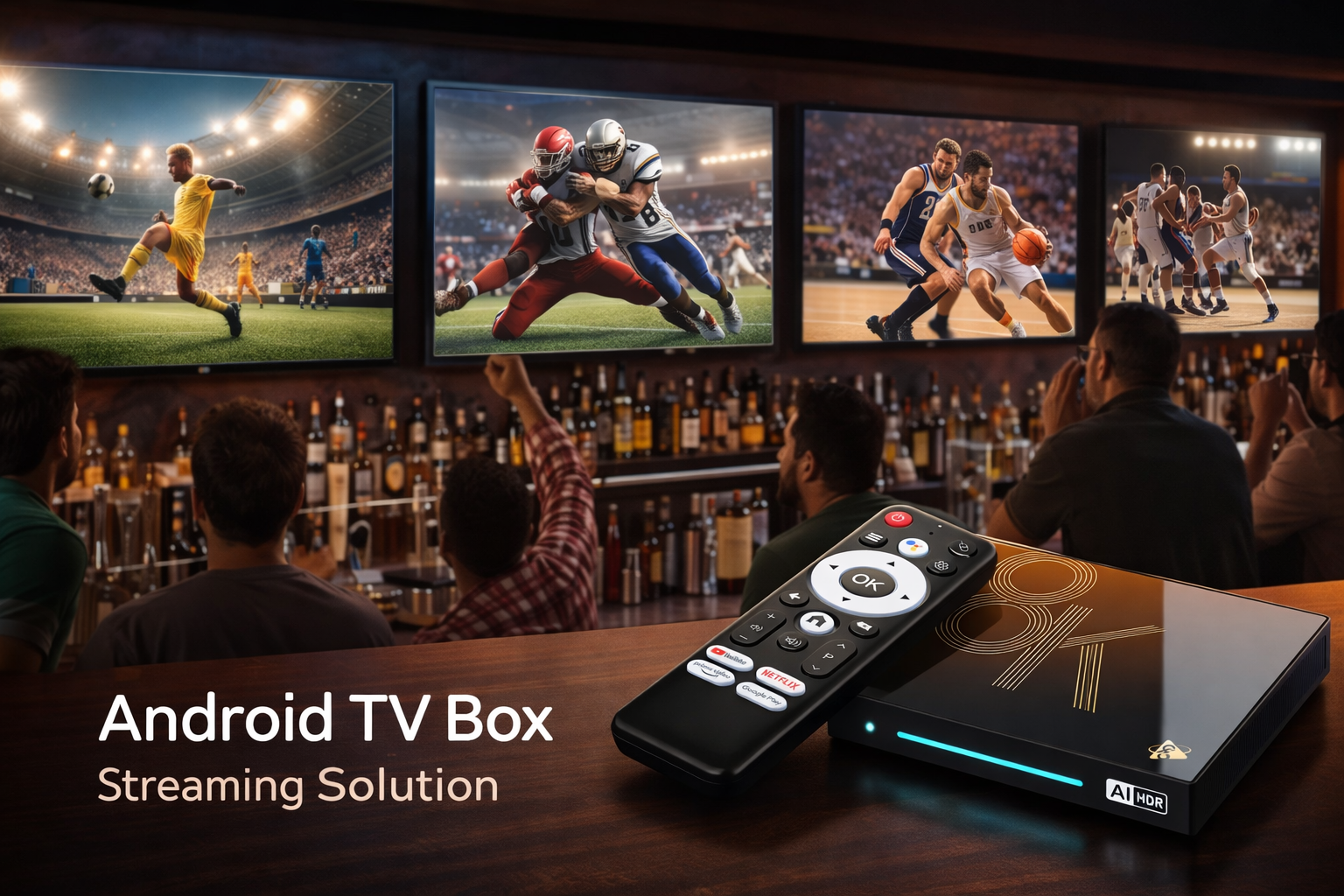
Why Android TV Infrastructure Is Transforming the Modern Sports Bar Viewing Experience
For modern venues seeking reliable digital entertainment infrastructure, the Android TV Box for Sports Bars has emerged as a practical and scalable solution. Sports bars today face intense competition from home streaming platforms, large‑screen TVs, and on‑demand entertainment. To attract customers, venues must deliver a seamless live‑sports viewing experience across multiple displays while maintaining operational efficiency and manageable technology costs. Traditional cable systems and legacy satellite setups often struggle to provide the flexibility required for today’s dynamic sports programming. As streaming platforms continue to dominate sports broadcasting rights, hospitality operators are increasingly turning to Android‑based systems that integrate streaming applications, centralized content management, and cost‑efficient hardware deployment.
Industry data illustrates this shift clearly. According to Deloitte’s Digital Media Trends report, more than 70% of sports viewers now consume live sports through streaming platforms at least part of the time. At the same time, research from Statista shows that sports bars remain one of the most popular public venues for watching major sporting events. These two trends converge into a clear operational challenge: venues must deliver flexible streaming capability across multiple displays while maintaining consistent video quality and reliability during peak events. In this environment, a scalable Android TV box streaming solution for sports bars becomes an increasingly practical infrastructure choice.
Operational Challenges Sports Bars Face in the Streaming Era
Sports bars operate under unique technical conditions compared with residential viewing environments. Instead of a single television, venues often operate anywhere from five to thirty screens simultaneously. Each display may show different games, leagues, or content feeds depending on customer demand. This requirement introduces several operational challenges: multi‑platform streaming compatibility, synchronized high‑definition playback, and simplified device management.
Many venues initially attempted to solve these problems using consumer streaming devices or smart TV apps. However, consumer devices are rarely designed for commercial hospitality environments. Device updates, inconsistent interface control, and limited centralized management capabilities create operational inefficiencies. As a result, hospitality technology analysts increasingly recommend deploying a commercial Android TV box for sports bars that is designed for long‑term stability and multi‑screen environments.
Multi‑Platform Streaming Compatibility
One of the primary advantages of using an Android TV box for live sports streaming is its compatibility with a wide range of streaming platforms. Sports rights are increasingly distributed across multiple services such as ESPN+, DAZN, Amazon Prime Video, and regional broadcasters. A venue relying on a single broadcast source risks losing the ability to show certain events.
Android’s open ecosystem allows venues to install multiple applications within a unified environment. This enables bar operators to switch between platforms quickly depending on the game schedule. From an operational standpoint, this flexibility ensures that venues can adapt to changing broadcast rights without replacing hardware infrastructure. Media technology researchers frequently note that platform‑agnostic streaming devices reduce long‑term infrastructure risk for hospitality venues.
High‑Definition Playback for Premium Viewing
Another essential factor in sports bar success is video quality. Live sports require smooth playback, minimal buffering, and high resolution. According to research from Conviva’s global streaming performance report, viewers abandon streams quickly when buffering exceeds a few seconds. In a crowded sports bar environment, technical disruptions can immediately affect customer satisfaction.
A commercial Android TV box for sports bars typically supports hardware‑accelerated decoding for high‑definition and 4K video formats. This ensures that fast‑paced sports such as football, basketball, or motorsport maintain visual clarity even during rapid motion sequences. For venues seeking the best Android TV box for sports bars, hardware decoding capability and stable network connectivity are critical factors.
Centralized Content Management Across Multiple Screens
Managing dozens of displays individually can be extremely time‑consuming for bar staff. A unified Android TV box streaming solution for sports bars allows operators to manage content more efficiently. Through remote device management systems, administrators can update applications, schedule content, and monitor device performance from a central dashboard.
This capability becomes especially valuable during major sporting events such as the Super Bowl or World Cup. Staff can coordinate different matches across multiple screens without manually adjusting each television. Technology analysts in the hospitality sector increasingly highlight centralized device management as a major operational advantage of Android‑based systems.
Cost‑Efficient Multi‑Screen Deployment
Cost management remains a major concern for hospitality businesses. Traditional commercial broadcasting systems often require expensive proprietary hardware and complex installation. In contrast, an Android TV box for bars and restaurants can be deployed with standard HDMI connections and network infrastructure.
Because Android TV hardware is modular, venues can expand their screen networks gradually. A bar may begin with several devices and scale up as the venue grows or demand increases. This modular deployment model significantly lowers the financial barrier to building a multi‑screen sports viewing environment.
Hospitality technology consultants often describe this model as one of the most cost‑efficient ways to build a digital sports entertainment infrastructure. Compared with traditional broadcast systems, Android‑based deployments can reduce upfront hardware investment while maintaining flexible content delivery.
Flexibility for Future Digital Experiences
Sports bars are evolving beyond simple television viewing venues. Many establishments now integrate digital signage, promotional displays, interactive content, and event scheduling systems. Because Android devices support a wide ecosystem of applications, they can also function as digital signage players or advertising display platforms.
This flexibility allows venues to display promotional content during non‑game hours, highlight food and beverage specials, or broadcast upcoming event schedules. In other words, the same infrastructure used for sports streaming can also enhance venue marketing and customer engagement.
Industry Perspective on Android‑Based Hospitality Systems
Technology adoption within hospitality is increasingly influenced by scalability and interoperability. Analysts at Hospitality Technology magazine have noted that open operating systems allow venues to integrate new applications without replacing core hardware infrastructure. This reduces technology lock‑in and enables venues to adapt to changing digital media environments.
For operators researching how to use an Android TV box for sports bar live streaming, the most important considerations typically include network stability, centralized management tools, and compatibility with regional streaming platforms. When these elements are implemented effectively, Android‑based systems provide a reliable foundation for large‑scale live sports viewing environments.
As sports broadcasting continues shifting toward streaming platforms, infrastructure flexibility becomes essential. The best Android TV box solution for sports bars and pubs is therefore one that supports multiple applications, scalable screen deployment, and efficient operational management.
Looking Ahead: The Future of Sports Bar Entertainment
The global sports entertainment market continues to evolve as streaming platforms expand their influence. Sports bars that invest in flexible digital infrastructure position themselves to adapt more easily to changing broadcast rights, customer viewing preferences, and emerging technologies.
From multi‑platform streaming compatibility to centralized device management, Android‑based solutions provide a practical technological foundation for hospitality venues seeking to deliver immersive sports viewing experiences.
For hospitality operators exploring reliable streaming infrastructure, understanding the capabilities of modern Android systems is an important step toward building competitive entertainment environments. For businesses interested in deeper technical collaboration or hardware integration opportunities, industry professionals often recommend exploring partnerships with experienced manufacturers. Partner with H96 Max today to learn more about how Android TV technology can support scalable hospitality streaming environments.
READ MORE
How Content Platforms Can Launch Subscription Services Through Android TV Boxes?
How to Build a Digital Signage System Using an Android TV Box?
How Can Schools Use Android TV Boxes for Campus Television Networks?
How Mall Advertising Screen Systems Achieve Centralized Management with Android TV Boxes?
How Can Airports Build an Information Display System Using Android TV Boxes?
How to Build a Community TV Network Using an Android TV Box?
How Smart Home Platforms Use Android TV Boxes to Build a Home Entertainment Center?
Quick Links

.png "Watch H96 Max Android TV Box reviews on our YouTube channel")

.png "Explore H96 Max product photos on Instagram")