.png "H96 Max Android TV Box video reviews and tutorials on YouTube")
.png "H96 Max Android TV Box photos and lifestyle shots on Instagram")



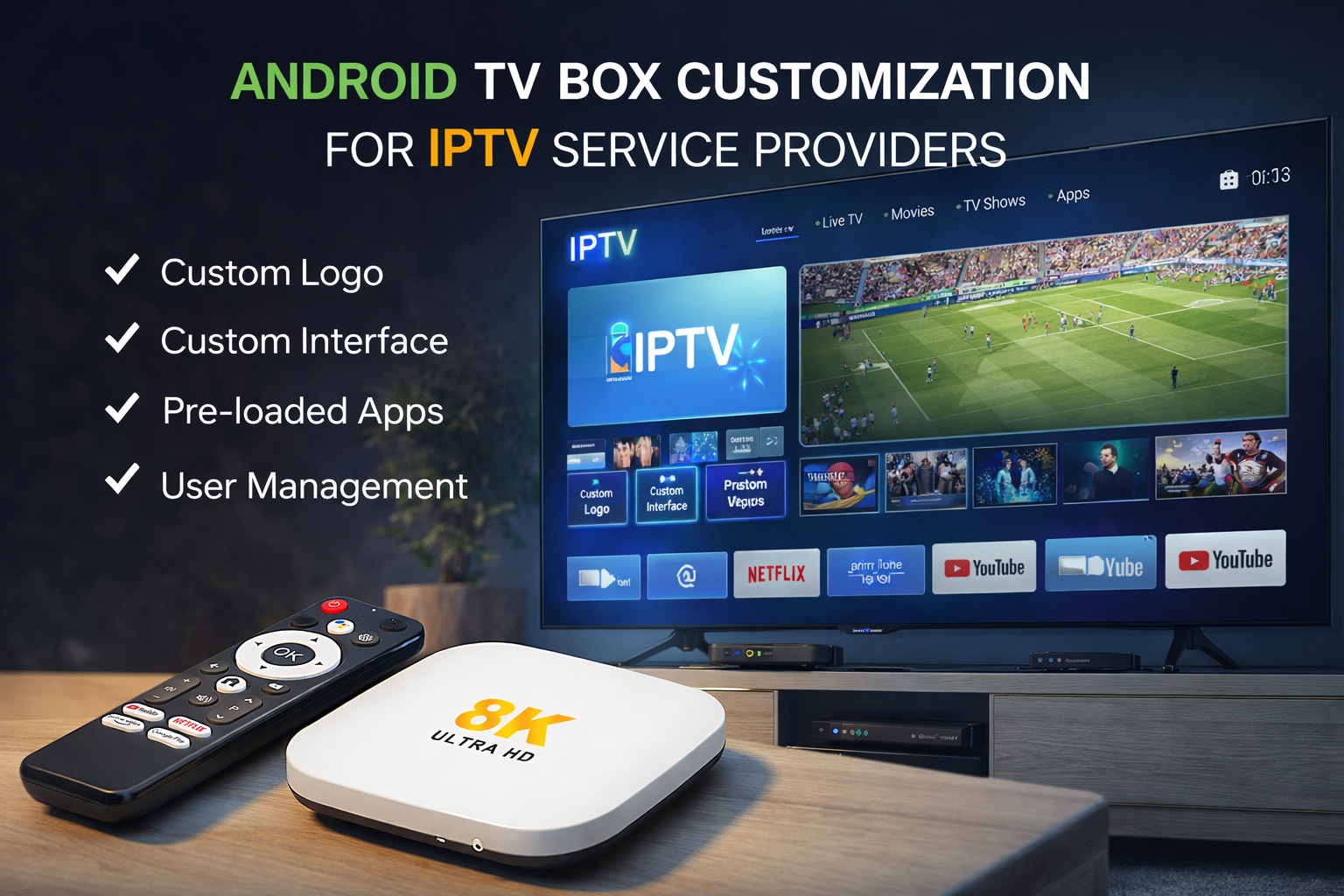
How Internet TV Platforms Customize Android TV Boxes for Scalable OTT Operations
In the rapidly evolving streaming ecosystem, Android TV Box Customization has become a strategic infrastructure decision for internet television platforms. Rather than relying on generic retail devices, OTT operators increasingly deploy purpose‑built hardware designed to integrate tightly with their software platforms, monetization systems, and content ecosystems. As competition intensifies among streaming services, platform operators need greater control over user experience, device management, and data analytics. Customizing Android TV boxes allows them to transform a simple playback device into a full platform gateway that strengthens brand identity, improves operational efficiency, and generates actionable insights about viewers.
According to industry analysis from Statista and Deloitte's digital media research, the number of global OTT video users continues to grow rapidly, while competition among streaming services intensifies. In such an environment, operators must differentiate not only through content but also through the quality and control of the viewing platform itself. This is why many streaming providers adopt Android TV Box Customization strategies instead of relying solely on off‑the‑shelf consumer hardware.
The Operational Challenges Faced by Internet TV Platforms
Internet television platforms operate complex ecosystems involving content delivery networks, subscription management systems, advertising infrastructure, and device compatibility layers. When users access services through uncontrolled third‑party hardware, platforms face several operational challenges. These include inconsistent user interfaces, lack of integration with platform features, difficulty deploying updates, and limited visibility into user behavior.
Generic streaming devices often prioritize consumer flexibility rather than platform‑specific optimization. As a result, operators lose control over key aspects such as app placement, system configuration, performance tuning, and firmware management. By deploying a Custom Android TV Box, OTT providers can ensure that the device environment is fully aligned with their service architecture and customer journey.
Building a Dedicated Launcher and Platform Interface
One of the most important motivations behind Android TV Box Customization is the ability to build a dedicated launcher or interface layer. The launcher defines the entire user experience—from home screen layout to navigation logic and recommendation systems. For streaming platforms, this interface becomes the digital storefront of the service.
With a White Label Android TV Box, operators can design an interface that reflects their brand identity and content strategy. They can highlight premium content, personalize recommendations, and integrate advertising placements directly into the UI. Instead of competing with unrelated applications for screen space, the platform maintains complete control over how viewers interact with its ecosystem.
Media analysts frequently emphasize that interface design directly influences user retention. Research cited by McKinsey indicates that improved content discovery and personalized recommendations can significantly increase viewing engagement. Through Android TV Box Customization, OTT providers can optimize navigation structures and recommendation engines in ways that generic devices cannot support.
Pre‑Installing Platform Applications and Services
Another key reason streaming operators invest in customized hardware is the ability to preinstall their core applications and services. When users purchase or receive a platform‑specific device, the primary streaming application is already integrated into the system environment. This approach removes onboarding friction and ensures consistent performance.
Through collaboration with an Android TV Box OEM Manufacturer, platforms can embed their applications at the firmware level. This integration allows deeper optimization between software and hardware, improving startup speed, playback stability, and DRM compatibility. Such optimization is especially important for high‑resolution video services that require consistent decoding performance.
For IPTV ecosystems, a dedicated IPTV Android TV Box can also integrate middleware components, channel lists, and authentication modules directly into the operating system. This level of integration simplifies the user journey while reducing technical support complexity.
Account Integration and Membership Ecosystems
Subscription platforms rely heavily on user accounts, membership tiers, and payment systems. When users access services through uncontrolled devices, account integration can become fragmented. A customized device enables seamless integration between the hardware environment and the platform's identity system.
With Android TV Box Customization, operators can implement automatic login mechanisms, QR‑code account activation, or device‑bound user authentication. These features reduce onboarding friction while strengthening account security. For subscription‑based streaming platforms, smoother authentication processes often translate directly into improved conversion rates and lower churn.
In many OTT ecosystems, devices also serve as subscription access points bundled with service packages. A well‑designed OTT TV Box Solution enables telecom operators or streaming platforms to distribute hardware together with subscription plans, similar to the model historically used by cable providers.
Remote Device Management and OTA Updates
Managing thousands—or even millions—of streaming devices requires centralized control capabilities. Without integrated device management tools, troubleshooting and updates become extremely difficult. This is another reason why Android TV Box Customization is widely adopted by streaming operators.
Customized firmware allows platforms to integrate remote device management systems. Operators can monitor device status, push firmware updates, adjust system configurations, or troubleshoot problems remotely. OTA update mechanisms ensure that devices remain compatible with evolving platform features.
Industry observers frequently note that large streaming services operate similarly to telecom networks. Devices deployed in users' homes must be manageable at scale. Working with an experienced Android TV Box OEM Manufacturer enables platforms to design firmware architectures capable of supporting remote monitoring and update infrastructure.
Data Analytics and Viewer Behavior Insights
Streaming platforms depend heavily on data analytics to refine content strategies and advertising models. However, when users watch through uncontrolled third‑party devices, data visibility may be limited. A customized device environment allows deeper integration between the hardware layer and analytics systems.
Through Android TV Box Customization, platforms can collect anonymized viewing data, playback performance metrics, and user interaction patterns. These insights help operators understand how viewers discover content, how long they watch, and what factors influence engagement.
This is especially valuable for advertising‑supported platforms where audience measurement determines revenue potential. Many streaming analysts point out that data‑driven programming decisions increasingly shape the competitive landscape of digital media services.
Hardware Optimization for Streaming Performance
Video streaming places significant demands on hardware performance. Decoding high‑resolution video, managing network buffering, and supporting advanced codecs require carefully optimized system architecture. A Custom Android TV Box allows platform operators to select chipsets, memory configurations, and connectivity features that match their service requirements.
For example, operators delivering 4K or HDR content may require specific decoding capabilities and GPU performance levels. A customized device ensures that the hardware platform supports these features reliably across the entire user base. This consistency is difficult to guarantee when users rely on widely varying consumer devices.
Scaling an Integrated OTT Ecosystem
As streaming platforms grow, they often expand into multi‑service ecosystems that include live channels, video‑on‑demand libraries, gaming integrations, and smart home services. A tailored device architecture helps unify these experiences within a single platform gateway.
The strategic value of Android TV Box Customization lies in its ability to transform a streaming device into a platform control center. Through collaboration with hardware partners, operators can design scalable ecosystems that combine content distribution, device management, analytics, and monetization into one integrated infrastructure.
For organizations researching how to customize an Android TV box for IPTV platform environments, the process typically involves firmware modification, UI design, middleware integration, and device management architecture. Similarly, companies exploring an Android TV box OEM solution for OTT streaming services often evaluate long‑term scalability, update mechanisms, and analytics capabilities before selecting a hardware partner.
Strategic Device Control in the Streaming Economy
As the streaming industry matures, control over the device layer becomes increasingly important. Hardware is no longer simply a playback tool—it is a strategic interface between the platform and the viewer. By implementing thoughtful Android TV Box Customization, internet television platforms gain control over branding, analytics, service delivery, and long‑term scalability.
Platforms seeking to build scalable OTT ecosystems often collaborate with specialized manufacturing partners capable of delivering reliable hardware solutions aligned with their operational goals. Partner with H96 Max today to explore professional collaboration opportunities.
READ MORE
How Content Platforms Can Launch Subscription Services Through Android TV Boxes?
How to Build a Digital Signage System Using an Android TV Box?
How Can Schools Use Android TV Boxes for Campus Television Networks?
How Sports Bars Deliver Streaming Entertainment with Android TV Boxes?
How Mall Advertising Screen Systems Achieve Centralized Management with Android TV Boxes?
How Can Airports Build an Information Display System Using Android TV Boxes?
How to Build a Community TV Network Using an Android TV Box?
How Smart Home Platforms Use Android TV Boxes to Build a Home Entertainment Center?
Quick Links

.png "Watch H96 Max Android TV Box reviews on our YouTube channel")

.png "Explore H96 Max product photos on Instagram")