.png "H96 Max Android TV Box video reviews and tutorials on YouTube")
.png "H96 Max Android TV Box photos and lifestyle shots on Instagram")



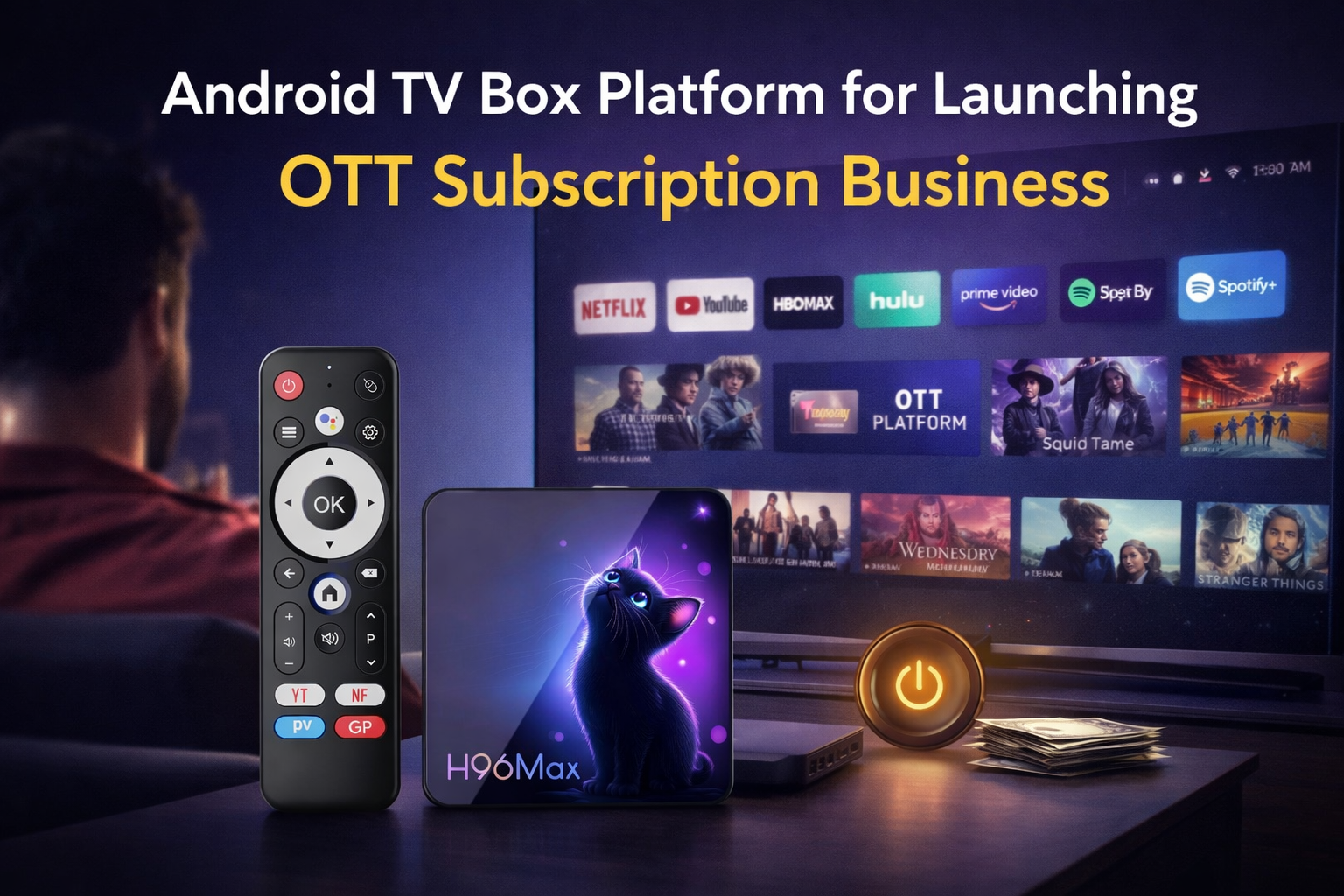
How Content Platforms Build Sustainable Subscription Ecosystems with Android TV Devices
The global streaming industry is shifting rapidly from open distribution toward controlled platform ecosystems. At the center of this shift is the Android TV Box Subscription Service, a model that allows content platforms to distribute applications, manage users, and monetize audiences through a dedicated hardware environment. Rather than relying solely on third‑party app stores or fragmented smart‑TV ecosystems, many media operators now deploy their own Android TV devices to build long‑term subscription relationships. By integrating device control, account systems, and content distribution, the Android TV ecosystem provides a powerful framework for sustainable digital media growth.
Industry data highlights the scale of this opportunity. According to research from Statista, global OTT video revenue is expected to exceed hundreds of billions of dollars within the next few years, while connected TV adoption continues to rise across emerging and developed markets. Analysts from Deloitte have also noted that device‑level distribution strategies allow media companies to improve retention, gather user insights, and reduce dependency on third‑party platforms. In this context, launching an Android‑based subscription ecosystem is increasingly viewed not just as a technical solution, but as a strategic business decision.
Why Platforms Need Control Over the User Entry Point
One of the biggest challenges for OTT operators is the lack of control over user acquisition channels. When services rely exclusively on app stores or smart‑TV marketplaces, the platform owner determines visibility, ranking algorithms, and revenue sharing models. An Android TV Box Subscription Service allows operators to shift that balance by controlling the device environment itself.
By shipping devices with preinstalled applications, a platform can guarantee that its service becomes the primary interface users interact with. This reduces reliance on app store discovery while increasing brand exposure and engagement. In addition, hardware‑level control ensures that updates, user interfaces, and content recommendations remain aligned with the platform’s business strategy.
Many media companies are therefore transforming Android devices into a full TV Box Subscription Platform that connects hardware, software, and subscription infrastructure into a unified system. This model resembles the ecosystem strategies used by leading technology companies, where device ownership strengthens long‑term service revenue.
Pre‑Installed Applications and Seamless User Onboarding
Another critical advantage of deploying an Android TV Box Subscription Service lies in simplified user onboarding. Traditional streaming platforms often face friction during the registration and installation process. Users must search for an app, install it, create an account, and then subscribe. Each step introduces potential drop‑off.
When platforms distribute their own devices, these barriers disappear. The application can be preinstalled and connected directly to a registration flow that links the device with a user account. In many implementations, the activation process requires only scanning a QR code or logging into a pre‑configured portal.
This approach significantly increases conversion rates. Media analysts frequently emphasize that reducing onboarding friction is one of the most effective ways to grow subscription services. By combining hardware distribution with a well‑designed Android TV Box OTT Platform, operators create a seamless journey from device activation to paid membership.
Integrating Accounts, Subscriptions, and Identity Systems
Subscription businesses rely heavily on strong account systems. A well‑designed identity framework enables platforms to manage payments, personalize recommendations, and track user engagement across devices. An Android TV Box Subscription Service can be directly integrated with account management systems to create persistent relationships with viewers.
When a device is linked to a user account, the platform gains several strategic advantages. First, subscription status can be verified instantly at the system level. Second, personalized recommendations can be delivered directly on the home screen. Third, viewing behavior data becomes easier to collect and analyze.
These capabilities transform the device into more than a streaming tool. It becomes a long‑term membership gateway within the broader Android TV Streaming Subscription ecosystem. Over time, this approach enables platforms to offer bundled services, tiered subscriptions, and targeted promotions.
Remote Device Management and Operational Efficiency
Operating a large‑scale streaming platform requires constant monitoring and maintenance. Content updates, security patches, and software improvements must be deployed continuously. With a traditional app‑only distribution strategy, managing millions of users across different devices can become extremely complex.
An Android TV Box Subscription Service solves this problem through centralized device management systems. Administrators can push firmware updates, configure applications, and monitor device health remotely. This capability dramatically reduces operational costs while improving service reliability.
For example, operators can schedule automatic updates during off‑peak hours, ensuring that new features and security improvements reach every user simultaneously. Remote management also allows platforms to troubleshoot technical issues without requiring users to perform manual updates. Within a large Android TV Box OTT Platform, such tools are essential for maintaining a consistent viewing experience.
Continuous Content Distribution and Engagement
A successful subscription business depends on ongoing engagement. Users who frequently return to a platform are far more likely to maintain their membership. By controlling the device environment, an Android TV Box Subscription Service enables operators to push content recommendations, promotional campaigns, and new releases directly to the home screen.
This capability creates a persistent communication channel between the platform and the viewer. Instead of relying solely on email or external notifications, the device itself becomes a marketing interface. Content banners, featured channels, and personalized suggestions can appear immediately when the user turns on the television.
Such engagement strategies are a core component of modern Smart TV Box Content Monetization. By maintaining a direct relationship with the user interface, platforms can promote premium content, upsell subscription tiers, and highlight exclusive programming.
The Strategic Role of Hardware in OTT Expansion
As competition intensifies across the streaming industry, hardware distribution is becoming a powerful differentiator. Companies that control both the device and the service can optimize the entire user experience. From boot screens to recommendation algorithms, every element of the interface can be tailored to support subscription growth.
This is one reason many operators are exploring how to launch a subscription service on Android TV box environments. By combining hardware distribution with software customization, platforms can accelerate market entry while maintaining flexibility.
In addition, Android’s open ecosystem allows manufacturers and service providers to collaborate on customized device solutions. These partnerships enable rapid deployment of specialized features such as DRM protection, billing integration, and remote device management. As a result, the Android TV box solution for OTT subscription platforms has become one of the most scalable strategies for launching new streaming businesses.
A Long‑Term Monetization Infrastructure
Ultimately, the value of an Android TV Box Subscription Service lies in its ability to create a sustainable monetization infrastructure. Instead of relying on short‑term advertising revenue or volatile app‑store distribution, platforms gain a stable subscription foundation supported by device ownership.
This infrastructure allows operators to experiment with multiple revenue models. Some platforms offer tiered memberships that unlock additional content libraries. Others combine advertising‑supported viewing with premium subscription options. In each case, the device becomes the gateway through which all services are delivered.
Media researchers often describe this strategy as the transition from "content distribution" to "platform ecosystems." Within such ecosystems, devices, applications, data analytics, and subscription services operate as interconnected components. An advanced OTT Subscription on Android TV Box strategy therefore extends far beyond video playback—it becomes the foundation for a long‑term digital media platform.
Looking Ahead: Device‑Driven Streaming Platforms
The future of streaming will likely be defined by deeper integration between hardware and digital services. As smart‑TV adoption continues to expand, audiences increasingly expect seamless access to curated content ecosystems rather than fragmented app experiences. In this environment, deploying a dedicated Android TV Box Subscription Service offers platforms a powerful way to build direct relationships with viewers.
By controlling the user entry point, preinstalling applications, linking account systems, and managing devices remotely, platforms can create a robust foundation for subscription growth. These capabilities explain why many streaming operators now view Android‑based hardware as a critical component of their long‑term strategy.
For organizations exploring new distribution models, the Android ecosystem provides a flexible path toward scalable OTT services. With the right technical infrastructure and operational strategy, content platforms can transform connected televisions into powerful subscription engines.
Organizations seeking to explore this ecosystem further often collaborate with experienced device manufacturers that understand both hardware integration and streaming platform requirements. Strategic partnerships can accelerate deployment timelines and ensure that the underlying infrastructure supports long‑term service growth. Partner with H96 Max today to explore how customized Android TV device solutions can support next‑generation streaming platforms.
READ MORE
How to Build a Digital Signage System Using an Android TV Box?
How Can Schools Use Android TV Boxes for Campus Television Networks?
How Sports Bars Deliver Streaming Entertainment with Android TV Boxes?
How Mall Advertising Screen Systems Achieve Centralized Management with Android TV Boxes?
How Can Airports Build an Information Display System Using Android TV Boxes?
How to Build a Community TV Network Using an Android TV Box?
How Smart Home Platforms Use Android TV Boxes to Build a Home Entertainment Center?
Quick Links

.png "Watch H96 Max Android TV Box reviews on our YouTube channel")

.png "Explore H96 Max product photos on Instagram")