.png "H96 Max Android TV Box video reviews and tutorials on YouTube")
.png "H96 Max Android TV Box photos and lifestyle shots on Instagram")



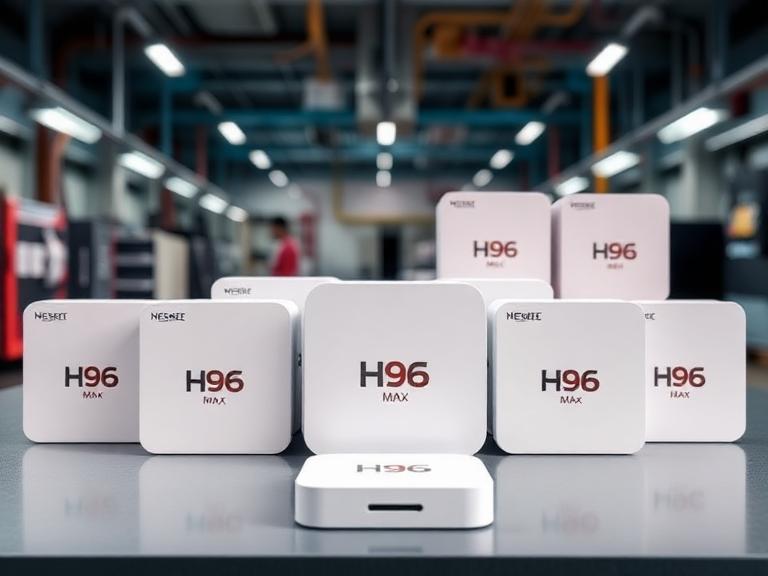
Essential Insights for B2B Buyers Selecting Android Box OEM Manufacturers for Global Projects
In today’s hyper-connected business world, the Android Box has evolved into a powerful platform for corporate innovation. No longer confined to home entertainment, Android Boxes are integral to B2B applications such as digital signage, smart education, healthcare communication, and enterprise streaming. As B2B buyers consider large-scale OEM projects, understanding the core selection factors is essential to ensure high performance, scalability, and long-term reliability.
1. Performance and Hardware Integrity
For enterprise-grade deployment, hardware strength determines success. Android Box OEM solutions built with chipsets like Amlogic S928X and Rockchip RK3588 offer superior computing capability and efficient multitasking. Devices equipped with DDR4/DDR5 RAM, eMMC 5.1, or SSD storage guarantee stable data processing, even under heavy workloads. A well-designed aluminum or magnesium casing further enhances thermal dissipation, extending operational lifespan and reducing system throttling.
When selecting an OEM partner, B2B buyers should demand detailed MTBF (Mean Time Between Failures) data, component traceability, and ISO-certified quality reports. These ensure that each Android Box meets industrial standards of durability and reliability, vital for mass production.
2. Firmware Stability and Update Ecosystem
The firmware of an Android Box is its operational core. Reliable OEM suppliers provide a structured OTA (Over-The-Air) update system, ensuring firmware patches and version upgrades occur seamlessly across all deployed devices. This minimizes downtime and reduces on-site maintenance efforts during large-scale rollouts.
Buyers should prioritize partners that offer customizable firmware solutions — supporting brand-specific UIs, custom applications, and integrated DRM systems. Manufacturers like H96 Max lead this domain by offering SDK-level customization and continuous update support, helping businesses future-proof their digital infrastructure.
3. Connectivity and Enterprise Network Integration
Connectivity defines modern B2B operations. High-end Android Boxes must include dual-band Wi-Fi 6, Gigabit Ethernet, and optional 4G/5G modules to ensure uninterrupted network performance. Features such as Bluetooth 5.2 and USB 3.0 enhance compatibility with external peripherals and IoT devices, making these boxes ideal for industrial control systems or corporate displays.
For global deployments, network security and consistency are paramount. Buyers should verify compatibility with VPN, IPv6, and advanced QoS (Quality of Service) features that safeguard data flow while optimizing bandwidth usage. Android Boxes with built-in remote monitoring APIs further streamline maintenance for distributed networks.
4. Security and Compliance Requirements
Data protection remains a top priority in OEM partnerships. Buyers must ensure that Android Box suppliers comply with CE, FCC, and RoHS certifications. Support for Secure Boot, AES-256 encryption, and TPM (Trusted Platform Module) provides hardware-level security against tampering and unauthorized access. These safeguards are especially important in sectors like finance, government, and telecommunications.
Manufacturers adhering to ISO 27001 and GDPR frameworks deliver additional trust, ensuring compliance with international data governance laws. Transparent documentation and audit-ready compliance reports are key differentiators among premium OEM vendors.
5. OEM Customization and Brand Personalization
OEM customization allows enterprises to fully align Android Box products with brand identity. From UI design and color schemes to boot animations and packaging, customization boosts recognition and engagement. Advanced OEM programs provide white-label management portals, enabling businesses to monitor performance metrics, push updates, and control firmware branding globally.
Enterprises targeting multilingual or multi-region audiences should ensure their OEM supplier provides language localization and certification support for local market compliance. H96 Max, for example, offers firmware translation and region-specific configuration options for diverse B2B requirements.
6. Scalability and Logistics Infrastructure
Scalability defines an OEM manufacturer’s capacity to meet global demand. Suppliers with advanced assembly lines, automated testing, and international warehousing networks can execute mass orders efficiently. Buyers should request transparent delivery schedules and warehouse distribution maps to assess production scalability.
H96 Max, with 50+ warehouses worldwide and annual production exceeding 5 million Android Boxes, provides unmatched supply chain reliability. Such capacity ensures fast shipment and consistent quality for enterprises expanding into new markets.
7. Long-Term Cost Efficiency
While initial cost is an important factor, evaluating Total Cost of Ownership (TCO) gives a clearer picture of ROI. Energy-efficient ARM-based processors and smart power management functions significantly reduce operational costs over time. Buyers should also assess warranty terms, firmware longevity, and after-sales service availability when calculating overall project investment.
OEMs offering long-term support, extended warranties, and upgrade options deliver higher value through sustainability and performance continuity. Predictable maintenance schedules further enhance cost control across enterprise deployments.
8. Sustainability and Green Manufacturing
Sustainability plays a strategic role in corporate procurement. Selecting Android Box OEMs committed to eco-friendly production helps businesses align with ESG goals. Manufacturers using recyclable materials, lead-free soldering, and renewable energy resources demonstrate leadership in responsible production. ISO 14001 certification provides assurance of environmental compliance and reduced carbon footprint.
Moreover, firmware-embedded energy-saving algorithms contribute to green operations, allowing enterprises to reduce both energy consumption and environmental impact without sacrificing performance.
9. Technical Support and Global After-Sales Service
Strong post-deployment support separates great OEMs from average ones. Top manufacturers maintain multilingual technical teams, regional service hubs, and fast-response repair centers. Buyers should insist on defined Service-Level Agreements (SLAs) that outline support availability, firmware updates, and turnaround times for defective units.
H96 Max’s extensive after-sales infrastructure spans multiple continents, ensuring fast issue resolution, remote diagnostic capabilities, and 24/7 communication channels for enterprise clients.
10. Partner with H96 Max for Trusted OEM Collaboration
For businesses aiming to deploy Android Box solutions globally, partnering with a trusted OEM manufacturer is the key to success. H96 Max stands as a leader with 2,000+ successful OEM/ODM projects, robust R&D expertise, and unmatched scalability. By combining advanced manufacturing processes with client-oriented customization, H96 Max ensures every Android Box meets enterprise-grade expectations.
Partner with H96 Max today to build powerful, future-ready Android Box solutions that enhance your enterprise operations, streamline digital engagement, and support sustainable business growth across global markets.
READ MORE
Expert Guide for B2B Buyers Choosing Android Box OEM Partners
In-Depth Analysis for B2B Buyers Choosing Android Box OEM Partners
Comprehensive Factors B2B Buyers Should Evaluate When Selecting Android Box OEM Manufacturers
Key Elements B2B Buyers Should Evaluate in Android Box OEM Partnerships
Best Strategies for B2B Buyers Selecting Android Box OEM Manufacturers
Strategic Factors for Selecting Android Box OEM Partners for Enterprise Expansion
Key Criteria for Choosing Android Box OEM Partners in Global B2B Projects
How to Select Android Box Suppliers for OEM and Large-Scale Enterprise Deployment
What B2B Buyers Should Know Before Choosing an Android Box for OEM Projects
Quick Links

.png "Watch H96 Max Android TV Box reviews on our YouTube channel")

.png "Explore H96 Max product photos on Instagram")