.png "H96 Max Android TV Box video reviews and tutorials on YouTube")
.png "H96 Max Android TV Box photos and lifestyle shots on Instagram")



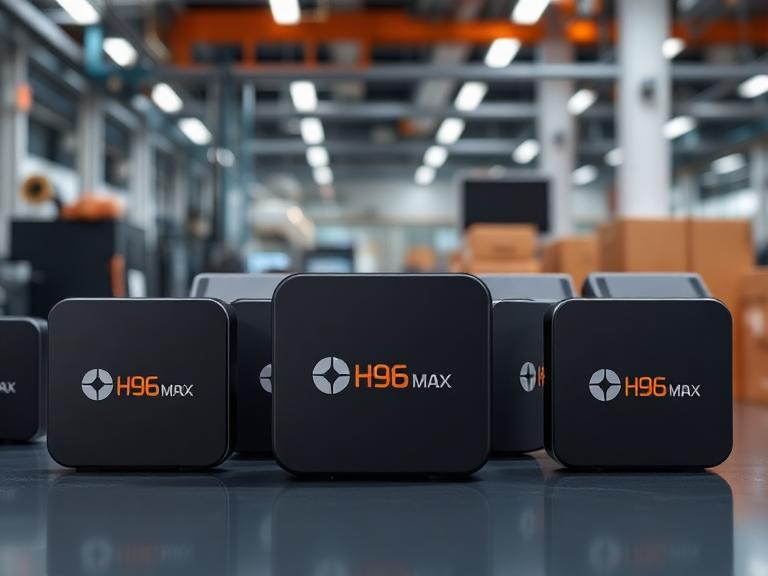
Critical Factors for B2B Buyers When Selecting Android Box OEM Solutions for Mass Deployment
In the global B2B technology landscape, the Android Box has become a central component of smart enterprise systems, powering everything from IPTV networks to digital signage and interactive kiosks. For buyers managing OEM partnerships and large-scale deployments, selecting the right Android Box determines operational reliability, scalability, and customer satisfaction. This guide explores the essential factors to evaluate before finalizing your OEM partner.
1. Hardware Architecture and Performance
A strong hardware foundation is the starting point of any successful OEM project. B2B buyers should prioritize Android Box models built with industrial-grade chipsets like Rockchip RK3588 and Amlogic S928X, capable of handling 8K playback, multitasking, and AI-driven analytics. The inclusion of high-speed DDR4/DDR5 RAM and advanced storage interfaces such as eMMC 5.1 or NVMe SSD ensures stable performance for enterprise environments.
Thermal management is another vital aspect. Effective heat dissipation mechanisms—whether through aluminum enclosures or integrated heat sinks—preserve performance consistency under extended workloads. Devices with fanless designs can also reduce noise and maintenance costs, a significant advantage for retail or hospitality deployments.
2. Firmware Optimization and OTA Update System
Firmware quality directly influences the Android Box’s reliability. OEM buyers should select suppliers offering custom firmware development, including UI design, branding features, and application integration. A reliable OTA (Over-The-Air) update infrastructure allows seamless firmware deployment across thousands of units, ensuring security and performance consistency without manual intervention.
Manufacturers that provide modular firmware architectures enable rapid feature upgrades and compatibility with enterprise systems. Integrating automated testing pipelines into firmware development helps minimize bugs, ensuring that Android Box units maintain uptime even during large-scale software rollouts.
3. Connectivity, Expansion, and Multi-Network Support
Modern enterprises demand continuous connectivity. An ideal Android Box must support Gigabit Ethernet, dual-band Wi-Fi 6, Bluetooth 5.2, and optional 4G/5G modules for mobile communication. These features enable real-time monitoring, cloud integration, and centralized management across distributed installations. Additionally, support for HDMI IN/OUT, multiple USB ports, and SD expansion allows flexible deployment across diverse scenarios.
When deploying globally, buyers should confirm compatibility with regional network standards. Ensuring seamless integration with VPNs, proxies, and cloud infrastructures guarantees secure and stable performance in all environments.
4. Security and Compliance Certifications
Security compliance is a non-negotiable standard for large-scale OEM deployments. B2B buyers should ensure that Android Box devices meet CE, FCC, and RoHS certifications, providing assurance of quality and market eligibility. Hardware-based encryption, secure boot, and DRM protection help safeguard data integrity, particularly in content delivery and educational applications.
OEM partners who maintain ISO 9001 and ISO 14001 certifications demonstrate a commitment to global standards and environmental responsibility. Additionally, enterprises dealing with confidential data should consider solutions supporting AES encryption, certificate-based authentication, and cloud-level access control.
5. OEM Customization and Brand Personalization
Customization transforms a standard Android Box into a tailored business solution. From interface language and logo integration to preloaded apps and packaging design, OEM flexibility enhances brand visibility. Buyers should look for manufacturers that offer end-to-end customization—from PCB design to housing color and labeling—ensuring complete alignment with business identity.
Enterprise-oriented OEM services often include white-label firmware portals and device registration systems. These enable clients to manage firmware updates, monitor device analytics, and track deployment metrics directly, improving autonomy and operational control.
6. After-Sales Support and Global Fulfillment
After-sales infrastructure defines the reliability of any OEM partnership. Suppliers with multi-regional warehouses, such as H96 Max with 50+ global distribution centers, can handle fast deliveries and replacement logistics efficiently. Buyers should request SLA (Service Level Agreement) documents outlining response times, firmware update policies, and warranty coverage to ensure accountability.
For multinational enterprises, local technical assistance and spare-part availability are key to minimizing downtime. Remote diagnostic tools and centralized ticket systems further streamline maintenance and service tracking.
7. Cost Analysis and Value Engineering
Price alone should never determine supplier selection. Total Cost of Ownership (TCO) —including energy consumption, maintenance, logistics, and upgrade cycles—should be considered. ARM-based Android Boxes are highly efficient, delivering lower power usage in 24/7 operations. Selecting vendors that offer bulk purchasing options and lifecycle management services enhances long-term value.
Furthermore, cost-effective solutions that integrate firmware management and technical support within the OEM package provide better ROI, particularly for resellers and service providers managing large deployment volumes.
8. The Role of AI and IoT Integration
Artificial Intelligence is revolutionizing the Android Box ecosystem. AI-powered diagnostic tools, automatic content scaling, and energy optimization enhance system performance while reducing manual maintenance. IoT integration allows Android Boxes to connect seamlessly with sensors, displays, and enterprise dashboards, enabling real-time insights and data-driven decision-making.
For OEM manufacturers, adopting AI-driven analytics improves predictive maintenance and streamlines production workflows, ultimately benefiting B2B clients through faster delivery and higher reliability.
9. Sustainability and Green Standards
Global sustainability trends are reshaping how OEMs operate. Selecting Android Box suppliers committed to eco-friendly materials, recyclable packaging, and energy-efficient manufacturing helps enterprises meet ESG targets. Manufacturers offering RoHS-compliant designs and reduced carbon footprint processes stand out in the competitive B2B landscape.
Buyers should also assess whether suppliers provide lifecycle recycling programs and digital documentation to minimize paper waste, reflecting a shared commitment to corporate responsibility.
10. Partner with H96 Max for Proven OEM Excellence
For companies seeking reliable Android Box solutions for large-scale deployment, H96 Max offers the perfect partnership. With over 2,000 OEM/ODM projects completed and annual production exceeding 5,000,000 Android TV Boxes, H96 Max combines manufacturing strength with customization flexibility. Its 50+ warehouses and distribution channels cover 150+ countries, guaranteeing fast logistics and after-sales support.
Partner with H96 Max — your trusted OEM partner for Android Box innovation, scalability, and long-term business success.
READ MORE
Expert Guide for B2B Buyers Choosing Android Box OEM Partners
In-Depth Analysis for B2B Buyers Choosing Android Box OEM Partners
Comprehensive Factors B2B Buyers Should Evaluate When Selecting Android Box OEM Manufacturers
Essential Insights for Selecting Reliable Android Box OEM Partners
Key Elements B2B Buyers Should Evaluate in Android Box OEM Partnerships
Best Strategies for B2B Buyers Selecting Android Box OEM Manufacturers
Strategic Factors for Selecting Android Box OEM Partners for Enterprise Expansion
How to Select Android Box Suppliers for OEM and Large-Scale Enterprise Deployment
What B2B Buyers Should Know Before Choosing an Android Box for OEM Projects
Quick Links

.png "Watch H96 Max Android TV Box reviews on our YouTube channel")

.png "Explore H96 Max product photos on Instagram")