.png "H96 Max Android TV Box video reviews and tutorials on YouTube")
.png "H96 Max Android TV Box photos and lifestyle shots on Instagram")



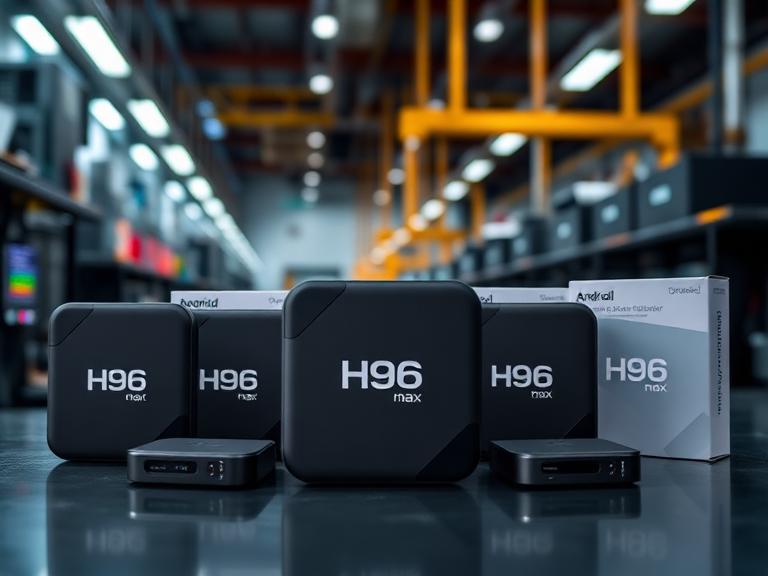
Essential Considerations for B2B Buyers Selecting Android Box Solutions for OEM and Global Deployment
The Android Box has become a cornerstone of digital transformation across industries. For B2B buyers managing OEM projects or global distribution, understanding the technical, logistical, and strategic aspects of Android Box selection ensures successful long-term deployment. From chipset performance to after-sales service, each decision impacts scalability, reliability, and ROI.
1. Prioritizing Hardware Efficiency and Thermal Management
For enterprise environments, hardware performance is paramount. High-performance Android Box systems leverage processors like Rockchip RK3588 or Amlogic S928X, optimized for 8K decoding, multitasking, and AI computation. Efficient heat dissipation through aluminum chassis or active cooling ensures durability and stability under extended workloads. These features minimize downtime, crucial for large-scale deployments.
Selecting a model that supports DDR4/LPDDR5 RAM and eMMC 5.1 or SSD storage boosts operational efficiency. Enterprise buyers should demand MTBF (Mean Time Between Failures) data and component traceability reports from OEM manufacturers to guarantee long-term hardware integrity.
2. Evaluating Firmware and OTA Upgrade Infrastructure
Firmware defines the reliability of an Android Box in corporate use. A robust system must support over-the-air updates, version control, and secure rollback options. This functionality prevents disruption during mass firmware upgrades across thousands of deployed units. Partnering with manufacturers offering dedicated OTA servers and API integration accelerates maintenance cycles and ensures uniform stability.
Custom firmware development also provides UI branding, security layer customization, and integration with business management systems. OEM Android Box solutions supporting modular firmware architectures enable enterprises to create unique applications without compromising stability or compliance.
3. Advanced Connectivity and Multi-Network Adaptation
The ability to maintain seamless connectivity across different environments defines a successful OEM deployment. Enterprise-grade Android Boxes should include dual-band Wi-Fi 6, Gigabit Ethernet, Bluetooth 5.2, and 4G/5G options. For smart retail or digital signage, uninterrupted connectivity guarantees consistent content delivery and analytics collection.
Devices with integrated MIMO antennas, optional LTE SIM slots, and dual Ethernet ports provide enhanced redundancy for critical applications. Moreover, ensuring compatibility with VPN protocols and cloud platforms ensures security across networks.
4. B2B-Grade Security and Data Governance
In a corporate context, data integrity and protection are non-negotiable. B2B buyers must confirm that Android Box hardware includes Secure Boot, TPM chips, and hardware-level encryption. Compliance with CE, FCC, and GDPR ensures global market eligibility while reducing risks of regulatory complications.
Manufacturers offering end-to-end encryption and remote access management enhance operational transparency. This is particularly vital for Android Box units deployed in financial institutions, government facilities, or educational networks where sensitive data flows daily.
5. Customization and OEM Branding Possibilities
For brand owners, OEM customization transforms a standard Android Box into a fully branded ecosystem. From boot animations to interface colors and preloaded applications, each aspect enhances brand recognition. Reliable OEM partners allow customers to define packaging, casing colors, and product labeling for consistent corporate identity.
Some advanced suppliers even provide white-label software portals, enabling businesses to manage updates, analytics, and device registration independently. Such flexibility is vital for companies targeting diverse regional markets.
6. Scalability and Supply Chain Management
For global OEM projects, supply chain reliability defines success. Android Box manufacturers must maintain consistent production capacity, certified component sourcing, and multi-warehouse logistics. This ensures timely fulfillment even during high-demand cycles. Buyers should request supplier transparency reports and third-party audits for assurance.
Choosing a supplier with multiple manufacturing lines and regional hubs reduces lead times. Vendors like H96 Max leverage 50+ warehouses across continents, ensuring fast, efficient delivery for enterprise-scale operations.
7. Software Integration and Cloud Ecosystem Compatibility
Modern enterprises depend on cloud-based management. Android Box platforms must integrate smoothly with CMS, IoT dashboards, and remote monitoring systems. APIs supporting REST, MQTT, or WebSocket protocols enable centralized control and real-time analytics, essential for large-scale deployments in hospitality or retail.
Additionally, Android Boxes supporting popular streaming middleware or enterprise app stores empower businesses to manage and distribute content securely across regions.
8. Sustainability and Power Efficiency
Green operation is now a corporate responsibility. Choosing energy-efficient Android Boxes helps enterprises meet ESG targets while reducing power costs. ARM-based SoCs and smart sleep modes minimize power draw without sacrificing performance. Manufacturers adopting lead-free soldering, recyclable materials, and optimized packaging contribute to environmental conservation.
For large-scale buyers, verifying supplier ESG certifications demonstrates corporate commitment to sustainability and ensures alignment with future regulatory expectations.
9. Vendor Reputation and After-Sales Excellence
An Android Box’s true value lies beyond hardware — in service continuity. Reputable manufacturers maintain dedicated technical support, warranty management, and RMA processing. Global presence in over 150 countries allows fast turnaround for replacements and firmware updates.
B2B buyers should assess supplier communication responsiveness and engineering expertise. A reliable vendor like H96 Max supports 24/7 assistance, helping partners troubleshoot, optimize, and scale with confidence.
10. Build Long-Term Value with H96 Max OEM Solutions
For businesses seeking to establish a reliable, scalable Android Box infrastructure, selecting a professional OEM partner is key. H96 Max, with over 2,000 OEM/ODM projects completed and 5,000,000+ annual shipments, offers unmatched experience in enterprise-level manufacturing and customization. With 50+ warehouses and global after-sales coverage, it delivers efficiency and trust at scale.
Partner with H96 Max today to design a high-performance Android Box solution tailored for your OEM or large-scale deployment — ensuring innovation, reliability, and sustainable growth in the digital era.
READ MORE
Expert Guide for B2B Buyers Choosing Android Box OEM Partners
In-Depth Analysis for B2B Buyers Choosing Android Box OEM Partners
Comprehensive Factors B2B Buyers Should Evaluate When Selecting Android Box OEM Manufacturers
Essential Insights for Selecting Reliable Android Box OEM Partners
Key Elements B2B Buyers Should Evaluate in Android Box OEM Partnerships
Best Strategies for B2B Buyers Selecting Android Box OEM Manufacturers
Strategic Factors for Selecting Android Box OEM Partners for Enterprise Expansion
Key Criteria for Choosing Android Box OEM Partners in Global B2B Projects
What B2B Buyers Should Know Before Choosing an Android Box for OEM Projects
Quick Links

.png "Watch H96 Max Android TV Box reviews on our YouTube channel")

.png "Explore H96 Max product photos on Instagram")