.png "H96 Max Android TV Box video reviews and tutorials on YouTube")
.png "H96 Max Android TV Box photos and lifestyle shots on Instagram")



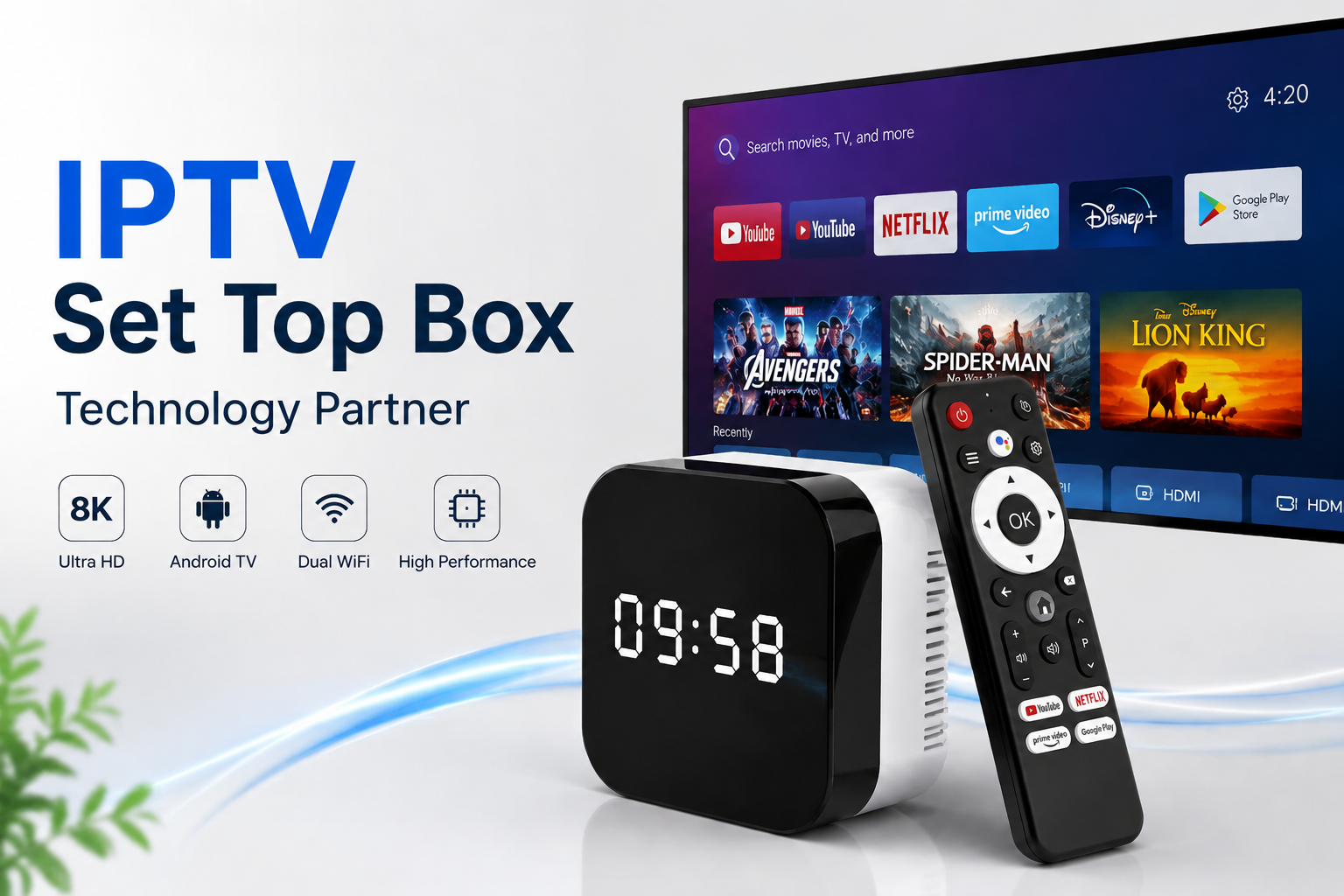
How Do You Operate Thousands of IPTV Boxes After Deployment?
Choosing an IPTV Set Top Box Manufacturer for an operator-scale project is not complete when the devices leave the factory. Brands, distributors, service providers and OEM/ODM buyers must also provision devices, control software versions, diagnose failures, manage updates and replace defective units across a fleet that may remain active for years. A box that is easy to manufacture but difficult to support can create recurring operational expense long after the initial hardware saving is forgotten. The procurement team should therefore evaluate fleet operations before approving the product architecture. Device identity, configuration, OTA governance, remote diagnostics, security maintenance, RMA processes and lifecycle transitions should be designed as connected capabilities. This guide explains how B2B buyers can build an operating model that keeps deployed IPTV boxes supportable at scale without turning every software issue into a truck roll or every hardware failure into an uncontrolled replacement process.
Design the Support Model Before the Hardware Ships
Define who supports end users, who operates the service platform, who diagnoses device problems and when factory engineering becomes involved. A retail distributor and a telecom operator may need very different escalation paths.
Ask the IPTV Set Top Box Supplier what information its engineers need for effective troubleshooting. Building that information into support workflows early is easier than reconstructing it after thousands of devices are deployed.
Give Every Device a Reliable Identity
Fleet operations depend on knowing which device is being discussed. Serial numbers and other appropriate identifiers should connect to hardware revision, production batch and approved firmware where the project requires such traceability.
A capable IPTV Set Top Box Manufacturer should prevent duplicate or incorrectly formatted production identifiers. Buyers should define which identifiers are operationally necessary and protect sensitive credentials appropriately.
Separate Identity From Credentials
A printed serial number can identify a unit without serving as an authentication secret. If the service requires credentials, keys or certificates, define secure generation, injection, storage, access and replacement processes with qualified security personnel.
Do not place sensitive production secrets into ordinary spreadsheets or labels simply because they are convenient for logistics. Security architecture should reflect the consequences of credential compromise.
Make Provisioning Repeatable
Provisioning may include network setup, account association, service configuration, application parameters or device-management enrollment. The exact workflow depends on the deployment, but it should minimize manual steps that technicians must repeat.
An OEM IPTV Set Top Box Manufacturer should validate factory-side configuration steps against the operator's process. A device that leaves production with the wrong market or service profile can be expensive to correct in the field.
Control Firmware by Fleet Segment
Large deployments may contain different hardware revisions, regions, customers or service configurations. Maintain a compatibility matrix connecting each approved segment to the correct software release.
The IPTV Set Top Box Manufacturer should identify production firmware precisely, while the fleet operator prevents incompatible updates from crossing hardware or customer boundaries.
Treat OTA as a Release System
OTA should control which devices receive a package, when installation occurs and how results are monitored. Package integrity and hardware compatibility are fundamental requirements, not optional enhancements.
Before deployment, test interrupted downloads, installation failures and recovery scenarios appropriate to the platform. A successful update on one laboratory box does not demonstrate fleet readiness.
Use Staged Rollouts Instead of Fleet-Wide Bets
Release new software first to internal units or a limited cohort where architecture permits. Monitor boot stability, networking, applications and update completion before expanding the rollout.
A Custom IPTV Set Top Box Manufacturer should support regression analysis when a new release behaves differently. Operators should define who can pause rollout and what evidence is required to resume it.
Build Recovery Into the Product
Recovery planning addresses devices that fail during update, become unable to boot or lose required configuration. The appropriate mechanism depends on hardware architecture, channel economics and available technical support.
A consumer retail product may need highly automated recovery, while a managed deployment can sometimes use technician procedures. Evaluate the cost and complexity of each approach before launch.
Define Remote Diagnostics Carefully
Useful diagnostics may include software version, network state, storage condition, update status and application errors, depending on the system. Collect only information justified by operational need and applicable privacy requirements.
The IPTV Set Top Box Manufacturer and service operator should agree which data are available, how they are accessed and which team interprets them. More telemetry is not automatically better.
Create a Diagnostic Decision Tree
Support teams need a repeatable method to distinguish service, network, application and hardware problems. Begin with observable symptoms, then gather version and environment information before escalating.
A decision tree can reduce unnecessary returns. If a device is replaced whenever video buffers, network problems become hardware RMA costs and the real service issue remains unresolved.
Measure What Creates Support Demand
Track contacts by category: setup, network, remote, application, playback, account, update or hardware failure. Patterns show where engineering, documentation or customer education can reduce future demand.
For Wholesale IPTV Set Top Box channels, distributors can provide valuable field feedback even when they do not operate centralized device management. Use structured categories rather than anecdotal complaints.
Set Practical Support Severity Levels
Define severity according to business impact. A widespread boot failure requires different response from a cosmetic launcher issue affecting one configuration. Set escalation contacts and expected communication cadence for each level.
An IPTV Set Top Box Manufacturer should understand which issues justify urgent engineering involvement. Clear severity definitions prevent every ticket from being labeled critical while ensuring genuine outages receive attention.
Use SLAs for Process, Not Impossible Guarantees
Service-level agreements can define acknowledgement, investigation and communication targets. Resolution time is harder to guarantee because complex failures may depend on chipset vendors, applications, networks or third parties.
Design commitments around actions each party can control. For severe incidents, regular status updates can be as important operationally as an unrealistic promise of immediate correction.
Build an RMA Process That Produces Evidence
Returned units should arrive with model, serial or batch, firmware, symptom and relevant environment information whenever possible. Random boxes without failure descriptions waste engineering time.
The IPTV Set Top Box Manufacturer should classify findings such as confirmed hardware defect, software issue, no fault found or external cause. This makes return data useful for quality improvement.
Do Not Let No-Fault-Found Returns Become Invisible
A unit that passes factory retesting may still reveal a support problem. The original failure could depend on a particular router, display, application sequence or intermittent condition.
Analyze repeated no-fault-found patterns. Better diagnostic capture, firmware logging or support procedures may reduce replacements even when no component defect is discovered.
Maintain Spare Units Strategically
Operators may hold replacement stock to restore service quickly, but spare quantities should reflect fleet size, observed failure rates, replenishment lead time and product lifecycle. Excessive spares can become obsolete.
Define whether replacements must match the original hardware exactly or whether a validated successor can be used. That decision becomes important as older components disappear.
Track Field Failures by Production Population
When traceability exists, compare failures by production period, hardware revision, component configuration and firmware. Clustering can reveal issues that are invisible when all returns are combined.
A disciplined IPTV Set Top Box Manufacturer should use these patterns for containment and root-cause analysis. The objective is to prevent recurrence, not merely replace affected units.
Manage Security as an Ongoing Responsibility
Connected devices can require security maintenance after launch. Google publishes Android Security Bulletins with information about vulnerabilities and security patch levels, illustrating the continuing nature of upstream security work.
Buyers should ask how relevant upstream issues are assessed and how chipset or platform dependencies affect patch availability. Security support periods should be considered during architecture selection.
Define Vulnerability Escalation
Establish a channel for receiving potential security reports, a process for severity assessment and clear engineering ownership. Sensitive details should be handled appropriately rather than circulated through ordinary support channels.
The IPTV Set Top Box Manufacturer may depend on upstream vendors for some corrections, so buyers should understand these dependencies before committing to long service lifetimes.
Plan for Privacy in Fleet Management
Device-management and analytics systems can process operational or user-related data. Define what is necessary, retention periods, access controls and responsibilities according to applicable laws and contractual obligations.
Do not collect data simply because the device can expose it. Data minimization reduces operational complexity and potential privacy risk while keeping diagnostics focused on actionable information.
Control Configuration Across Replacement Devices
A replacement should receive the correct market, service, remote and firmware configuration. As fleets age, multiple hardware revisions can make this more difficult.
Maintain configuration rules that map replacement hardware to supported software. Test successor units against critical service journeys before introducing them into the spare pool.
Prepare for Platform End of Life
SoCs, memory and wireless components eventually change. An IPTV Set Top Box Manufacturer should communicate significant lifecycle risks early enough for the buyer to qualify a successor platform.
Migration testing should include applications, middleware, remote behavior, networking and OTA processes. A technically newer box is not automatically operationally equivalent to the deployed model.
Use Fleet Data to Improve the Next Hardware Revision
Support categories, RMA findings and deployment incidents provide evidence for future product decisions. If remote pairing generates disproportionate contacts, the next revision should address that experience instead of simply adding more processing power.
This feedback loop connects operations with product management and manufacturing. Field evidence becomes an input to engineering rather than a cost recorded only by customer service.
What Does a Scalable Fleet Model Look Like?
A scalable model identifies devices, controls configurations, stages updates, captures useful diagnostics, classifies support incidents and feeds failures into corrective action. Responsibilities remain clear across operator, distributor and factory teams.
Evaluating an IPTV Set Top Box Manufacturer against these lifecycle capabilities helps buyers choose a partner for years of operation rather than only the first production shipment.
Discuss Operator-Scale Deployment With H96 Max
H96 Max is a source factory supporting brands, importers, wholesalers, distributors, operators and OEM/ODM procurement teams. We can discuss IPTV set top box hardware and firmware configuration, device identification, OTA requirements, pilot validation, production traceability, RMA workflows, repeat-order control and successor-platform planning. Share your service model, target markets, fleet size, required applications, support structure and expected lifecycle so manufacturing and post-deployment requirements can be reviewed together before volume production. Partner with H96 Max today to explore an IPTV set top box program built around controlled deployment, scalable manufacturing and practical long-term fleet support.
READ MORE
How to Structure an IPTV Set Top Box Manufacturing Agreement for B2B Buyers
How to Plan IPTV Set Top Box Compliance for International B2B Markets
How to Calculate the True Cost of Bulk IPTV Set Top Box Procurement
How B2B Buyers Can Audit IPTV Set Top Box Quality Before Mass Production
How to Reduce IPTV Set Top Box Supply Chain Risk Before Bulk Orders
How to Control IPTV Set Top Box Software Before Mass Deployment
OEM vs ODM: Which IPTV Set Top Box Manufacturing Model Fits Your Business?
How to Choose an IPTV Set Top Box Manufacturer for B2B Procuremen
Quick Links

.png "Watch H96 Max Android TV Box reviews on our YouTube channel")

.png "Explore H96 Max product photos on Instagram")