.png "H96 Max Android TV Box video reviews and tutorials on YouTube")
.png "H96 Max Android TV Box photos and lifestyle shots on Instagram")



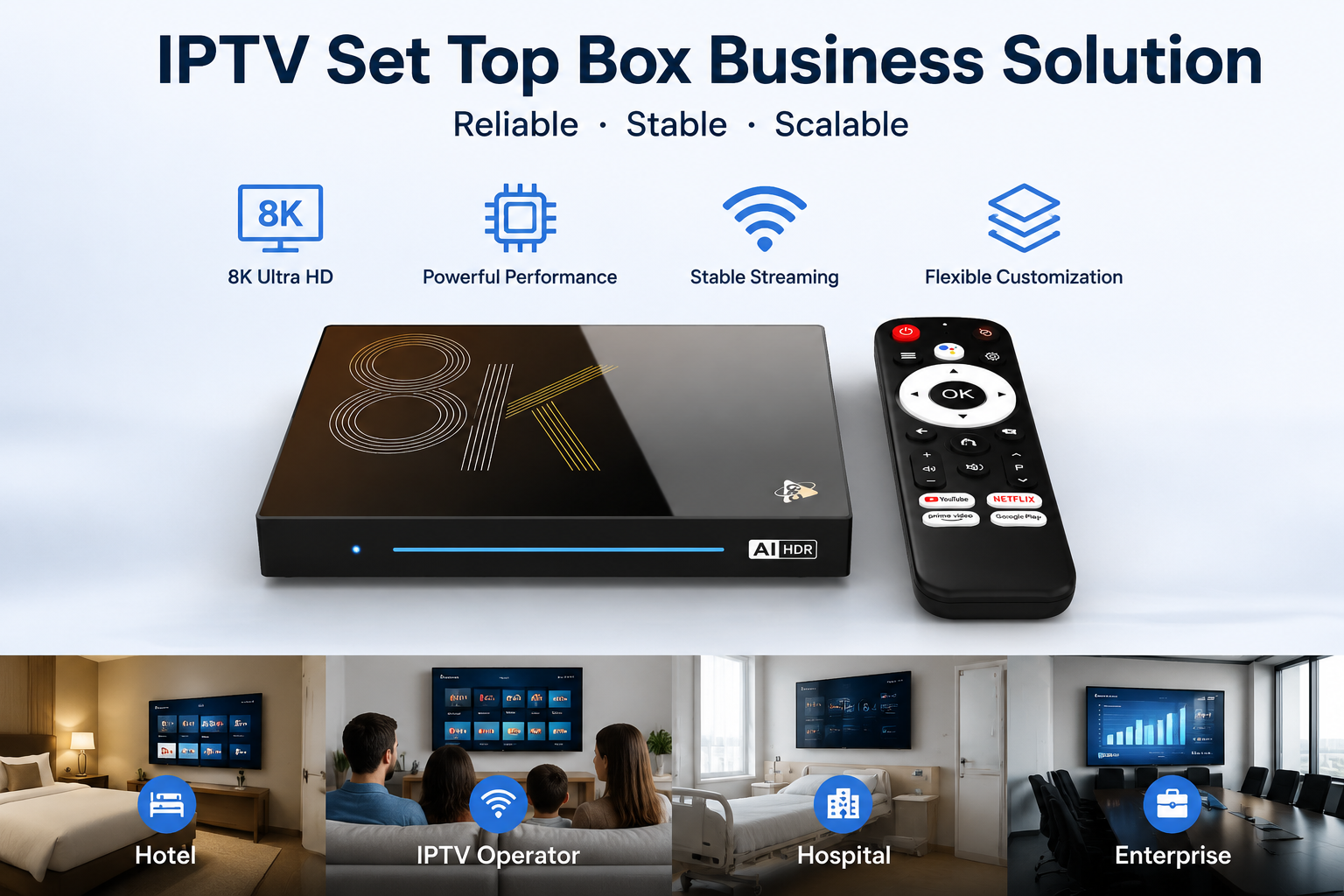
What Does an IPTV Set Top Box Really Cost at B2B Scale?
A quotation from an IPTV Set Top Box Manufacturer can look simple: specification, quantity, unit price and delivery term. For brands, importers, wholesalers, distributors, operators and OEM/ODM buyers, however, the lowest quoted unit price is rarely the same as the lowest commercial cost. Tooling, NRE, customized packaging, inspection, freight, duties, inventory, warranty replacements, firmware maintenance and product transitions can materially change the economics of a program. A cheaper configuration can also create indirect costs if weak network performance increases support contacts or if unstable components force emergency substitutions. B2B procurement should therefore evaluate total cost across acquisition, deployment and lifecycle rather than negotiating one number in isolation. This guide shows buyers how to normalize quotations, understand MOQ drivers, model landed cost and identify hidden expenses before committing to a bulk IPTV set top box order.
Normalize the Specification Before Comparing Price
Two suppliers are comparable only when they quote the same functional requirement. Confirm SoC class, RAM, storage, Wi-Fi, Bluetooth, Ethernet, ports, remote, adapter, firmware scope, packaging and testing before ranking prices.
Ask each IPTV Set Top Box Supplier to identify assumptions and exclusions. A low quotation may exclude customization, special packaging or engineering that another factory has already included.
Separate Recurring and Non-Recurring Costs
Recurring costs are paid with each unit or shipment. Non-recurring costs may include engineering, tooling, fixtures, artwork setup or specialized integration. Keeping them separate makes different development models easier to compare.
A professional IPTV Set Top Box Manufacturer should explain what an NRE charge delivers and whether future revisions create additional fees. Buyers can then amortize investment over realistic lifetime volume.
When Is NRE Economically Rational?
NRE is justified when customization creates enough margin, channel access, deployment efficiency or differentiation to repay the investment. Divide the expected charge by conservative lifetime volume rather than an optimistic sales forecast.
Compare that per-unit impact with a standard platform. If custom engineering creates little customer value, private labeling may offer better economics. If it solves an operator requirement, the investment may be essential.
Model Tooling as a Business Investment
Custom enclosure or remote tooling can strengthen differentiation, but it adds upfront cash exposure and schedule. Consider expected product life, volume, tooling ownership, maintenance and whether the design can survive a future platform migration.
A Custom IPTV Set Top Box Manufacturer should distinguish tooling from ordinary setup costs. Buyers should approve tooling only after the underlying architecture is sufficiently stable.
Understand What Actually Drives MOQ
MOQ can come from PCB production, component packaging, enclosure finishing, printed remotes, labels or cartons. Ask which item creates the minimum instead of treating MOQ as one fixed factory rule.
Once the constraint is visible, buyer and IPTV Set Top Box Manufacturer can explore alternatives such as common hardware with smaller batches of market-specific packaging.
Do Not Confuse Lower MOQ With Lower Risk
A small first order reduces finished-goods exposure but may increase unit cost, freight cost or material inefficiency. Conversely, a large order can obtain better economics while creating obsolete inventory if demand is uncertain.
Choose quantity according to forecast confidence, replenishment lead time and product lifecycle. The optimal order size balances availability, cash and obsolescence rather than simply maximizing a volume discount.
Build a Landed-Cost Model
Landed cost can include product price, packaging, inland transport, export handling, international freight, insurance, duties, taxes and destination charges depending on the transaction and jurisdiction. Obtain professional customs advice for applicable classifications and rates.
Compare suppliers using the same destination and commercial assumptions. A modest ex-factory saving can disappear if packaging volume or shipping arrangements are less efficient.
Use Incoterms Precisely
Incoterms define important delivery, cost and risk responsibilities but do not replace a complete sales contract. Buyers should understand the named place and chosen rule rather than comparing quotations labeled only with abbreviations.
Ask the IPTV Set Top Box Manufacturer which charges are included to the named point. Freight forwarders can help validate the logistics assumptions used in the total-cost model.
Packaging Has a Cost Beyond Printing
Retail boxes, inserts, manuals and protective materials affect material cost, assembly time, carton dimensions and freight efficiency. Attractive packaging that increases shipment volume substantially can raise landed cost.
For Wholesale IPTV Set Top Box programs, compare retail and bulk packaging strategies according to channel needs. Do not pay for presentation features that distributors will discard before the product reaches users.
Calculate the Cost of Regional SKUs
Different plugs, languages, labels, remotes and software can fragment inventory. Every variant creates planning, packaging and configuration complexity, even if the core electronics remain identical.
Where practical, preserve a common platform and differentiate later in production. Postponement can reduce finished-goods inventory while still meeting regional requirements, provided configuration control is strong.
Include Inspection and Validation in Procurement Economics
Engineering validation, pilot production and shipment inspection have direct costs, but eliminating them can create larger downstream losses. Budget quality activities according to order value and deployment risk.
An OEM IPTV Set Top Box Manufacturer should clarify which tests are standard and which buyer-specific validation requires additional resources. This prevents surprises after development begins.
What Does a Defect Cost After Shipment?
A field defect can trigger support labor, replacement hardware, two-way logistics, channel credits and lost customer time. For operator fleets, technician visits can add another major cost layer.
Model several failure scenarios rather than assuming every warranty return costs only the factory price. This makes quality investments easier to compare with apparently cheaper components.
Evaluate Warranty Terms as Economics
Clarify warranty period, covered defects, evidence requirements, replacement or repair method and freight responsibilities. Commercial terms should match the channel and expected service model.
A strong IPTV Set Top Box Manufacturer should also analyze recurring failures. Replacing units without correcting the root cause can keep warranty cost rising across later shipments.
Software Maintenance Is a Lifecycle Cost
Customized launchers, middleware integrations, device management and framework modifications may need maintenance as applications and upstream software change. Initial development fees do not necessarily cover years of support.
Define what post-launch engineering is included, what triggers new charges and how long the platform is expected to remain supportable. Heavy customization should have a clear business reason.
OTA Can Reduce Service Cost
A well-governed OTA system can correct software issues without collecting devices, but it requires infrastructure, testing and release management. Those costs should be compared with the field-service expense it can avoid.
The IPTV Set Top Box Manufacturer should explain update capabilities, while buyers define release authority and fleet requirements. OTA is an operational system, not a free feature.
Inventory Carrying Cost Matters
Inventory consumes cash and can incur storage, insurance and obsolescence exposure. Electronics also lose commercial value when new platforms or software expectations emerge.
Compare the savings from a larger order with the cost of holding additional months of stock. Fast replenishment can sometimes justify paying slightly more per unit to preserve working capital.
Measure the Risk of Customized Inventory
Printed cartons, remotes and unique enclosures may have little value outside one program. If forecasts fall, unused materials can become buyer liability depending on the commercial agreement.
Ask which materials are non-cancellable and how long they remain usable. Release customized items in quantities aligned with credible demand instead of automatically matching the largest component MOQ.
Account for Emergency Freight
Poor planning can turn economical sea freight into urgent air shipments. Track forecast changes, supplier lead times and requested delivery dates to identify whether premium freight is caused by the factory, buyer or external disruption.
A collaborative forecast with the IPTV Set Top Box Supplier can reduce emergencies. The financial model should still include a contingency for exceptional logistics events.
Payment Terms Affect Effective Cost
Deposit requirements, balance timing, currency exposure and credit terms influence working capital. Buyers should compare commercial offers using both price and cash-flow impact while considering counterparty risk.
Terms should be documented clearly and matched to project milestones where appropriate. Procurement teams should involve finance rather than evaluating payment structure only after supplier selection.
Plan the Cost of Platform Migration
When a chipset or component reaches end of life, migration can require engineering, samples, regression, compliance review, packaging changes and customer qualification. Long-term programs should reserve time and budget for this transition.
An IPTV Set Top Box Manufacturer with a clear successor roadmap can reduce disruption, but buyers should still validate the new platform against their own service requirements.
Use Scenario Analysis Instead of One Forecast
Build low, expected and high-volume scenarios. Include unit price, NRE amortization, tooling, freight, inventory and expected support cost. This reveals whether a customization decision remains economical if demand underperforms.
Scenario analysis also shows when higher volumes justify tooling or deeper ODM work. Decisions become tied to commercial thresholds rather than optimism.
Create a Total-Cost Supplier Scorecard
Compare price together with engineering capability, quality performance, lead time, supply continuity, software support and commercial terms. Weight factors according to the buyer's channel and deployment risk.
The purpose is not to assign an artificial perfect score. It is to make tradeoffs visible so a low quotation cannot hide expensive weaknesses elsewhere in the program.
What Is the Right B2B Purchase Price?
The right price is the cost of a configuration that meets requirements reliably at the intended scale, with acceptable lifecycle risk. Negotiation should remove waste and clarify assumptions rather than forcing reductions that undermine necessary components or controls.
Evaluating an IPTV Set Top Box Manufacturer through total cost gives procurement teams a stronger basis for decisions. The cheapest invoice and the most economical program are often different things.
Discuss Bulk Procurement Economics With H96 Max
H96 Max is a source factory supporting brands, importers, wholesalers, distributors, operators and OEM/ODM procurement teams. We can discuss IPTV set top box configurations, OEM/ODM scope, MOQ drivers, customized packaging, pilot production, repeat-order planning and platform lifecycle considerations. Share your target market, expected quantities, required hardware and software customization, packaging model and delivery plan so major cost drivers can be identified before volume commitments are made. Partner with H96 Max today to explore an IPTV set top box sourcing program built around practical specifications, controlled manufacturing and scalable B2B procurement economics.
READ MORE
How to Structure an IPTV Set Top Box Manufacturing Agreement for B2B Buyers
How to Manage IPTV Set Top Box Fleets After Large-Scale Deployment
How to Plan IPTV Set Top Box Compliance for International B2B Markets
How to Calculate the True Cost of Bulk IPTV Set Top Box Procurement
How to Reduce IPTV Set Top Box Supply Chain Risk Before Bulk Orders
How to Control IPTV Set Top Box Software Before Mass Deployment
OEM vs ODM: Which IPTV Set Top Box Manufacturing Model Fits Your Business?
How to Choose an IPTV Set Top Box Manufacturer for B2B Procuremen
Quick Links

.png "Watch H96 Max Android TV Box reviews on our YouTube channel")

.png "Explore H96 Max product photos on Instagram")