.png "H96 Max Android TV Box video reviews and tutorials on YouTube")
.png "H96 Max Android TV Box photos and lifestyle shots on Instagram")



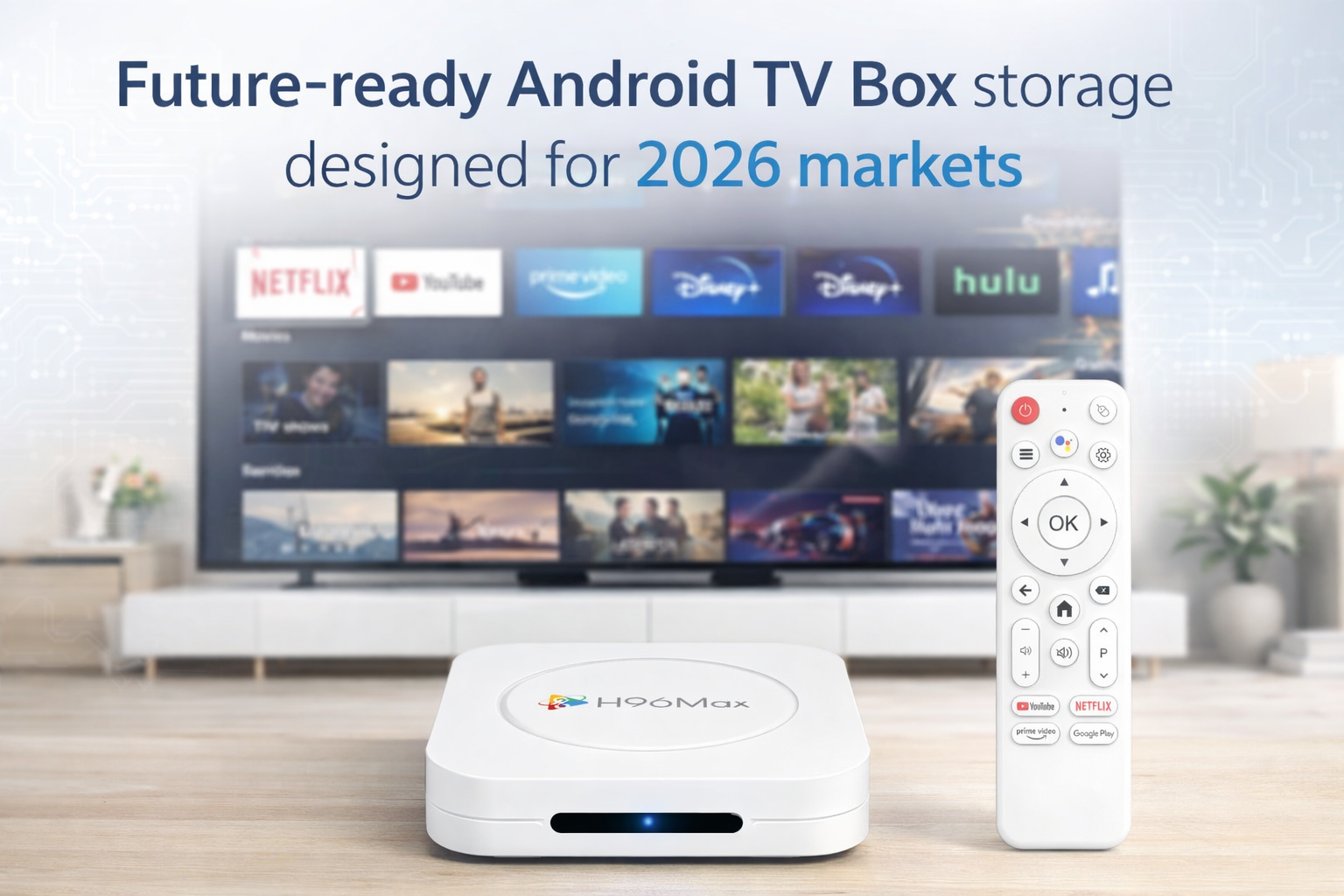
2026 Android TV Box Storage Specification Trends: Is 16GB Becoming Obsolete?
Introduction: Why Storage Defines the Android TV Box Experience
The global Android TV Box market is evolving rapidly, with Android TV Box storage needs transforming due to exploding app sizes, UHD content, and consumer demand for flexibility. Storage is not only a technical parameter but the core factor impacting product satisfaction and market competitiveness.
In 2026, the central debate has shifted to “is 16GB enough for Android TV Box?” The answer is increasingly clear: 16GB is no longer sufficient for most user groups or markets. Whether in North America, Europe, or emerging economies, the migration to 32GB and 64GB models is well underway. This article examines why, supported by expert data, international case studies, and forward-looking industry commentary.
Pain Points: What Limited Storage Means for Clients and Consumers
Market Drivers: Why 16GB Android TV Boxes Are Disappearing
Three main drivers are accelerating the demise of Android TV Box 16GB devices:
App Bloat: Netflix, Prime Video, Disney+, and regional streaming platforms continue to grow in app size. More space is needed for smooth operation and offline caching.
Firmware Inflation: Android OS updates and pre-installed apps increasingly take up space, leaving end users with less free memory.
UHD Content and AI: UHD/4K streaming, AI-based recommendations, and smarter voice controls all require more memory allocation.
IDC (2025) and ABI Research data reveal a consistent decline in 16GB shipments, replaced by surging demand for Android TV Box 32GB and Android TV Box 64GB units worldwide.
Regional Analysis: How Storage Needs Vary by Country
In emerging markets such as Southeast Asia, Latin America, and Africa, price remains a critical factor. However, there is a marked shift as media-rich local apps and greater internet penetration drive storage expectations higher. India’s Economic Times (2026) notes 32GB shipments rising 27% year-on-year, and in Brazil, 64GB models have entered mainstream distribution for the first time. China’s Sina Tech forecasts 64GB will exceed 50% of Android TV Box shipments by 2027.
Expert Commentary & Media Insights: Industry Backs the Shift
ABI Research and Google Trends (2026) both point to sharp increases in search volumes for “Android TV Box storage trends 2026,” “is 16GB enough for Android TV Box,” and “Android TV Box memory upgrade.” This reflects an international consensus: higher storage is now an essential, not a luxury.
Client Value: How Storage Trends Impact B2B Success
Professional distributors in North America report 40% higher conversion rates for Android TV Box storage configurations above 16GB. In EMEA, the introduction of 64GB models has opened new verticals in commercial digital signage and hotel smart rooms. These developments are confirmed by a Frost & Sullivan 2026 whitepaper, which projects continued growth for high-capacity devices.
Future Outlook: Storage and Specification Needs Through 2030
Regional media—from the US’s TechCrunch to China’s Sina Tech and India’s Economic Times—agree: the global Android TV Box memory market will continue to expand as UHD streaming, AI functions, and hybrid work/home entertainment drive persistent demand for more robust storage.
Conclusion: The Market Imperative for Higher Storage
In summary, the Android TV Box storage trends of 2026 reflect a global transformation, where the bar for entry is rising fast. Stakeholders who adapt early—aligning inventory and offerings with these data-backed shifts—will capture both the attention and loyalty of a new generation of connected customers.
READ MORE
2026 Profit Margin Gap Between High-End and Low-End Android TV Boxes
Comprehensive Analysis of Real Market Demand for 4K and 8K Android TV Boxes in 2026
Will Android TV Boxes Still Need Gigabit Ethernet Ports in 2026?
Is There More Profit Potential for AV1 Android TV Boxes in 2026?
Android TV Box Chipset Comparison 2026: Amlogic vs Rockchip vs Allwinner
Which Android TV Box Specifications Will Still Be Profitable in 2026?
Quick Links

.png "Watch H96 Max Android TV Box reviews on our YouTube channel")

.png "Explore H96 Max product photos on Instagram")