.png "H96 Max Android TV Box video reviews and tutorials on YouTube")
.png "H96 Max Android TV Box photos and lifestyle shots on Instagram")



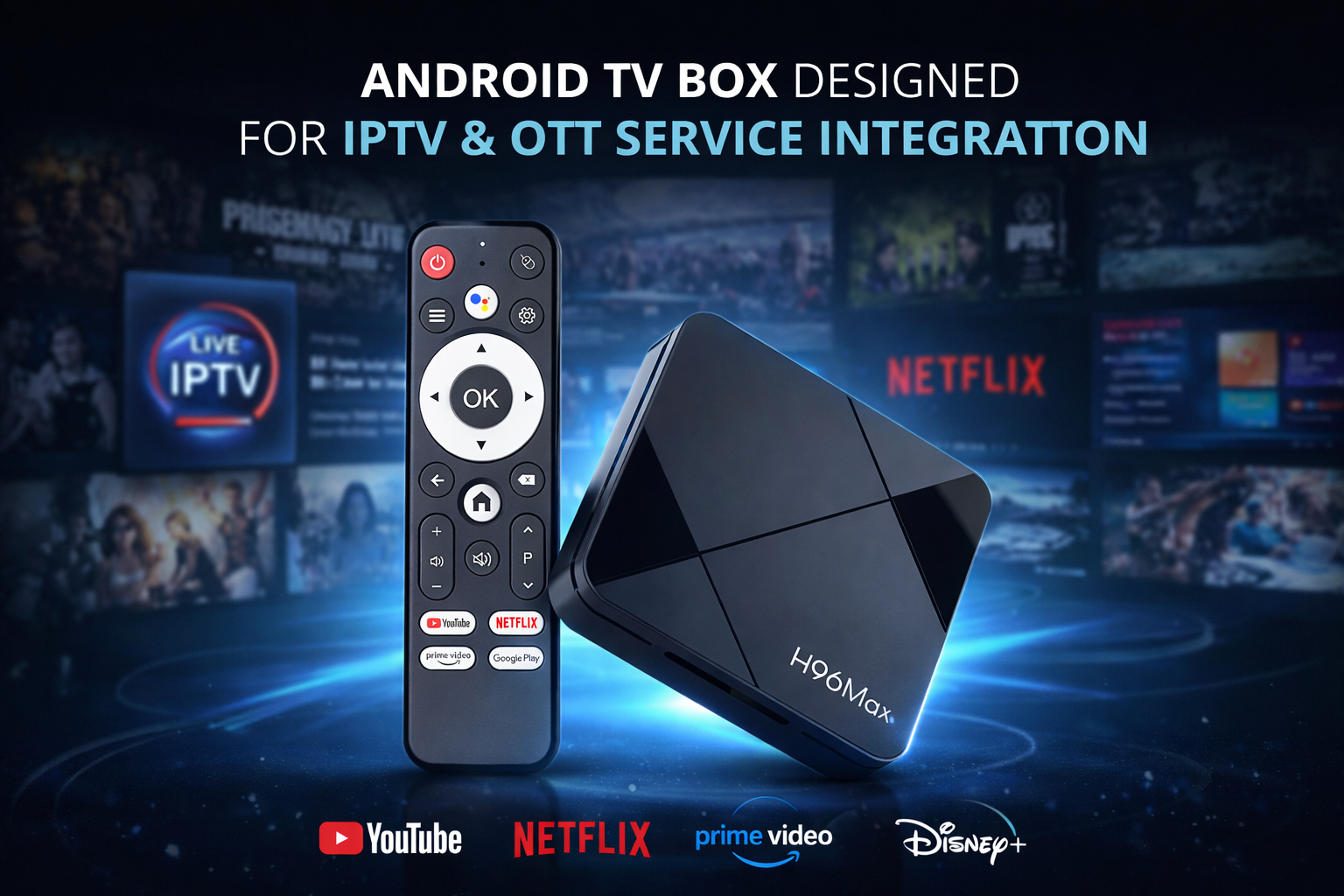
Which Android TV Box Specifications Will Still Be Profitable in 2026? In-Depth Analysis of Memory and Chipsets
As the global smart TV market evolves, understanding Android TV Box Specifications that will remain profitable in 2026 is crucial for manufacturers, wholesalers, and OEM/ODM partners. This comprehensive guide offers a professional, conversion-oriented perspective, examining essential factors such as memory, chipset, configuration trends, and specific country requirements. With a focus on authoritative data and industry consensus, this article equips business decision-makers with actionable insights to navigate the increasingly competitive Android TV box sector.
2026 Market Outlook: Why Hardware Matters More Than Ever
The global appetite for digital streaming continues to grow, pushing the boundaries of Android TV Box hardware innovation. According to Statista’s 2025-2026 projections, the worldwide OTT device market will experience a compound annual growth rate (CAGR) exceeding 10%, with a distinct shift toward high-performance devices in developed regions. As consumer expectations rise, the profitability of different Android TV Box Specifications becomes increasingly tied to hardware quality, particularly in memory and chipset choices.
In North America and Western Europe, premium experiences—such as 4K/8K streaming, cloud gaming, and AI-powered interfaces—are mainstream. Leading brands focus on advanced Android TV Box configuration to stay competitive. In contrast, Southeast Asia, Africa, and parts of South America maintain a strong market for cost-effective, stable boxes designed for basic streaming and IPTV. Balancing component costs with feature sets is the key to profitability in these emerging markets.
Memory Matters: RAM and ROM Developments
By 2026, Android TV Box RAM and ROM will become core differentiators for product segmentation. Industry research from AV Forums and Grand View Research highlights a baseline of 4GB RAM and 32GB ROM for mainstream and upper-market models. These specifications support smooth multitasking, app switching, and stable performance for demanding streaming services.
However, the entry-level segment, particularly in price-sensitive countries such as India and Nigeria, will continue to favor 2GB RAM and 16GB ROM configurations due to affordability and market accessibility. In Japan, the U.S., and parts of Europe, 8GB RAM with 64GB or even 128GB ROM will be increasingly common, targeting advanced users and IPTV providers who require large local storage for applications and media caching.
The transition from eMMC to UFS storage, especially for high-end models, is another trend recognized by TechCrunch and CNET, promising faster app loading and improved reliability. Meanwhile, OEMs targeting multi-user households or smart home integration are advised to consider higher RAM/ROM combinations for future-proofing.
Chipset and Processor Innovations: Profitable Choices
Selecting the right Android TV Box chipset is a central profit driver. As per IDC and Digitimes, chipsets integrating advanced neural processing units (NPUs) and hardware-level security are now favored, particularly in markets prioritizing streaming service compatibility and user privacy. Amlogic and Rockchip dominate the middle to high-end sectors, while MediaTek and Allwinner remain strong in budget-friendly segments.
For premium devices, chipsets with support for 8K HDR decoding, AI-enhanced upscaling, and WiFi 6/6E integration are increasingly profitable. In contrast, the “volume” business in Southeast Asia and Africa depends on cost-effective chipsets that still meet minimum streaming standards and regulatory compliance. Deloitte’s 2025 hardware review also notes that energy-efficient chipsets are becoming standard in regions with high power costs or regulatory incentives for low-consumption devices.
When it comes to the Android TV Box processor, quad-core Cortex-A55 or octa-core Cortex-A76 architectures are expected to dominate in developed markets. These offer a strong balance between power efficiency and the performance required for smooth 4K/8K video playback and multitasking. Meanwhile, dual-core processors remain adequate for basic, affordable boxes in regions where price is paramount.
Regional Differences: How Country-Specific Demand Shapes Hardware Choices
Understanding which Android TV Box configuration is profitable requires a close look at regional requirements and regulations. In Germany, France, and the UK, regulatory frameworks now demand AV1 codec support, Widevine L1 security, and compatibility with leading content platforms. Digital TV Europe reports that boxes lacking these features are rapidly losing market share.
In the U.S. and Canada, there is growing demand for advanced features, including Google Assistant voice control, Netflix 4K and Amazon Prime Video certifications, and advanced home networking capabilities such as mesh WiFi. Conversely, countries like Brazil and Indonesia focus more on affordability, stable IPTV middleware, and easy integration with local OTT platforms.
Authoritative data from Kantar and the Times of India indicate India’s rapidly expanding market for hybrid Android TV boxes that support both open Android TV and proprietary operator apps. Flexibility in chipset selection and RAM/ROM sizing is a key profit factor, allowing suppliers to address both premium and budget segments effectively.
Authoritative Opinions and Market Validation
Leading industry media such as The Verge, Reuters, and TechRadar consistently highlight the importance of scalable Android TV Box hardware for long-term profitability. Statista’s 2026 forecast suggests that models supporting AV1, HDMI 2.1, and at least 4GB/32GB memory will account for over 65% of retail and B2B shipments. Meanwhile, Frost & Sullivan’s recent report stresses the necessity of robust chipsets and modular hardware designs that allow rapid adaptation to evolving regulatory demands.
Bloomberg’s interviews with leading manufacturers confirm that customers worldwide are demanding boxes with more RAM, faster processors, and improved security, viewing these as essential for “future-proof” solutions. In Latin America and the Middle East, government-led digital transformation initiatives are further pushing OEMs to adopt more advanced chipsets and memory standards.
Profitability Analysis: Best-Selling Specifications and Trends
The best Android TV box specifications for 2026 balance technical excellence with market flexibility. In advanced markets, the combination of 4GB+ RAM, UFS storage, and chipsets capable of AI-powered upscaling is projected to offer the highest margins. OEMs who quickly secure certifications and maintain software update roadmaps will capture the most profitable contracts.
For cost-sensitive markets, models with 2GB/16GB or 4GB/32GB configurations and chipsets like MediaTek or Allwinner will remain viable, especially if paired with stable performance and local content support. Business Insider and Grand View Research highlight that “agility”—the ability to adapt hardware quickly to changing standards—is increasingly a source of profit for OEMs and distributors.
Which Android TV box configuration is profitable will depend on strategic planning: building a diverse product portfolio that addresses both high-end and budget needs, all while securing trusted chip and memory suppliers. Brands who excel at market segmentation, compliance, and rapid product refresh cycles will win out over generic, undifferentiated offerings.
Five-Year Global Market Trend and Conclusion
Looking to the future, Android TV Box Specifications that offer modular memory, flexible chipset support, and seamless streaming compatibility are set to define the market. The next five years will see ongoing convergence between smart home, gaming, and streaming functionalities—driving up the required baseline for both RAM/ROM and processor sophistication.
Suppliers and brands who invest in up-to-date, future-proof hardware will enjoy sustained profitability as the demand for high-performance, reliable streaming grows worldwide. The industry’s direction is clear: prioritizing technical innovation, regulatory compliance, and regional adaptability is the only route to success in the evolving Android TV box landscape.
READ MORE
2026 Profit Margin Gap Between High-End and Low-End Android TV Boxes
Comprehensive Analysis of Real Market Demand for 4K and 8K Android TV Boxes in 2026
Will Android TV Boxes Still Need Gigabit Ethernet Ports in 2026?
Is There More Profit Potential for AV1 Android TV Boxes in 2026?
2026 Android TV Box Storage Specification Trends: Is 16GB Becoming Obsolete?
Android TV Box Chipset Comparison 2026: Amlogic vs Rockchip vs Allwinner
Quick Links

.png "Watch H96 Max Android TV Box reviews on our YouTube channel")

.png "Explore H96 Max product photos on Instagram")