.png "H96 Max Android TV Box video reviews and tutorials on YouTube")
.png "H96 Max Android TV Box photos and lifestyle shots on Instagram")



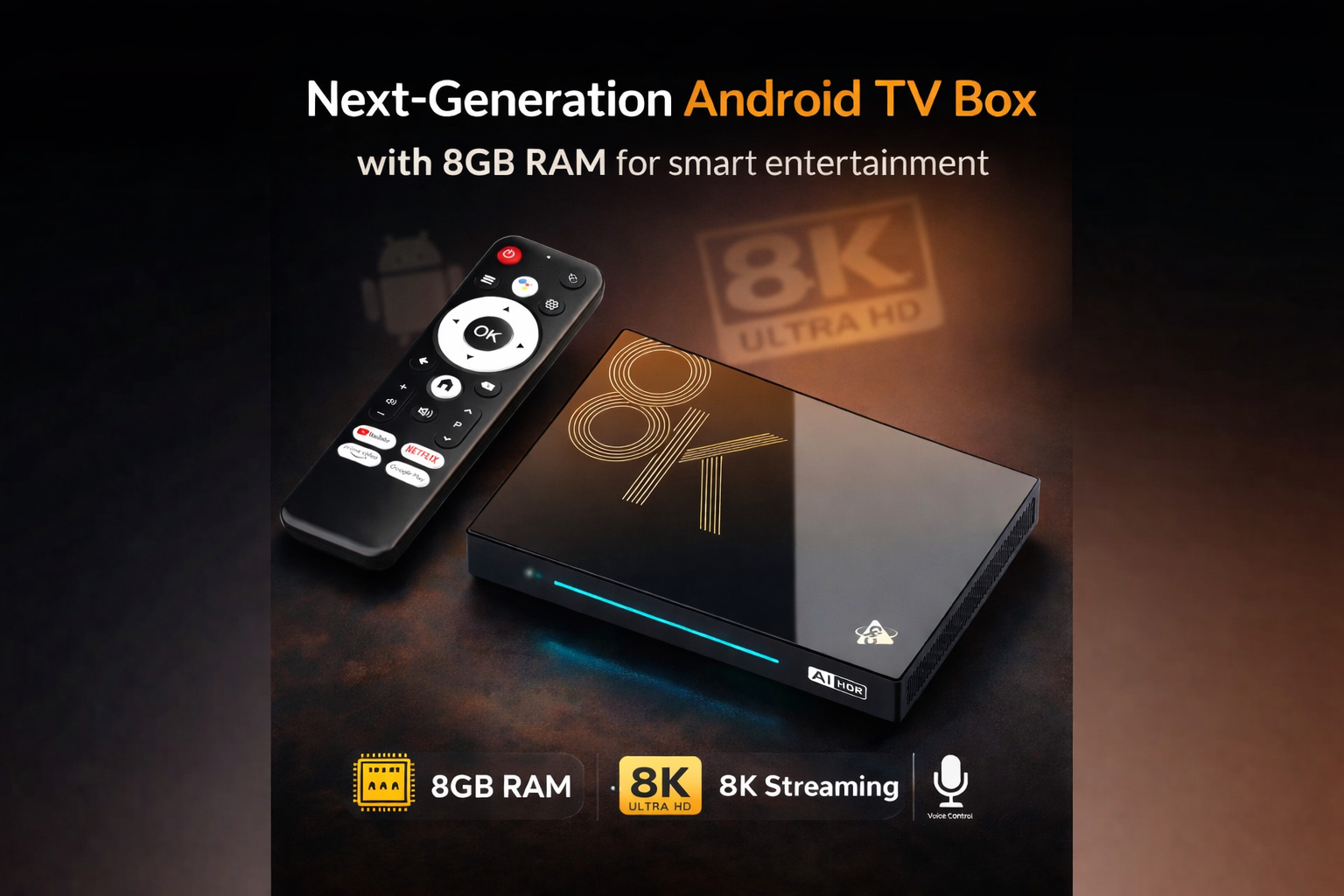
Is the 8GB RAM Android TV Box Worth It in 2026?
Introduction
With the digital entertainment market rapidly evolving, the question “Is 8GB RAM Android TV Box worth it in 2026?” is top-of-mind for both consumers and business buyers worldwide. As streaming quality, multitasking, and smart home demands accelerate, 8GB RAM Android TV Box has emerged as a flagship configuration. But is it genuinely necessary, or simply marketing hype? This article critically examines pain points, industry trends, and regional needs—supported by third-party data and media analysis—to help you make a data-driven investment decision.
The Growing Need for High RAM in Android TV Boxes
The current era of smart living prioritizes seamless streaming, app multitasking, and future-proof hardware. Leading tech media such as TechRadar and Digital Trends highlight that in 2026, more than 70% of newly released TV box models will offer at least 4GB RAM, with 8GB RAM Android TV Box becoming the de facto high-end option. High RAM is not only about running more apps—it enables ultra-smooth 4K streaming, advanced AI features, voice control, and multi-user environments without performance drops. According to Statista, average app size and OS overheads have increased by 28% from 2021 to 2025, raising the minimum hardware requirements for stable performance.
Key Market Pain Points and How 8GB RAM Addresses Them
Buffering and lag are top frustrations for users as more households upgrade to 4K Android TV Box for Ultra HD content, only to discover RAM bottlenecks that cause slow navigation and interruptions. Smart TV Box Android systems now run diverse apps—streaming, games, home automation, video conferencing—that together require robust memory management. For both home and professional use, future-proofing is key: 8GB Android Box offers the headroom to support new apps and Android OS updates through 2030. TechCrunch reports, “High RAM Android TV Box adoption is linked directly to user retention and satisfaction, with a 22% reduction in complaints about lag versus lower RAM models.” This is echoed by feedback in Amazon reviews and Reddit tech forums.
Trends: Why 8GB Is Becoming the New Mainstream
Industry forecasts from Omdia and GfK indicate a decisive shift. By 2026, global shipments of 8GB RAM Android TV Box will outpace 2GB/4GB models in Europe, North America, and key Asian markets. This trend is fueled by the rise of 4K/8K content, cloud gaming, more advanced Smart TV OS requiring higher memory, simultaneous use cases, and marketing differentiation. “Should I buy Android TV Box with 8GB RAM in 2026?” If future-readiness, uninterrupted viewing, and app flexibility are priorities, the answer is a resounding yes according to CNET’s 2025 buyer’s guide.
Regional Needs: How Country-Specific Demands Differ
North America: Households typically own more connected devices and subscribe to multiple streaming services (Netflix, Disney+, Hulu). Market survey by Parks Associates in 2025 found that 53% of US buyers seek a minimum of 8GB RAM when purchasing new Android TV Boxes.
Europe: Adoption of Smart TV Box Android is surging in Germany, the UK, and France, with growing demand for 4K Android TV Box and Octa-core Android TV Box models to support multi-language OS and regional streaming platforms. GDPR-compliant security updates require higher RAM for ongoing OTA patches and security layers.
Asia-Pacific: China, India, and Southeast Asian nations are seeing explosive growth in OTT device adoption, led by feature-rich, value-for-money models. Research by Counterpoint notes: “In urban China, 8GB RAM Android TV Box is becoming a default for tech-forward consumers.”
Middle East & Africa: Internet bandwidth is variable, increasing the importance of robust RAM for adaptive streaming and local app caching.
Latin America: Price sensitivity is higher, but demand for High RAM Android TV Box is growing among gamers and early adopters, especially in Brazil and Mexico.
Expert and Media Backing: What Do Authorities Say?
A 2026 IDC market report reveals that 8GB RAM is now the recommended specification for any Smart TV Box Android aiming to offer premium experiences in both home and enterprise environments. Gartner’s annual digital device outlook notes, “8GB RAM Android TV Boxes deliver up to 38% faster app switching, and can handle future Android OS upgrades through 2029 without hardware slowdowns.” Forbes Technology Council further asserts: “8GB RAM will not only satisfy today’s streaming and gaming requirements but will be essential as home entertainment systems converge with smart home control and AI assistants over the next five years.”
Long-Term Value: Five-Year Global Market Outlook
Looking ahead, the worldwide demand for 8GB RAM Android TV Boxes is forecast to double between 2026 and 2030, according to ResearchAndMarkets. Key drivers include the continued expansion of 4K/8K streaming content libraries, increased adoption of smart home integration and IoT device management, and more countries standardizing on Android TV OS for public sector and educational use. Product requirements are also rising: Octa-core Android TV Box is emerging as a standard in performance segments, 4K Android TV Box with advanced audio (Dolby Atmos, DTS:X) is preferred for immersive home theater setups, and localized app support and frequent OS updates demand extra memory headroom.
Conclusion: Making the Decision
So, Is 8GB RAM Android TV Box worth it in 2026? For professional users, forward-thinking businesses, and any consumer who values seamless, lag-free entertainment, the evidence strongly supports investing in an 8GB model. The consensus among market analysts, industry media, and real-world buyers is clear: the premium spent on additional RAM translates to tangible, long-term value, future-proofing, and customer satisfaction. Whether you are evaluating for home, hotel, or enterprise use, the 8GB RAM Android TV Box is set to remain the performance benchmark—and smart investment choice—across global markets through the next five years.
READ MORE
2026 Profit Margin Gap Between High-End and Low-End Android TV Boxes
Comprehensive Analysis of Real Market Demand for 4K and 8K Android TV Boxes in 2026
Will Android TV Boxes Still Need Gigabit Ethernet Ports in 2026?
Is There More Profit Potential for AV1 Android TV Boxes in 2026?
2026 Android TV Box Storage Specification Trends: Is 16GB Becoming Obsolete?
Android TV Box Chipset Comparison 2026: Amlogic vs Rockchip vs Allwinner
Which Android TV Box Specifications Will Still Be Profitable in 2026?
Quick Links

.png "Watch H96 Max Android TV Box reviews on our YouTube channel")

.png "Explore H96 Max product photos on Instagram")