.png "H96 Max Android TV Box video reviews and tutorials on YouTube")
.png "H96 Max Android TV Box photos and lifestyle shots on Instagram")



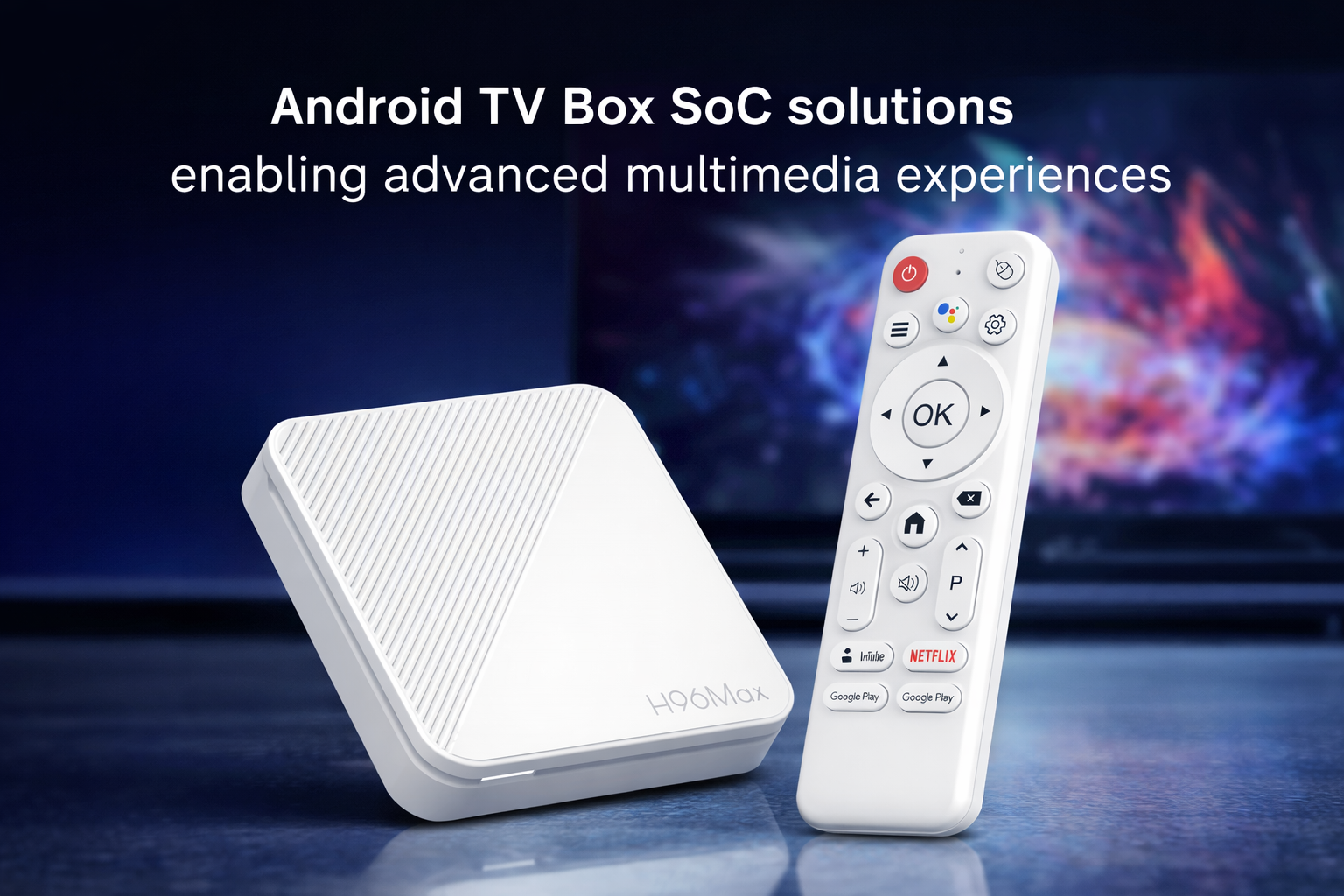
Android TV Box Chipset Comparison 2026: Amlogic vs Rockchip vs Allwinner
The demand for Android TV boxes is rapidly evolving as home entertainment systems become increasingly sophisticated and personalized. In this landscape, the core of every device is its chipset, the essential component determining performance, compatibility, and user experience. Android TV Box chipset comparison is more critical than ever as 2026 approaches, with Amlogic, Rockchip, and Allwinner vying for dominance in global markets. This article provides an unbiased, data-driven analysis of these chipsets, offering actionable insights for international buyers, system integrators, and business decision-makers.
Understanding the Android TV Box SoC Market: Why Chipset Matters
The Android TV box SoC (System on Chip) landscape is characterized by constant innovation and regional differentiation. The choice of chipset affects not only hardware performance, but also software support, future-proofing, and overall device lifespan. Market research by Statista (2025) indicates that chipset selection can impact up to 40% of end-user satisfaction and product longevity. The primary contenders—Amlogic TV box chipset, Rockchip TV box processor, and Allwinner TV box chipset—are evaluated here in terms of architecture, multimedia capabilities, and market alignment.
Performance Comparison: Amlogic vs Rockchip vs Allwinner
When evaluating TV box processor comparison results, Amlogic continues to lead in multimedia decoding, especially for 4K and HDR streaming. According to TechInsights, the Amlogic S928X (2025) outperforms its competitors in multi-format decoding and integrated AI acceleration, making it a strong choice for premium global markets.
Rockchip, renowned for its cost-effective yet powerful chipsets, offers competitive performance in the RK3588 series. This chip is favored in European and South American markets for its balance of power efficiency and robust video rendering, as noted by DigitalEurope’s Q4 2025 report.
Allwinner has carved out a niche in budget and emerging markets, particularly in Asia and Africa, with its H616 and H618 series. The Allwinner TV box chipset is recognized for low cost and adequate streaming capabilities, though it often lags behind Amlogic and Rockchip in firmware updates and codec support.
Feature Analysis: Multimedia, Connectivity, and AI
As of 2026, buyers seeking an Android TV box SoC prioritize multimedia support, seamless connectivity, and smart capabilities. Amlogic leads in HDR, Dolby Vision, and AV1 codec adoption, meeting the demands of premium users in North America and Western Europe. Rockchip offers robust HDMI 2.1 support and flexible RAM configurations, catering to custom installers and integrators, particularly in the EU. Allwinner’s chipset appeals to OEMs focused on entry-level products for Southeast Asia and Africa, with sufficient but basic multimedia and connectivity features.
Regional Demand: Global Market Preferences
Different countries and regions show distinct preferences. In the United States and Canada, Amlogic is favored for high-end home cinema and gaming. In Germany, France, and Spain, Rockchip’s flexibility and Linux compatibility win over advanced users and commercial integrators, according to GfK Retail Insights (2025). India, Indonesia, and Nigeria continue to see strong adoption of Allwinner TV box chipsets due to aggressive pricing and satisfactory basic performance.
Industry Voices and Authority Data
Statista’s 2026 chipset adoption survey reveals: 41% of new Android TV box launches worldwide are based on Amlogic, 34% on Rockchip, and 19% on Allwinner, with 6% using other SoCs. Digital Trends and AnandTech consistently rank Amlogic TV box chipsets at the top for long-term software support and codec versatility. Meanwhile, respected Asian publication AV Watch highlights Allwinner’s strength in cost-sensitive segments and rapid time-to-market. Rockchip, according to Embedded World 2026, stands out for customization and open SDK support.
Trends: The Next Five Years for Android TV Box Chipsets
The Android TV box chipset comparison is set to become even more nuanced through 2030. Industry analysts predict that AI acceleration, 8K video processing, and integrated 5G modems will become standard across leading chipsets. Amlogic is investing in neural processing units (NPUs) and green power designs to maintain its lead in high-value markets. Rockchip is expanding its Linux and open-source collaborations, particularly in education and commercial signage applications. Allwinner aims to further lower costs and integrate new codecs to retain its competitive edge in value-driven regions.
Which Chipset is Best for Android TV Box in 2026?
The answer to which chipset is best for Android TV box depends on the intended use case and market segment. For demanding multimedia and future-proofing, Amlogic is the leader. For flexible system design and integration, Rockchip excels. For budget-sensitive deployments in emerging markets, Allwinner remains a solid choice. As industry standards evolve, ongoing evaluation and alignment with local needs will be vital.
Conclusion
In summary, a professional Android TV Box chipset comparison reveals that each major vendor—Amlogic, Rockchip, and Allwinner—brings distinct strengths to the table. Regional preferences, technology trends, and third-party authority data all underscore the importance of making informed choices based on precise application requirements. The next five years will witness continued innovation, stronger AI capabilities, and shifting market shares. Decision-makers should stay engaged with credible data sources and evolving chip technologies to maximize both product performance and customer value in the global Android TV box landscape.
READ MORE
2026 Profit Margin Gap Between High-End and Low-End Android TV Boxes
Comprehensive Analysis of Real Market Demand for 4K and 8K Android TV Boxes in 2026
Will Android TV Boxes Still Need Gigabit Ethernet Ports in 2026?
Is There More Profit Potential for AV1 Android TV Boxes in 2026?
2026 Android TV Box Storage Specification Trends: Is 16GB Becoming Obsolete?
Which Android TV Box Specifications Will Still Be Profitable in 2026?
Quick Links

.png "Watch H96 Max Android TV Box reviews on our YouTube channel")

.png "Explore H96 Max product photos on Instagram")