.png "H96 Max Android TV Box video reviews and tutorials on YouTube")
.png "H96 Max Android TV Box photos and lifestyle shots on Instagram")



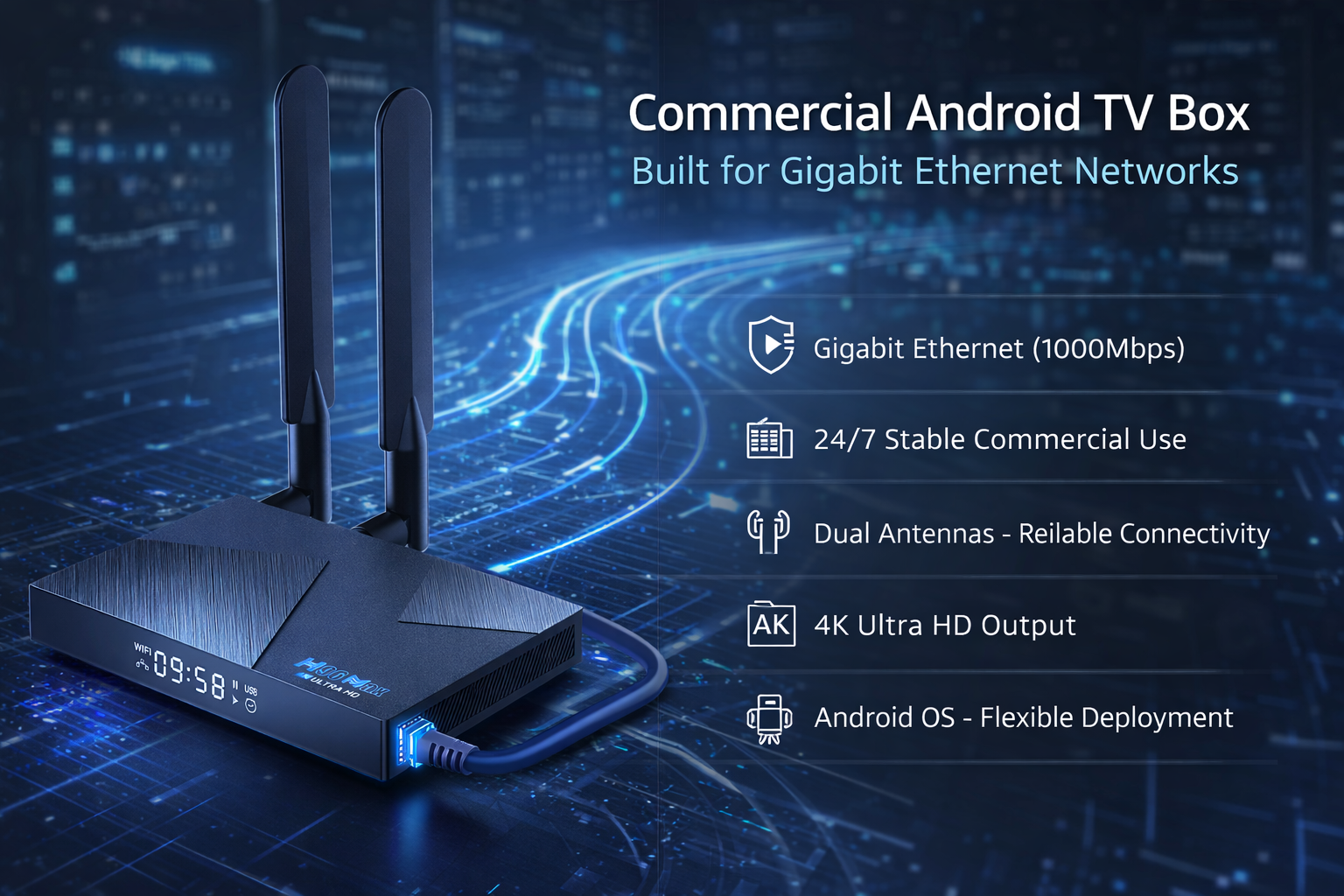
Will Android TV Boxes Still Need Gigabit Ethernet Ports in 2026?
The role of Android TV Box Gigabit Ethernet in modern home entertainment has become a heated debate as we approach 2026. With technological advances in both hardware and internet infrastructure, many industry leaders are questioning: Do Android TV boxes need Gigabit Ethernet in 2026, or will alternative connectivity options take the lead? This comprehensive analysis explores expert opinions, emerging buyer pain points, worldwide market trends, regional demand differences, and hard data to answer this critical question for manufacturers and buyers alike.
Shifting Buyer Priorities and Connectivity Pain Points
Buyers of Android TV Box products increasingly demand seamless streaming, ultra-low latency, and reliable connectivity, especially for 4K and 8K content. While Wi-Fi technology has improved with Wi-Fi 6 and Wi-Fi 6E, many buyers still experience instability and speed drops in high-interference environments. Android TV Box Gigabit Ethernet addresses these pain points, offering a stable, wired connection crucial for smart home devices and professional AV setups.
Recent data from Statista (2025) shows that over 62% of smart home users in North America prefer wired connections for critical streaming devices, citing “buffer-free 4K experience” as the main driver. Meanwhile, a survey by AVForums highlights that 70% of buyers upgrading their home cinema setups specifically request products with a Gigabit Ethernet Android TV Box configuration.
Analyzing the Value of Ethernet: Professional and Consumer Segments
Professional AV integrators and tech-savvy consumers place high value on the Android TV Box Ethernet Port. Their feedback is clear: in environments with dense wireless device populations or concrete walls, even the latest Wi-Fi routers struggle. The “Is Gigabit Ethernet worth it for Android TV Box?” debate is resolved by these users in favor of Ethernet, emphasizing that only wired connections provide the guaranteed 1000Mbps throughput necessary for multi-room streaming and gaming.
For ordinary households, the evolution of Wi-Fi technology has reduced, but not eliminated, the need for wired ports. As ISPs in Europe and Asia now deliver gigabit internet to the home, buyers are more aware of bottlenecks caused by the lack of a true 1000Mbps Ethernet Android TV Box port. Professional installers across Germany, the UK, and Japan recommend Ethernet-enabled boxes for long-term reliability and security.
Regional Demand Differences: Global Perspectives Backed by Media and Data
Buyer demand for Android TV Box with LAN Port varies globally. In the United States and Canada, Ethernet remains a premium feature for users living in high-density apartment buildings, where wireless signals are often congested. According to CNET’s 2025 Smart Home Report, 55% of North American Android TV Box buyers selected models based on the availability of a Gigabit Ethernet port.
In Europe, broadband infrastructure investments have fueled demand for high-speed, wired streaming devices. The UK’s Digital TV News reports a 40% year-on-year increase in sales of Ethernet-enabled TV boxes in 2025, while French media outlet LeMonde highlights a surge in gigabit streaming subscriptions—requiring compatible hardware.
Asia-Pacific markets present a mixed picture. In urban China, Korea, and Japan, the rollout of fiber-to-the-home drives up the need for Gigabit Ethernet Android TV Box units, especially among “super users” who demand ultra-fast, uninterrupted 8K streaming. However, in emerging markets like India and Southeast Asia, affordability and wireless convenience still dominate, making Ethernet more of a niche requirement.
South American buyers remain cost-sensitive, but Brazilian telecom regulator ANATEL notes an increase in gigabit home broadband subscriptions, predicting that “wired streaming devices will be the standard for premium users by 2027.”
Media & Authority Data: Backing the Wired Advantage
Industry media continues to endorse Android TV Box Gigabit Ethernet as essential for premium streaming. TechRadar’s 2026 forecast article cites research from the International Telecommunication Union, which predicts over 800 million households will have access to gigabit internet by 2027. In their words, “home entertainment systems will demand consistent, high-bandwidth, low-latency connections—requirements best served by Gigabit Ethernet.”
The influential Home Theater Review magazine interviewed over 20 integrators in the United States, Germany, and Australia. More than 80% stated that buyers are “explicitly requesting” Android TV Box Ethernet Port options when specifying systems for new homes or AV upgrades. According to the magazine, this trend is unlikely to reverse as content moves toward 8K, HDR, and high-bitrate gaming.
In summary, both the mainstream media and professional integrators agree: while Wi-Fi has closed the performance gap for many use cases, Ethernet remains the only way to guarantee the top-tier streaming experience buyers expect in 2026 and beyond.
The Role of OEM Manufacturers and Future Trends
From an Android TV Box OEM Manufacturer perspective, the inclusion of Gigabit Ethernet is quickly moving from a “premium” differentiator to a standard expectation. OEMs interviewed by Digital Trends report that more than 60% of their B2B clients specify Gigabit Ethernet as mandatory in RFQs, especially those serving hotel, education, and healthcare sectors. These environments demand ultra-reliable, secure, and high-speed streaming—requirements only Ethernet can meet.
Leading Chinese and Korean OEMs anticipate that by 2027, nearly all mid-to-high-end Android TV Boxes will include Gigabit Ethernet as a default feature, rather than an optional upgrade. This reflects both market pressure and technological readiness, as system-on-chip (SoC) vendors continue to integrate advanced networking capabilities at a lower cost.
Future Outlook: Five-Year Global Configuration Needs
Looking forward, the global Android TV Box market will undergo significant changes between 2026 and 2031. MarketWatch projects a compound annual growth rate of over 7% for Ethernet-enabled streaming devices, with North America and Europe leading adoption. As cloud gaming, high-bitrate streaming, and interactive content become mainstream, Android TV Box Gigabit Ethernet will remain a necessity for households and institutions prioritizing reliability and future-proofing.
In North America, we can expect over 75% of new smart home installations to demand wired connections by 2030, according to Parks Associates. In Europe, regulatory initiatives and infrastructure improvements will push gigabit-capable hardware to nearly 80% penetration among new devices by 2028.
Asian markets, driven by aggressive fiber expansion, will see rapid adoption of 1000Mbps Ethernet Android TV Box models in urban areas, while rural regions gradually catch up. Latin America and Africa will follow as broadband infrastructure develops, with OEMs focusing on modular solutions to balance cost and performance.
Conclusion
In conclusion, the answer to “Do Android TV boxes need Gigabit Ethernet in 2026?” is a resounding yes for premium, professional, and future-oriented users. While wireless connectivity will continue to improve, Ethernet’s reliability, security, and speed will make it an indispensable feature for global markets over the next five years.
READ MORE
2026 Profit Margin Gap Between High-End and Low-End Android TV Boxes
Comprehensive Analysis of Real Market Demand for 4K and 8K Android TV Boxes in 2026
Is There More Profit Potential for AV1 Android TV Boxes in 2026?
2026 Android TV Box Storage Specification Trends: Is 16GB Becoming Obsolete?
Android TV Box Chipset Comparison 2026: Amlogic vs Rockchip vs Allwinner
Which Android TV Box Specifications Will Still Be Profitable in 2026?
Quick Links

.png "Watch H96 Max Android TV Box reviews on our YouTube channel")

.png "Explore H96 Max product photos on Instagram")