.png "H96 Max Android TV Box video reviews and tutorials on YouTube")
.png "H96 Max Android TV Box photos and lifestyle shots on Instagram")



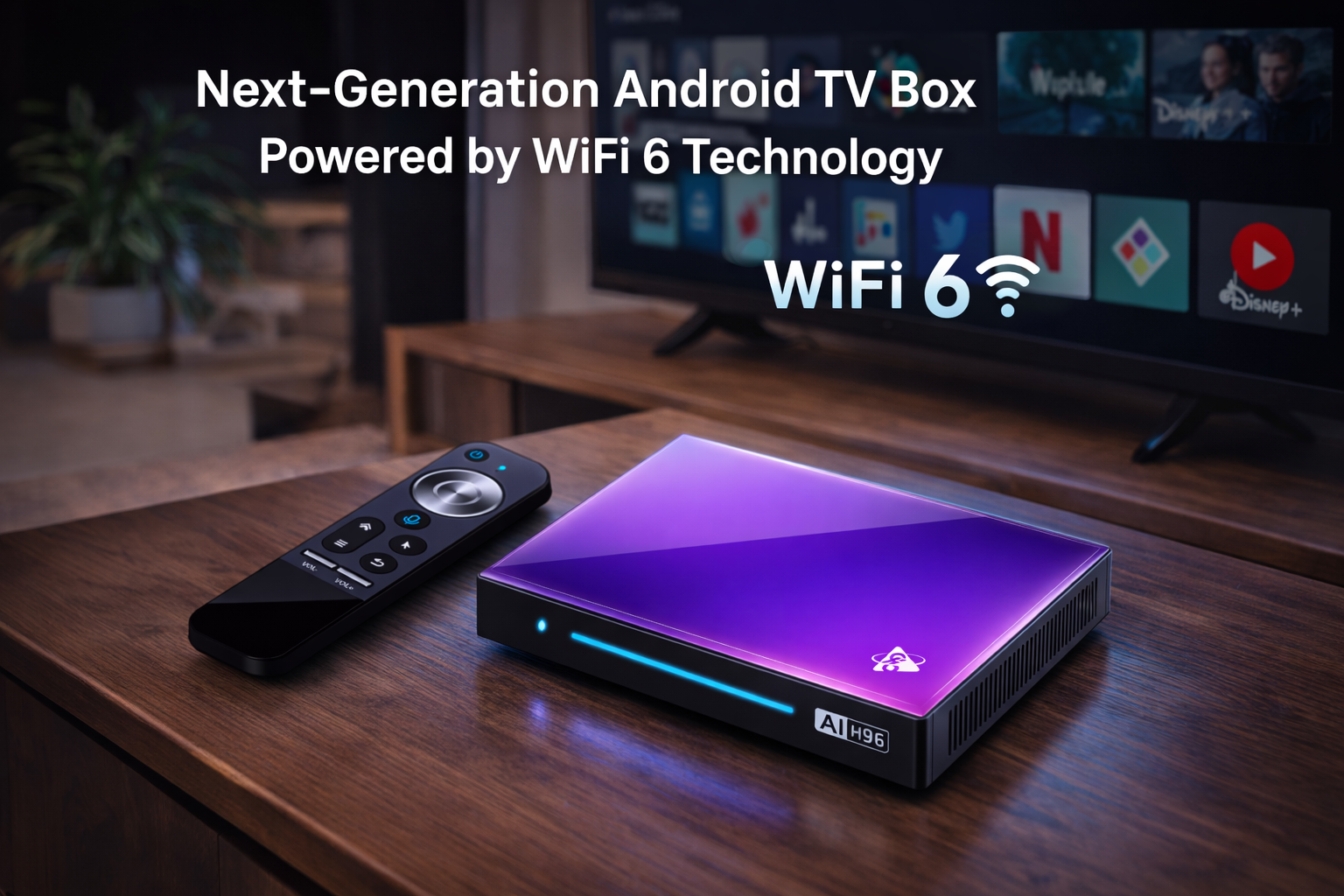
Does an Android TV Box Need WiFi 6/WiFi 6E Support in 2026?
In 2026, as the streaming media landscape rapidly evolves, Android TV Box WiFi 6 is no longer just a technical luxury—it's becoming a market necessity. According to a recent Statista report, global streaming device usage will surpass 2.2 billion units by the end of 2025, with user expectations for speed and reliability at an all-time high. The phrase "Android TV Box WiFi 6" now headlines customer requirement lists for manufacturers, distributors, and end-users seeking the best home entertainment experiences. The technology offers improved throughput, lower latency, and better network efficiency, all essential for today's 4K/8K streaming and smart home integration. Industry sources such as TechRadar and Digital TV Europe underscore that in 2026, performance differentiation hinges on next-generation WiFi, shifting competitive standards for every Android TV Box manufacturer and Android TV Box factory globally.
Why WiFi 6/WiFi 6E Is Transforming TV Box Market Requirements
WiFi 6 and WiFi 6E have transformed home connectivity, addressing many pain points associated with earlier standards. The Android TV Box with WiFi 6 can handle more simultaneous connections, minimizing buffering and latency even in dense environments, which is critical for the new wave of streaming, online gaming, and video conferencing. WiFi 6E, which expands into the 6GHz band, further reduces congestion, enabling seamless UHD streaming and smart IoT device integration. This evolution directly impacts both buyers and suppliers, who now view WiFi 6 as a baseline feature for competitiveness and future-proofing. Data from Grand View Research shows that demand for WiFi 6 Android TV Box models is projected to increase by over 35% in North America and Western Europe between 2024 and 2027.
Regional Market Needs: The US, EU, and Asia-Pacific
Market demand for WiFi 6/6E Android TV Boxes is not uniform. In the United States, the Android TV Box WiFi 6 trend is driven by the popularity of high-bandwidth content and multiple-user households. Broadband penetration rates are among the highest globally, and the proliferation of smart homes intensifies the need for robust connectivity. U.S. media outlets such as CNET emphasize WiFi 6 as the new standard for premium streaming.
In Europe, regulatory support for high-speed broadband and the rollout of 6GHz spectrum licenses underpin a fast adoption curve for WiFi 6E. Markets like Germany, the UK, and the Nordics are prioritizing devices labeled as WiFi 6 Android TV Box and Android TV Box with WiFi 6 to stay competitive. European consumers value long-term device utility and seamless integration with existing smart ecosystems.
Asia-Pacific, led by China, South Korea, and Japan, is seeing the fastest shift. OEMs in the region are rapidly moving to become recognized Android TV Box WiFi 6 manufacturer brands, catering to both export and domestic demand. Statista notes that nearly 70% of new Android TV Box shipments in China in 2025 will feature WiFi 6/6E support, while Indian and Southeast Asian markets focus on affordability and WiFi 6 as a differentiator for urban users.
Expert Perspectives and Industry Data
Media reviews from sources like PCMag and Digital Trends echo a consensus: WiFi 6E unlocks future-proofing, advanced streaming, and broader smart device integration. According to a 2025 Parks Associates study, over 62% of surveyed consumers planning to upgrade their streaming hardware list "WiFi 6 compatibility" as a top buying factor. Device reviews highlight how WiFi 6/6E features increase reliability, particularly in urban and multi-device environments.
Industry associations, including the Wi-Fi Alliance, emphasize that by 2026, “Do Android TV Boxes need WiFi 6 in 2026? is answered by evolving user expectations and the exponential rise of connected devices. Manufacturers who delay upgrading risk falling behind as consumer standards shift rapidly.
Pain Points: Why WiFi 6 is No Longer Optional
For both B2B and end-user customers, lack of WiFi 6 is a critical pain point:
Network Congestion: Without WiFi 6, network performance degrades as more devices connect.
Latency: WiFi 6’s improved protocols reduce streaming lag, essential for live sports, gaming, and video calls.
Future Compatibility: Legacy TV boxes face obsolescence as ISPs and content platforms optimize for next-generation WiFi.
Feedback from global buyers and resellers in 2026 shows a growing preference for Android TV Box manufacturer offerings with WiFi 6/6E, especially in markets with high smart device penetration.
Global Five-Year Demand & Feature Outlook
Over the next five years, the Android TV Box WiFi 6 market will expand across every major region. Demand drivers include the proliferation of high-resolution content, growth in smart home devices, and rising internet speeds worldwide. Expert projections from MarketWatch forecast that Android TV Box WiFi 6 manufacturer and OEM output will double by 2028, as requirements for low-latency, high-bandwidth streaming solidify.
Feature trends for future Android TV Boxes will center around WiFi 6E, AI-driven smart features, voice and gesture control, tighter integration with OTT platforms, and sustainability. Regional customization—such as support for local content platforms and compliance with specific telecom standards—will also become a core competitive factor. In summary, WiFi 6 and 6E will be at the heart of both B2B and consumer buying decisions for the foreseeable future.
READ MORE
2026 Profit Margin Gap Between High-End and Low-End Android TV Boxes
Comprehensive Analysis of Real Market Demand for 4K and 8K Android TV Boxes in 2026
Will Android TV Boxes Still Need Gigabit Ethernet Ports in 2026?
Is There More Profit Potential for AV1 Android TV Boxes in 2026?
2026 Android TV Box Storage Specification Trends: Is 16GB Becoming Obsolete?
Android TV Box Chipset Comparison 2026: Amlogic vs Rockchip vs Allwinner
Which Android TV Box Specifications Will Still Be Profitable in 2026?
Quick Links

.png "Watch H96 Max Android TV Box reviews on our YouTube channel")

.png "Explore H96 Max product photos on Instagram")