.png "H96 Max Android TV Box video reviews and tutorials on YouTube")
.png "H96 Max Android TV Box photos and lifestyle shots on Instagram")



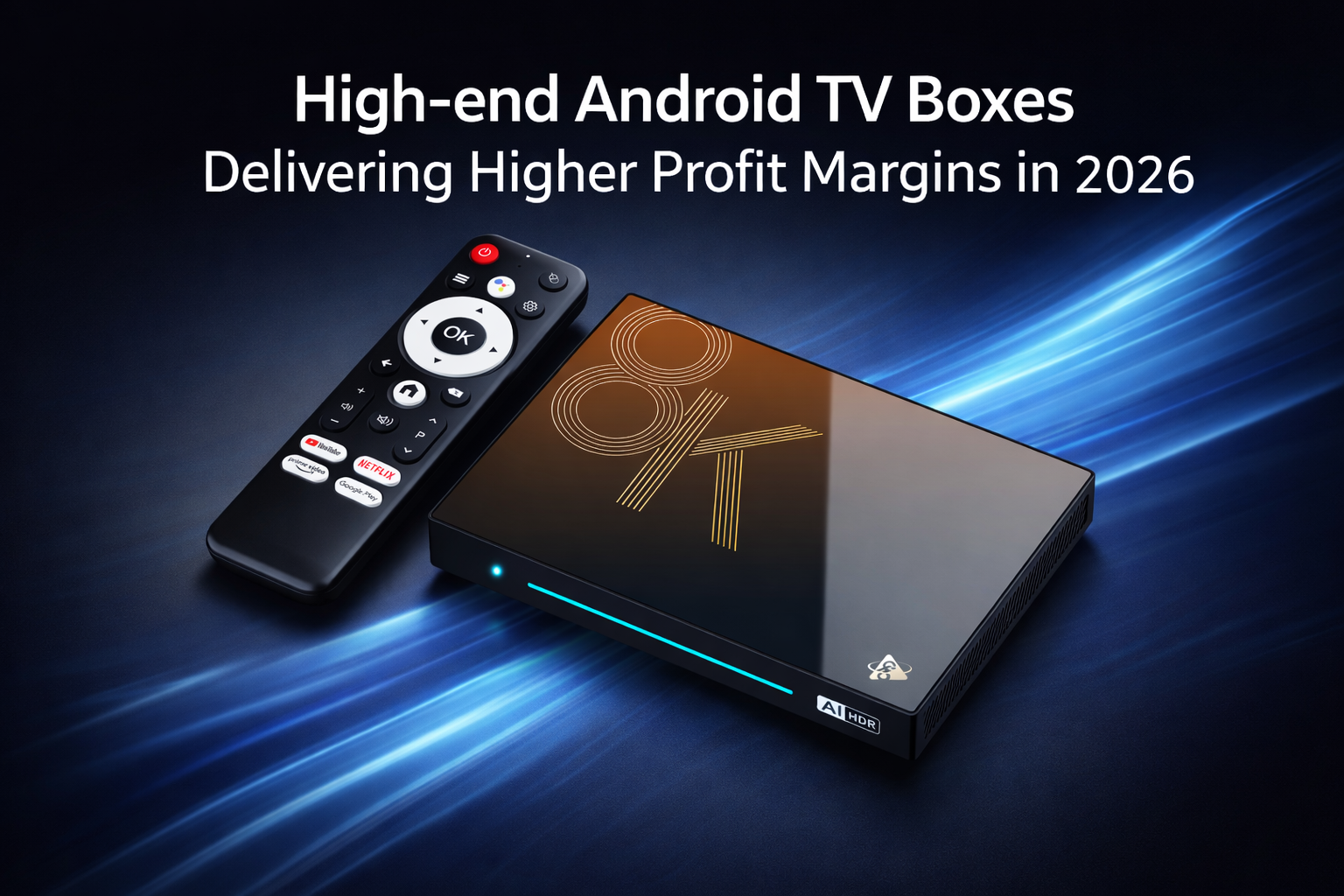
2026 Profit Margin Gap Between High-End and Low-End Android TV Boxes
Introduction
The Android TV Box Profit Margin stands at the heart of strategic decision-making for OEMs, wholesalers, and investors in the global streaming hardware market. As 2026 approaches, the gap between High-end Android TV Box and Low-end Android TV Box profitability is wider than ever before. This article provides a professional, data-driven analysis of what’s driving this gap, the evolving manufacturing landscape, market trends, and regional differences—equipping business readers with actionable insights for optimizing profitability in the Android TV box segment.
Understanding Manufacturing Costs and Price Structure
The Android TV Box Manufacturing Cost forms the baseline for all profit calculations. High-end devices require top-tier processors, advanced memory, and premium hardware, leading to a manufacturing cost of $40-55 per unit on average. Enhanced features such as WiFi 6, 8K support, and proprietary firmware drive costs higher. Meanwhile, low-end boxes rely on entry-level chipsets and limited features, holding manufacturing costs down to $14-20 per unit, according to industry figures from Grand View Research.
Component shortages, shipping rates, and compliance costs all influence final margins. For high-end units, investments in R&D and stringent quality assurance boost reliability and performance but also increase costs. In contrast, low-end models focus on cost-cutting, producing basic streaming solutions with slim feature sets to maintain aggressive price points.
Wholesale Pricing and Market Dynamics
The Android TV Box Wholesale Price reflects not only hardware costs but also distribution, channel markups, and perceived value. High-end models fetch retail prices 2-3.5x that of low-end products, but the actual Android TV Box Profit Margin is shaped by market competition and fluctuating demand. Low-end boxes depend on large volume sales with very thin margins; profitability is tied to operational scale and rapid turnover.
Profit Margin Comparison: High-End vs Low-End
Analyst data from Counterpoint Research and Statista highlight that android tv box profit margin comparison is stark in 2026: high-end models average 36-43% gross margin, while low-end models hover between 8-15%. Factors driving this divergence include technology gaps, distribution reach, and after-sales service quality. As noted by TechCrunch and Digital Trends, high-end devices often include white-label integrations, smart home compatibility, and advanced streaming apps, further enhancing perceived value.
Regional Demand Differences and Global Trends
North America: Local media and industry sources confirm that consumers value advanced features, seamless OTT streaming, and robust smart home integrations—benefiting high-end device sales and margins.
Europe: Strict regulations and tax requirements increase the Android TV Box Manufacturing Cost, yet innovation and multi-service integration allow high-end models to capture higher profits. The BBC and Reuters highlight a trend toward hybrid smart boxes that unify broadcast and streaming.
Asia-Pacific: Low-end Android TV box demand dominates, with countries like India and Indonesia preferring cost-effective solutions. Android TV Box OEM Factory operations in China, per Nikkei Asia, set the global price and profit margin baseline for budget devices.
Authoritative Data and Industry Validation
Grand View Research projects that by 2026, global Android TV box sales will grow 9.5% CAGR, with high-end units driving over 60% of industry profits. Statista forecasts that android tv box industry profit 2026 will remain polarized, with premium segments outpacing low-end units in both revenue and profitability.
China’s android tv box factory in China profit margin continues to set industry benchmarks. For custom orders, profit margins of 18-24% are common in the high-end segment, while low-end production margins often dip below 10% due to raw material cost swings and intense competition. Reports from China Daily and Global Times note that scale, automation, and fast shipping capabilities give Chinese OEMs an enduring edge.
Trends Shaping 2026 Profit Margins
Component Advancements: New chipsets, AI-powered features, and enhanced graphics increase both device capability and costs—benefiting high-end models most.
Sustainability & Regulation: Stricter global environmental standards and rising labor costs, especially in China, add complexity for low-end device makers but create opportunities for high-margin, eco-friendly innovation.
Market Polarization: As McKinsey and Frost & Sullivan note, developed regions fuel demand for feature-rich, premium boxes, while emerging markets focus on value-driven low-end devices. Strategic partnerships with local OTT and telecom players can boost margins for both segments.
Conclusion
The profit margin gap between High-end Android TV Box and Low-end Android TV Box units in 2026 is shaped by technology, market demand, and regulatory pressure. Premium models benefit from innovation, partnership, and branding, while low-end units must optimize for scale and cost. As the Android TV box market matures, companies that can strategically balance these forces will be best positioned for sustainable profit in a complex, fast-evolving industry.
READ MORE
Comprehensive Analysis of Real Market Demand for 4K and 8K Android TV Boxes in 2026
Will Android TV Boxes Still Need Gigabit Ethernet Ports in 2026?
Is There More Profit Potential for AV1 Android TV Boxes in 2026?
2026 Android TV Box Storage Specification Trends: Is 16GB Becoming Obsolete?
Android TV Box Chipset Comparison 2026: Amlogic vs Rockchip vs Allwinner
Which Android TV Box Specifications Will Still Be Profitable in 2026?
Quick Links

.png "Watch H96 Max Android TV Box reviews on our YouTube channel")

.png "Explore H96 Max product photos on Instagram")