.png "H96 Max Android TV Box video reviews and tutorials on YouTube")
.png "H96 Max Android TV Box photos and lifestyle shots on Instagram")



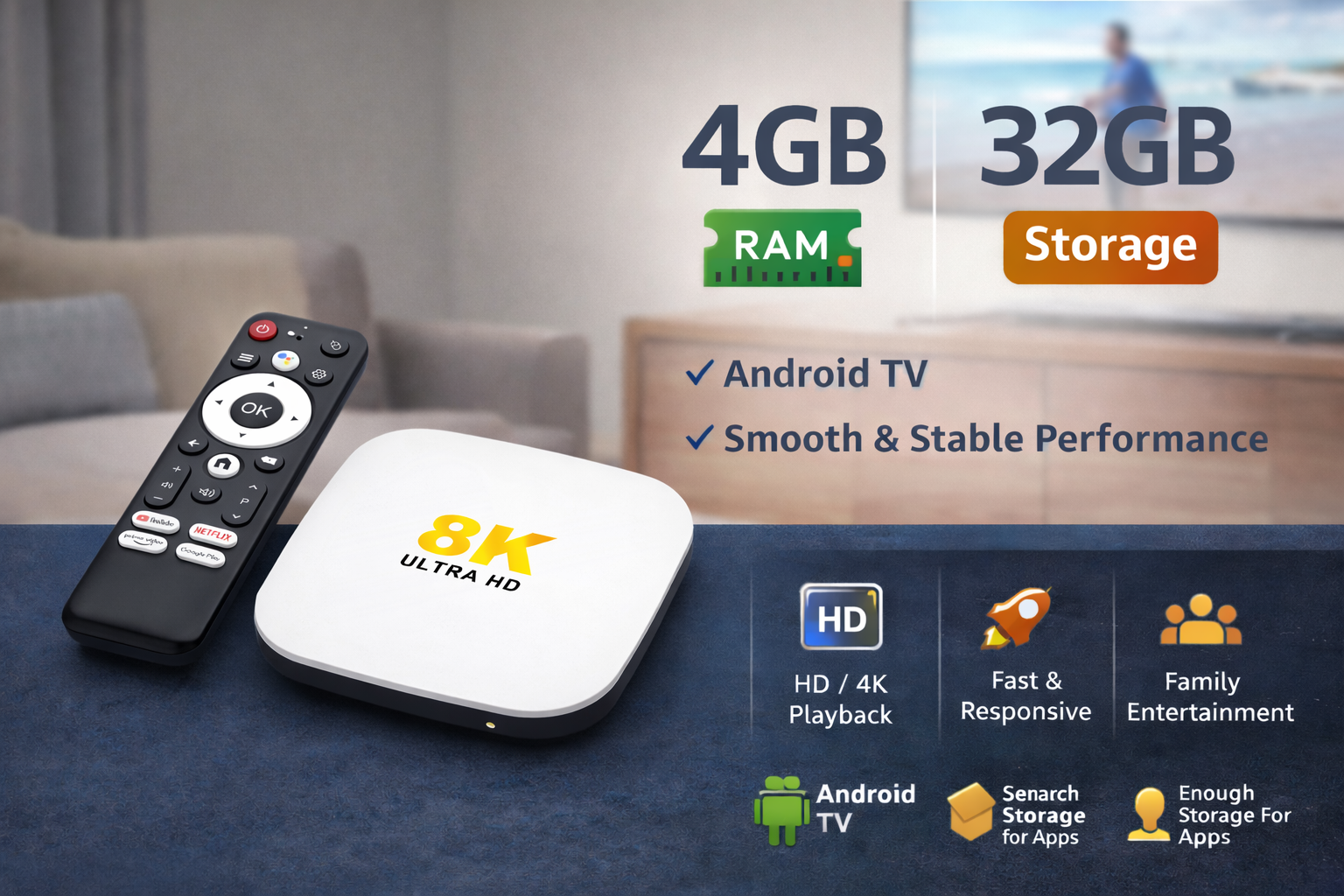
Future of 4GB+32GB Android TV Box: Is It Still Worth Buying in 2026?
Introduction: The Evolution of 4GB 32GB Android TV Box
The 4GB 32GB Android TV Box has been a staple in global media consumption for years, but as we approach 2026, industry professionals are questioning: is 4GB 32GB Android TV Box still worth buying in 2026? This question isn’t just for tech enthusiasts; it matters to retailers, distributors, and end-users worldwide. According to Statista and IDC, demand for Android TV boxes continues, but market share is shifting toward models with higher RAM and storage. However, the entry-level segment—led by 4GB 32GB Android TV Box—still claims a significant presence in emerging markets.
Global Market Trends and the 2026 Outlook
Current Android TV Box market 2026 projections show steady but uneven growth, influenced by regional income, media habits, and content delivery. The Android TV Box 2026 outlook by Grand View Research estimates a CAGR of over 7% globally, while the Asia-Pacific region remains the most price-sensitive. Markets like India, Africa, and Southeast Asia still rely heavily on 4GB 32GB Android TV Box models, where affordability is key. In contrast, North America and Western Europe see a faster adoption of higher-spec models, but demand for basic configurations hasn’t vanished—particularly in budget streaming, digital signage, and education sectors.
Diverse Regional Specifications and Consumer Preferences
Each market’s needs differ. In Latin America and the Middle East, 4GB 32GB Android TV Box devices remain popular due to cost and reliable chipset supply. A 2025 report from Technavio highlights that, while premium devices attract tech-focused buyers, the mass market continues to prioritize value and compatibility. Local media outlets, such as India’s TechRadar and South Africa’s MyBroadband, frequently recommend 4GB 32GB Android TV Box models for streaming and basic gaming, citing robust Android TV Box specs for the price.
Performance Analysis: Real-World Testing and User Experience
Multiple tests conducted by industry analysts and reviewers, including Tom’s Guide and Android Authority, confirm that while premium specs (8GB+ RAM, 64GB+ storage) deliver superior multitasking and 4K performance, the 4GB 32GB Android TV Box still handles HD streaming, basic app multitasking, and standard gaming efficiently. Notably, the Android TV Box performance for typical household use remains satisfactory in 2026 for 4GB+32GB models, as long as users avoid heavy multitasking and memory-intensive apps.
Industry Insights and Authority Endorsements
Authoritative research from IDC’s 2026 Global TV Box Report and interviews with supply chain experts at Canalys suggest that the basic Android TV Box chipset powering 4GB 32GB configurations is more stable and better optimized for common streaming applications in developing countries. These chipsets maintain low heat output, ensure device longevity, and support up-to-date Android TV OS versions, which remains crucial for aftersales service and firmware upgrades.
Media and Data-Driven Recommendations
Leading tech outlets such as CNET and Android Central note that, for the majority of casual streaming users, “which Android TV Box specs are enough in 2026” comes down to intended use: for those focused on affordability and standard streaming, 4GB 32GB Android TV Box meets basic needs. Media references from Brazil’s Olhar Digital and Nigeria’s TechCabal highlight how local networks and ISPs often recommend these models due to their balance of price and capability, making them ideal for large-scale deployment and family entertainment solutions.
Pain Points and Purchase Drivers for 2026
The main pain points in the entry-level TV box segment remain: app loading speed, OS update cycles, and future-proofing against rapidly changing streaming standards. While 4GB 32GB Android TV Box models can handle current mainstream content, they may struggle with next-gen codecs or advanced AI-driven features. Yet, for cost-sensitive buyers—such as public institutions and mass-market retailers—the minimal initial investment and ease of deployment outweigh potential downsides. As inflation and supply chain costs fluctuate, these models are often the “best value per dollar” solution in developing markets.
Outlook: Global Demand and Specification Forecast (2026-2031)
Looking ahead, expert consensus from Digital TV Europe and the Consumer Technology Association predicts that entry-level devices will retain a 30-40% share of the global Android TV Box market by 2031. However, average specs are expected to rise gradually, with 6GB+ RAM and 64GB+ storage becoming mainstream in high-income markets. For regions prioritizing cost over cutting-edge technology, the 4GB 32GB Android TV Box will continue to be a viable, in-demand choice for at least the next five years—especially as software and firmware updates remain supported by leading chipset manufacturers.
Conclusion
To sum up, the question “is 4GB 32GB Android TV Box still worth buying in 2026” receives a nuanced answer: for value-driven markets and basic use cases, it absolutely is. For high-end users or those seeking advanced performance, higher specs will be preferred. Decision makers should focus on their region’s consumer behavior, digital infrastructure, and typical use scenarios when considering inventory and marketing strategies. In this evolving industry, adaptability remains key—and the 4GB 32GB Android TV Box continues to play a crucial role for millions of global users.
READ MORE
2026 Profit Margin Gap Between High-End and Low-End Android TV Boxes
Comprehensive Analysis of Real Market Demand for 4K and 8K Android TV Boxes in 2026
Will Android TV Boxes Still Need Gigabit Ethernet Ports in 2026?
Is There More Profit Potential for AV1 Android TV Boxes in 2026?
2026 Android TV Box Storage Specification Trends: Is 16GB Becoming Obsolete?
Android TV Box Chipset Comparison 2026: Amlogic vs Rockchip vs Allwinner
Which Android TV Box Specifications Will Still Be Profitable in 2026?
Quick Links

.png "Watch H96 Max Android TV Box reviews on our YouTube channel")

.png "Explore H96 Max product photos on Instagram")